Back to top

All NCTSN Resources

The following resources on child trauma were developed by the NCTSN. To find a specific topic or resource, enter keywords in the search box, or filter by resource type, trauma type, language, or audience.

NCTSN Resource

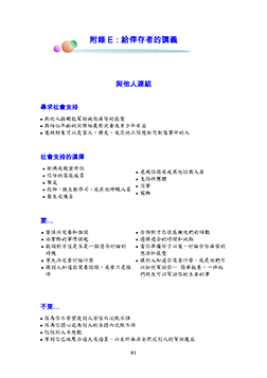
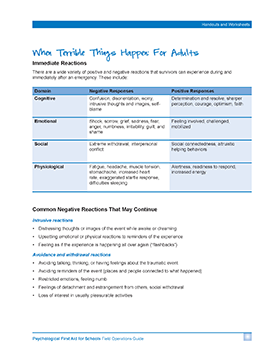
PFA-S: When Terrible Things Happen: For Adults

Type: Special Resource

Is a handout from Psychological First Aid for Schools (PFA-S) Field Operations Guide. This handout offers information on immediate reactions that may occur, common negative reactions that may continue, reactions to the death of a loved one, ways to cope, and strategies that don't work.
NCTSN Resource

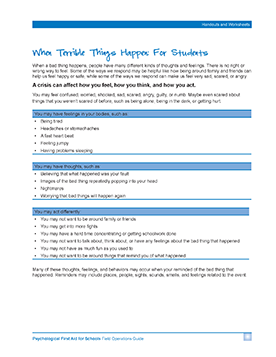
PFA-S: When Terrible Things Happen: For Students

Type: Special Resource

Is a handout from Psychological First Aid for Schools (PFA-S) Field Operations Guide. This handout offers information on immediate reactions that may occur, common negative reactions that may continue, reactions to the death of a loved one, ways to cope, and strategies that don't work.

NCTSN Resource

Preparing Our Children for Emergencies

Type: Webinar

Describes how best to prepare our children for emergencies. This webinar discusses how to prepare for events from a community preparedness and resilience standpoint, as well as emergency preparedness within school settings.

NCTSN Resource

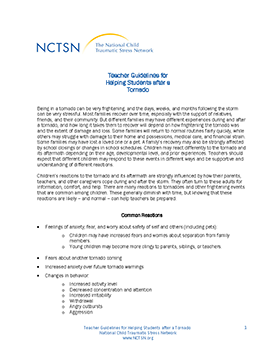
Teacher Guidelines for Helping Students after a Tornado

Type: Fact Sheet

Offers teachers guidance on helping students after a tornado. This fact sheet describes common reactions students may have, how teachers and school staff can help, as well as engage in self-care after a tornado.

NCTSN Resource

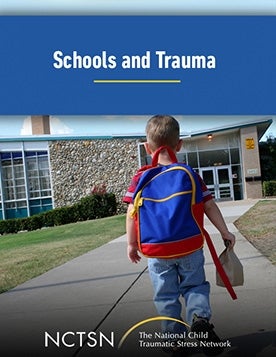
Schools and Trauma

Type: Webinar

Focuses on partnering with schools to enhance mental health and trauma-informed services designed to inform both school personnel and mental health professionals about the impact of traumatic events.

NCTSN Resource

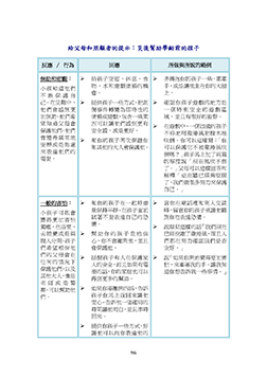
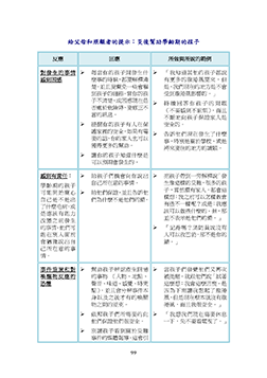
Age-Related Reactions to a Traumatic Event

Type: Fact Sheet

Describes how young children, school-age children, and adolescents react to traumatic events and offers suggestions on how parents and caregivers can help and support them.

Pages