Understanding and Addressing the Intersection of Substance Use and Child Trauma: Introduction
Provides an overview of the connection between child trauma and substance use and how these experiences can impact youth, families, and communities.
October was first declared as National Substance Abuse Prevention Month in 2011. Since then, October has been a time to highlight the vital role of substance abuse prevention in both individual and community health has, to remember those who have lost their lives to substance abuse, to acknowledge those in recovery, as well as children, parents, family, and friends supporting them. Studies show that the earlier an individual starts smoking, drinking or using other drugs, the greater the likelihood of developing addiction. 9 out of 10 people who abuse or are addicted to nicotine, alcohol or other drugs began using these substances before they were 18. People who began using addictive substances before age 15 are nearly 7 times likelier to develop a substance problem than those who delay first use until age 21 or older. Every year that substance use is delayed during the period of adolescent brain development, the risk of addiction and substance abuse decrease.
The National Child Traumatic Stress Network (NCTSN) has compiled a list of helpful resources for parents and caregivers, children and teens, mental health providers, child welfare workers, law enforcement professionals, educators and school staff, and policy makers.

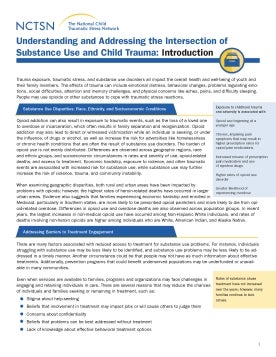
Provides an overview of the connection between child trauma and substance use and how these experiences can impact youth, families, and communities.

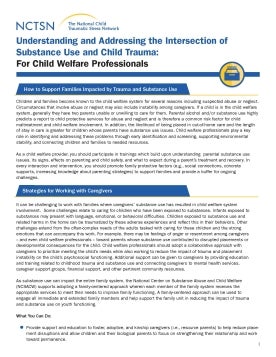
Provides child welfare professionals with guidance on addressing the intersection of caregiver substance use and child trauma

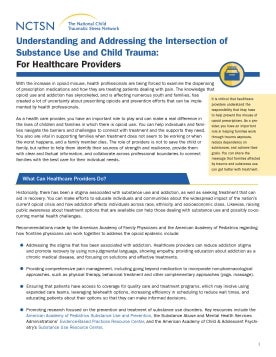
Aids healthcare providers to recognize how trauma and substance use intersect and affect the health and development of children and adolescents in medical settings.

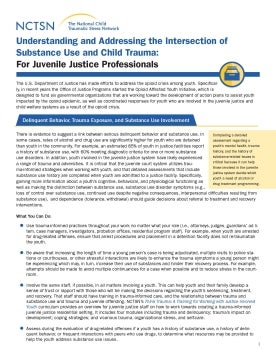
Helps juvenile justice professionals understand how trauma and substance use can influence youth behavior and involvement in the justice system.

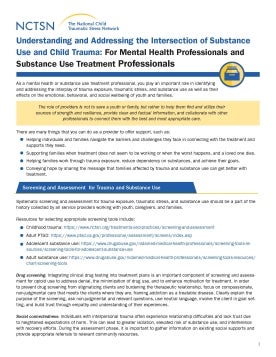
Supports mental health professionals in understanding the complex relationship between trauma exposure and substance use among youth and families.

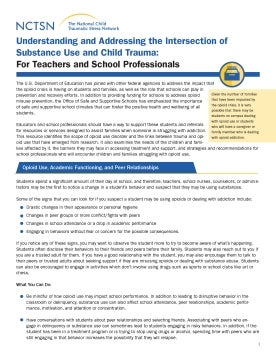
Helps school professionals understand how trauma and substance use can affect students’ behavior, learning, and well-being within school settings.

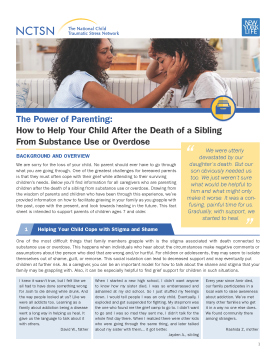
Offers parents and caregivers information to help support their surviving children after a the death of a sibling due to substance use or overdose.
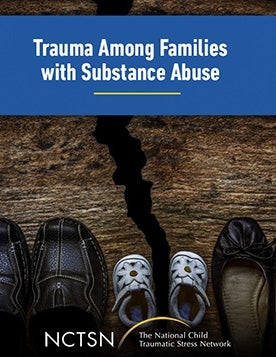
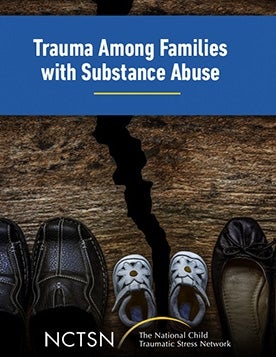
Provides a picture of the challenges experienced by families caring for youth with trauma and substance use.
Offers perspectives on the intersections between trauma, caregiver substance use, parenting, and prenatal substance use exposure.
Describes the connections between intimate partner violence and substance use.
Discusses the potential impact of opiates on the developing fetus and the baby.
Provides information about the effects of prenatal exposure to substances and trauma on children.