Back to top

All NCTSN Resources

The following resources on child trauma were developed by the NCTSN. To find a specific topic or resource, enter keywords in the search box, or filter by resource type, trauma type, language, or audience.

NCTSN Resource

Taking Care of You

Type: Fact Sheet

Provides information to help youth practice self-care. This fact sheet includes information on what it means to take care of yourself, as well as recommended hotlines and conversation starters. This resource is most helpful for youth ages 12 and older.

NCTSN Resource

Talking About Suicide with Friends and Peers

Type: Fact Sheet

Provides information to support youth talking about suicide with friends and peers. This fact sheet includes what you can do, action words, skills for getting help, as well as myths and facts about how to help as a peer. This resource is most helpful for youth ages 12 and older.

NCTSN Resource

Words to Use When Talking About Suicide

Type: Fact Sheet

Provides information to help youth know what words to use when talking about suicide with friends and peers. This fact sheet includes when you should ask, examples of what to say, when to get help, as well as next steps. This resource is most helpful for youth ages 12 and older.

NCTSN Resource

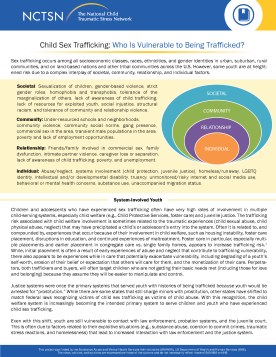
Child Sex Trafficking: Who is Vulnerable to Being Trafficked?

Type: Fact Sheet

Discusses the complex interplay of societal, community, relationship, and individual factors that increase a youth's risk of being trafficked. This fact sheet offers information about youth whose experiences make them more vulnerable to being trafficked. 

NCTSN Resource

Coping After Mass Violence

Type: Fact Sheet

Offers information on coping after mass violence. This fact sheet provides common reactions children and families may be experiencing after a mass violence event, as well as what they can do to take care of themselves. 

Pages