Trauma-Informed Integrated Care for Children and Families in Healthcare Settings
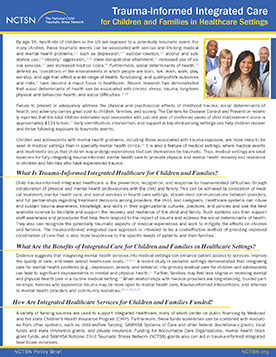
Provides policymakers and other stakeholders an overview of trauma-informed integrated care and its importance for children who have experienced trauma.
The following resources on Healthcare were developed by the NCTSN.

Provides policymakers and other stakeholders an overview of trauma-informed integrated care and its importance for children who have experienced trauma.

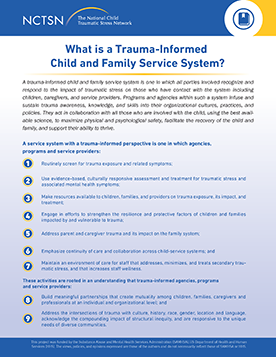
Answers the question what is a trauma-informed child and family service system. This fact sheet details the components of a trauma-informed child and family service system.
Discusses an integrated approach to recognizing and responding to child and family traumatic stress when a child has cancer.
Offers information on integrated care approaches to supporting children and families dealing with traumatic stress and chronic health conditions.
Explores the common reasons CSEC youth seek care, as well as challenges to victim identification.
Provides a trauma-informed integrated healthcare model for conceptualizing young children exposed to violence and other traumatic stressors.
Lays a groundwork of fundamental knowledge about integrated health care and how it relates to trauma.

Provides a brief overview of medical traumatic stress, the D-E-F protocol (Reduce Distress, Promote Emotional Support, and Remember the Family) and traumatic stress reactions.

Outlines how to use the Pediatric Medical Traumatic Stress Toolkit for Health Care Providers effectively.

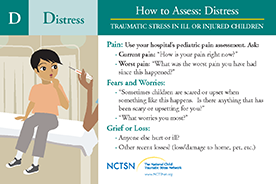
Provides tips for medical professionals on how to assess distress in ill or injured children and how to help their families.

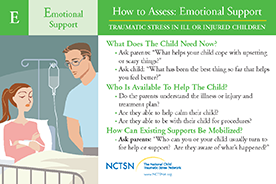
Provides tips for medical professionals on how to assess emotional support in ill or injured children and how to help their families.

Provides tips for medical professionals on how to assess a family of ill or injured children and how to help their families.