Understanding Stress vs. Trauma
Highlights the differences between stress and trauma by explaining their unique causes, effects, and timelines, helping caregivers, educators, and providers respond with the appropriate support.
May was first declared as Mental Health Awareness Month in 1949. In 2006, Children’s Mental Health Awareness Day was chosen as a special day during this month to focus on the mental health needs of children. Since 2006, May has been a time to acknowledge the importance of children's mental health, show that positive mental health is essential to a child's healthy development from birth, promote positive youth development, resiliency, and recovery, along with the transformation of mental health service delivery for youth, adolescents, and their families.
The National Child Traumatic Stress Network (NCTSN) has compiled a list of helpful resources for parents and caregivers, children, mental health providers, child welfare and juvenile justice professionals, healthcare providers, educators and school staff, military families, and policy makers.
A list of external resources related to children's mental health awareness is available here.

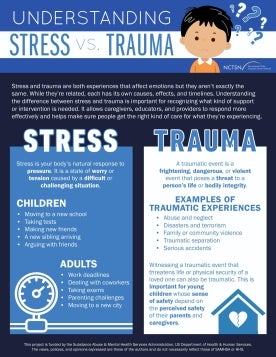
Highlights the differences between stress and trauma by explaining their unique causes, effects, and timelines, helping caregivers, educators, and providers respond with the appropriate support.

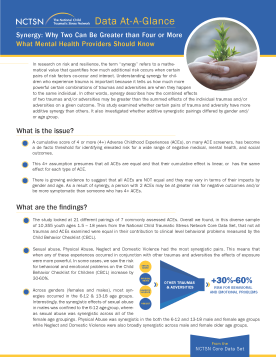
Offers providers information about synergy for children who experience trauma. This fact sheet is a summary of important points from a NCTSN Core Data Set publication developed to help providers understand whether certain pairs of trauma and adversity have more additive synergy than others.

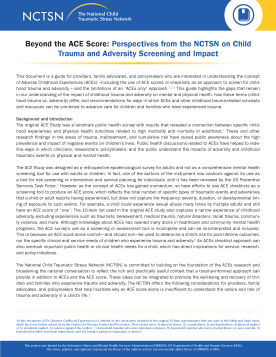
Provides an overview of the concepts of Adverse Childhood Experiences (ACEs) and childhood trauma, highlights the gaps that remain in our understanding of the impact of childhood trauma and adversity on mental and physical health...

Provides external resources related to Children's Mental Health Awareness.

Discusses how families living in racially and economically segregated communities must also cope with the effects of historical trauma and intergenerational racism.

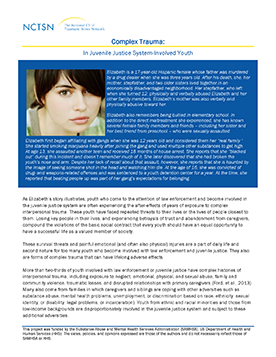
Delineates the path from complex trauma exposure to involvement in the juvenile justice system.

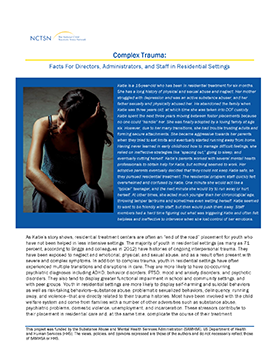
Provides information for staff in residential treatment centers on how to understand behavior through a trauma lens.

Details the importance of a holistic, multidisciplinary, multi-level approach to addressing the needs of youth with complex trauma in residential treatment settings.

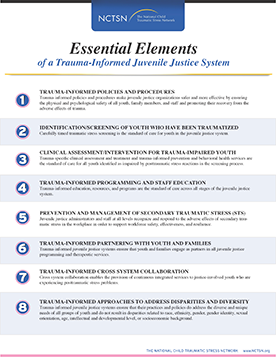
Helps programs who work with justice-involved youth better understand the steps to take to recognize and respond to the trauma-related needs of youth, family members, and staff working in the justice system.

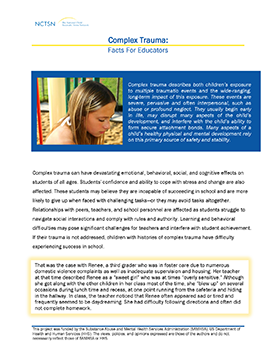
Helps educators and school staff recognize the signs and symptoms of complex trauma and offers recommendations on how to help students heal.

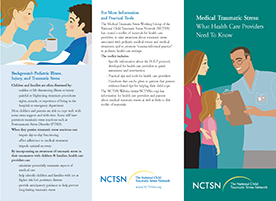
Provides a brief overview of medical traumatic stress, the D-E-F protocol (Reduce Distress, Promote Emotional Support, and Remember the Family) and traumatic stress reactions.

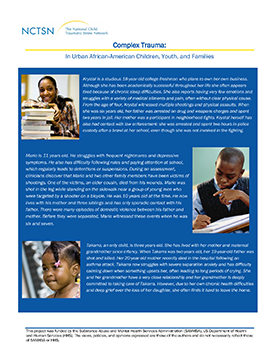
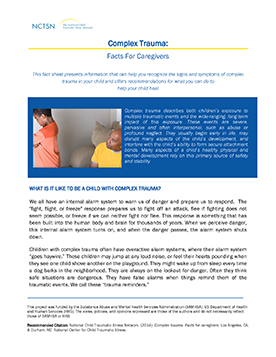
Helps parents and caregivers recognize the signs and symptoms of complex trauma and offers recommendations on how to help children heal.