NCTSN Resource
Complex Trauma: In Juvenile Justice-System Involved Youth
Type: Fact Sheet
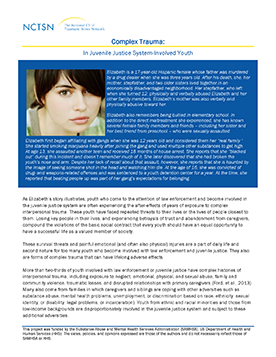
Delineates the path from complex trauma exposure to involvement in the juvenile justice system.

The following resources on child trauma were developed by the NCTSN. To find a specific topic or resource, enter keywords in the search box, or filter by resource type, trauma type, language, or audience.
Delineates the path from complex trauma exposure to involvement in the juvenile justice system.
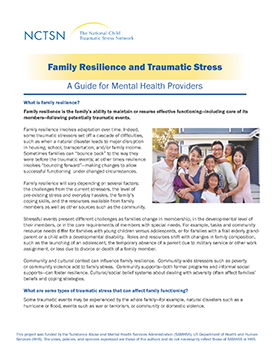
Provides information on family resilience. This fact sheet discusses a family's ability to maintain or resume effective functioning, including care of its members following potentially traumatic events.
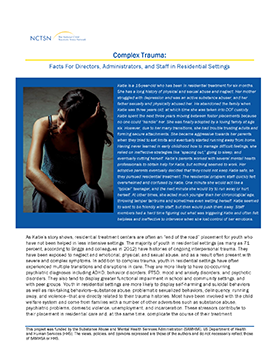
Provides information for staff in residential treatment centers on how to understand behavior through a trauma lens.
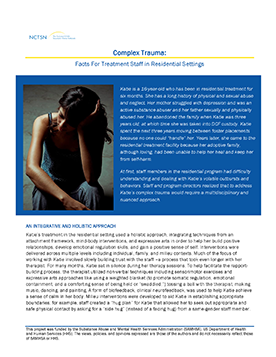
Details the importance of a holistic, multidisciplinary, multi-level approach to addressing the needs of youth with complex trauma in residential treatment settings.
This resource has been retired. Please see our other resources for more up-to-date information on supporting children and families living with trauma and intellectual and developmental disabilities.
Defines resilience and factors that enhance resilience in children following a potentially traumatic event.
Answers the question what is a trauma-informed child and family service system. This fact sheet details the components of a trauma-informed child and family service system.
Offers providers details about the unique needs of veterans transitioning out of service. This fact sheet provides general information about today's military veteran family and challenges of military life including separation, physical disabilities or injury, and impaired cognitive functioning.
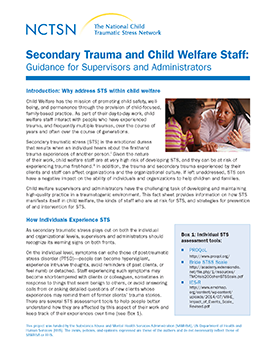
Gives supervisors and administrators in the child welfare system the information on the importance of addressing secondary traumatic stress (STS).
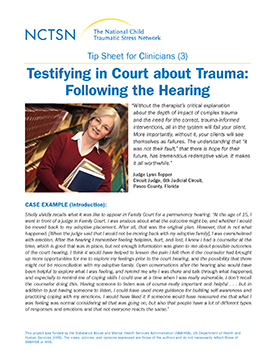
Provides information on the importance of follow-up after testifying. This fact sheet, a part of the Testifying in Court about Trauma series, focuses on follow-through for clinicians, clients, and their caregivers after the court process.
Discusses the correlation between victimization and juvenile offending.
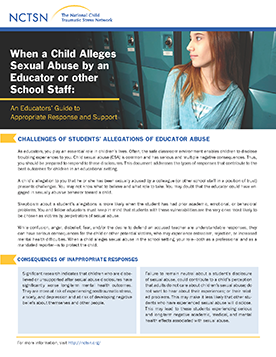
Provides educators and school staff information on the challenges that occur when there is an allegation of educator abuse.