Five Tools to Help You Identify the Right Trauma‑Focused Intervention
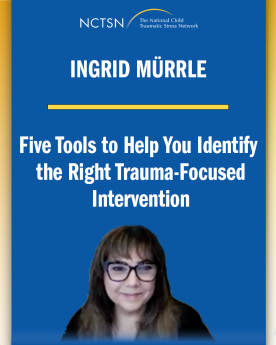
Ingrid Mürrle of the National Center for Child Traumatic Stress introduces a set of five implementation tools that agencies can use when bringing in a new practice.
The following resources on child trauma were developed by the NCTSN. To find a specific topic or resource, enter keywords in the search box, or filter by resource type, trauma type, language, or audience.
Ingrid Mürrle of the National Center for Child Traumatic Stress introduces a set of five implementation tools that agencies can use when bringing in a new practice.
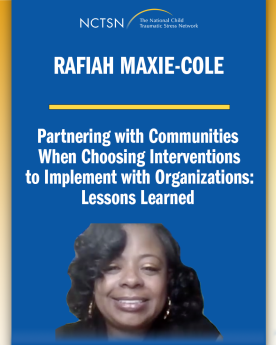
Soul Survivors of Chicago founder Rafiah Maxie-Cole highlights the importance of organizations partnering with communities when selecting and implementing interventions.
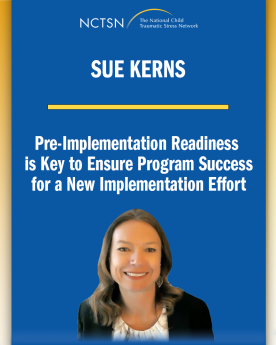
Sue Kerns of The Kempe Center at the University of Colorado highlights the critical importance of pre-implementation readiness in supporting evidence-based practices to take root and sustain over time.
Dr. Cameo Stanick seeks to answer the question: “How do we keep our evidence-based practice investment sustainable in the long term even when our funding runs out or changes?”

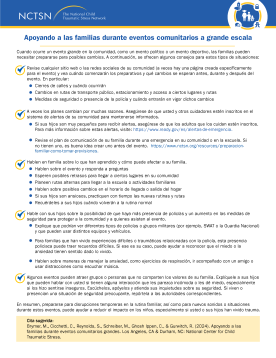
Provides information for parents and caregivers about how to support their family when a large community event is happening in their city or town. Translated 2026.

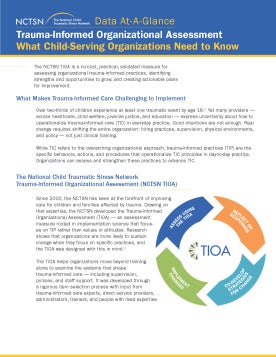
Introduces the NCTSN Trauma-Informed Organizational Assessment (TIOA), highlighting key research findings, core domains of measurement, and how organizations can use the TIOA to create meaningful, sustainable change.
NCTSN Affiliate Dr. Ginny Sprang from the University of Kentucky and National Center Co-Director Dr. Lisa Amaya-Jackson discuss Secondary Traumatic Stress (STS).

Offers parents guidance on helping their children after a shooting. This fact sheet describes common reactions children may have, how parents can help them, and self-care tips after an event. Translated in 2026.

Provides parents and providers with information about the psychological impact of a shooting.

Provides information on how to talk to children about mass shootings. This tip sheet describes ways to talk to children about mass violence events that involve a shooting. It gives tips about how to start the conversation, common reactions children may have, and how to seek help if needed.

Gives information to parents and caregivers about media coverage following a shooting. This tip sheet describes what parents can do to help their children, media exposure after events, and talks about what it is like when a family is a part of the story. Translated in 2026.

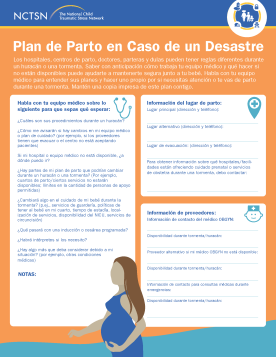
Helps expectant parents and their care teams plan for labor and delivery during hurricanes or severe storms. This tool can be used to outline key contacts, medical details, and backup birth locations so you can stay informed, supported, and safe. Translated in 2026.