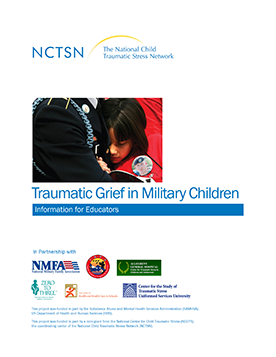
NCTSN Resource
Traumatic Grief in Military Children: Information for Educators
Type: Fact Sheet
Provides educators with information about traumatic grief in military children.

The following resources on child trauma were developed by the NCTSN. To find a specific topic or resource, enter keywords in the search box, or filter by resource type, trauma type, language, or audience.
Provides educators with information about traumatic grief in military children.
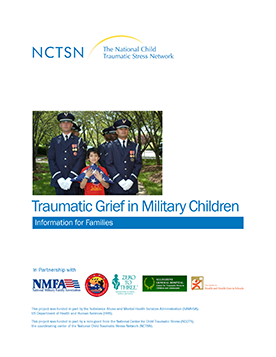
Provides parents and caregivers with information about traumatic grief in military children.
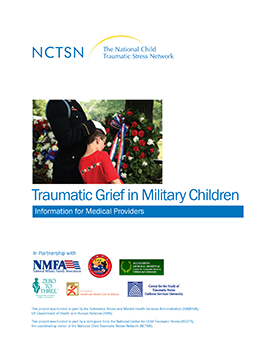
Provides medical providers with information about traumatic grief in military children.
Provides information for parents and caregivers about children and teens who have had a loved one die in an earthquake.
Provides information for teachers and school personnel about children and teens who have had a loved one die in an earthquake.
Explores the complex connections between traumatic stress and substance abuse.

Helps Children's Advocacy Center (CAC) directors evaluate options for offering mental health services, and assessing and/or comparing the quality of services available in the community.
Discusses ways to better engage adolescents who have experienced trauma in treatment.
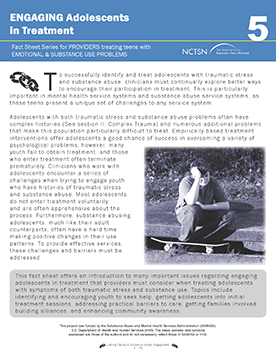
Offers an introduction to issues regarding engaging adolescents in treatment that providers must consider when treating adolescents with symptoms of both traumatic stress and substance use.
Provides information for parents and caregivers whose teen might be or is experiencing substance abuse and/or stress from a traumatic event. This fact sheet is a part Understanding the Links Between Adolescent Trauma and Substance Abuse: A Toolkit for Providers.
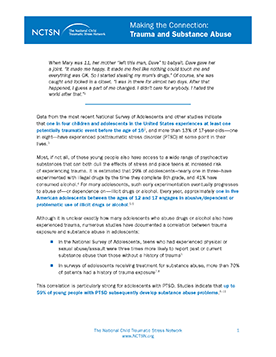
Provides background statistics on trauma and substance abuse, describes the risk factor interactions between trauma and substance abuse, and outlines challenges to care and possible solutions.

Explores links between trauma and substance abuse.