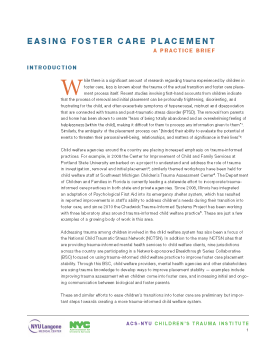
Easing Foster Care Placement Practice Brief
Focuses on addressing secondary traumatic stress experienced by child welfare staff, easing children’s transitions into foster care, and working with parents who have been impacted by trauma.
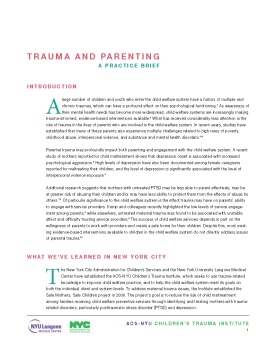
The following resources on child trauma were developed by the NCTSN. To find a specific topic or resource, enter keywords in the search box, or filter by resource type, trauma type, language, or audience.

Focuses on addressing secondary traumatic stress experienced by child welfare staff, easing children’s transitions into foster care, and working with parents who have been impacted by trauma.

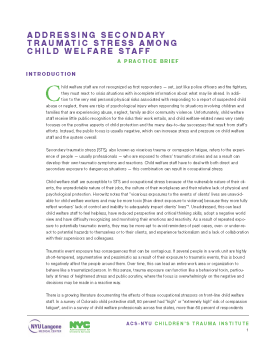
Focuses on addressing secondary traumatic stress experienced by child welfare staff, easing children’s transitions into foster care, and working with parents who have been impacted by trauma.
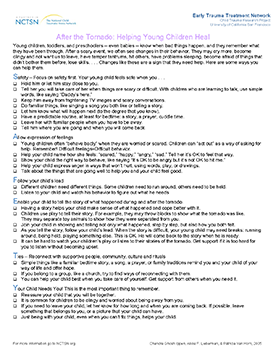
Focuses on addressing secondary traumatic stress experienced by child welfare staff, easing children’s transitions into foster care, and working with parents who have been impacted by trauma.
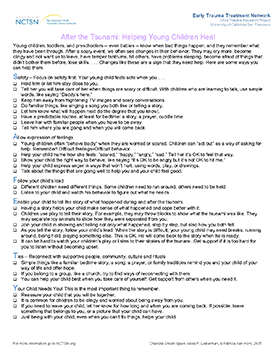
Provides information on how parents and caregivers can help their young children cope with the aftermath of a tornado.

Provides tips to parents on how to help their young children cope and recover following a tsunami.

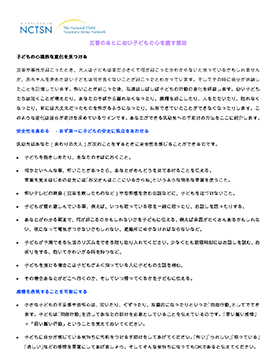
Provides information on how parents can help their young children cope with the aftermath of an earthquake. This is the Japanese version 災害のあとに幼い子どもの心を癒す援助

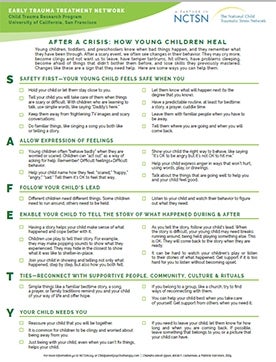
Offers tips to parents on how to help young children, toddlers, and preschoolers heal after a traumatic event.

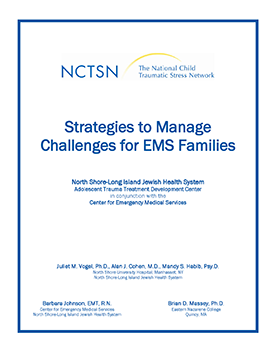
Describes the challenges that Emergency Medical Service Personnel and their families face.