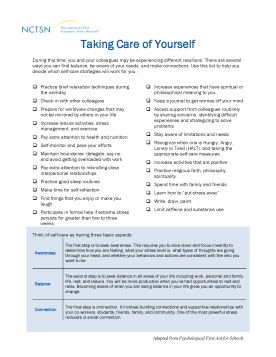
Taking Care of Yourself
Offers providers a list of ideas for self-care strategies to use after a difficult event. This checklist outlines the three basics aspects of self-care including awareness, balance, and connection.
The following resources on child trauma were developed by the NCTSN. To find a specific topic or resource, enter keywords in the search box, or filter by resource type, trauma type, language, or audience.

Offers providers a list of ideas for self-care strategies to use after a difficult event. This checklist outlines the three basics aspects of self-care including awareness, balance, and connection.

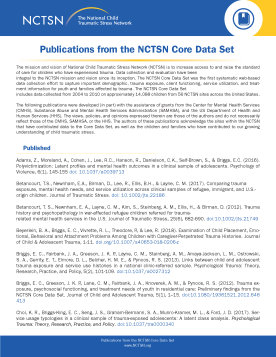
Is a list of publications from the NCTSN Core Data Set. This comprehensive list gives readers the reference information for each publication.

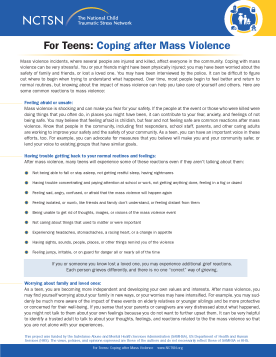
Offers information for teens about common reactions to mass violence, as well as tips for taking care of themselves and connecting with others.

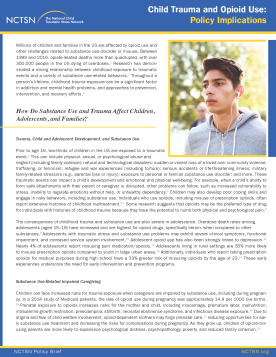
Provides policymakers and other stakeholders with an overview of how substance use and trauma affects children, adolescents, and families; substance use-related impaired caregiving; and the impact of the opioid crisis on children and families.

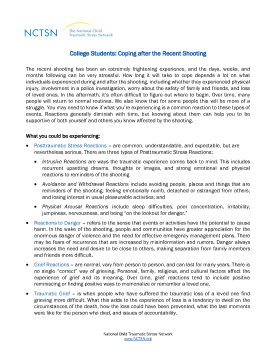
Provides information for college students on how to cope afte the recent shooting. This fact sheet offers insight into what college students could be experiencing in light of the recent shooting, as well as types of reactions and what they can do for themselves.

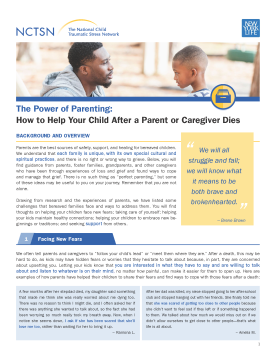
Offers guidance around helping children cope after the death of a loved one. Information is provided about how to face new fears in the context of bereavement, how grieving caregivers can take care of their own needs...

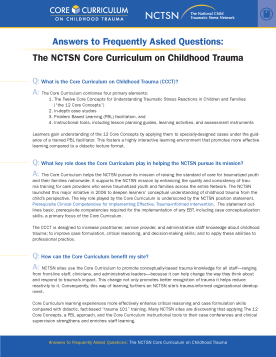
Answers frequently asked questions about the NCTSN Core Curriculum on Childhood Trauma.

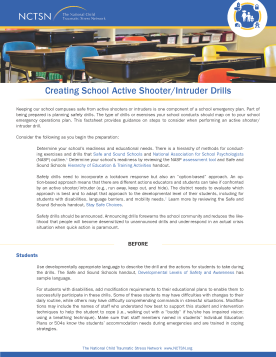
Provides information to schools about how to create a trauma-informed active shooter/intruder drill. This fact sheet outlines the steps to take before, during, and after for students, school staff, and parents.

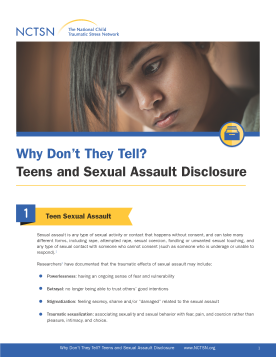
Offers information about teen sexual assault and disclosure. This fact sheet outlines why teens don't disclose sexual assault, the benefits of disclosure, and how to support teens after disclosure of a sexual assault.

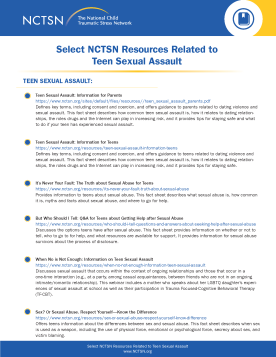
Identifies existing NCTSN resources related to teen sexual assault, acquaintance rape, sexual abuse, and child traumatic stress. The list includes fact sheets and webinars that offer information and tips for professionals, parents, and teens themselves.

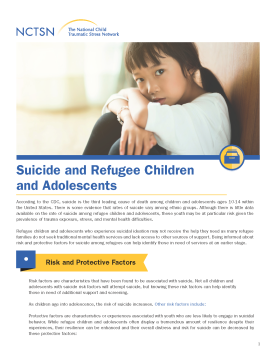
Offers information about risk and protective factors as related to suicide and refugee children and adolescents. This fact sheet gives strategies for talking with refugee children and adolescents about suicide.

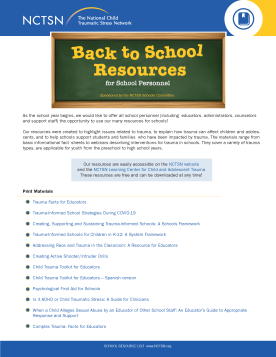
is a list of NCTSN products that are useful for school staff and personnel.