Complexity of the Traumatic Experience
Discusses how every traumatic event is made up of traumatic moments that may include varying degrees of objective life threat, physical violation, and witnessing of injury or death.
The following resources on child trauma were developed by the NCTSN. To find a specific topic or resource, enter keywords in the search box, or filter by resource type, trauma type, language, or audience.
Discusses how every traumatic event is made up of traumatic moments that may include varying degrees of objective life threat, physical violation, and witnessing of injury or death.
Offers providers ways to use the CANS-Trauma Comprehensive, a tool designed to support individual service, treatment planning, and evaluation of service systems. This course contains demonstration videos, PowerPoints, helpful resources, as well as links for training on the use of the CANS.

Outlines practice examples for continuity of care and collaboration across systems, a vital activity for youth involved in multiple service systems. This brief, written by Macon Stewart from the Center for Juvenile Justice Reform describes its Youth Practice Model.

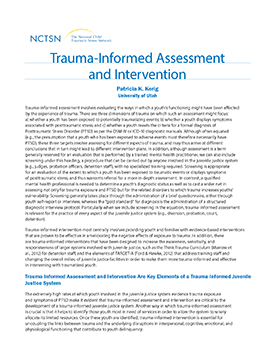
Outlines the importance of trauma-informed assessment and intervention in the juvenile justice system.

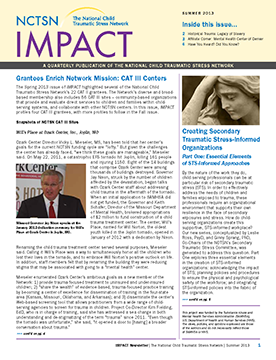
Showcases a few of our Category III sites and the outstanding work they are doing in their centers, as well as other highlights.

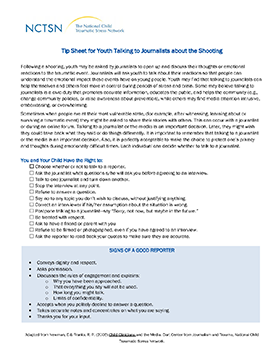
Offers information to youth, parents, and caregivers on how to talk with journalists after a mass violence event or shooting. This tip sheet describes a parent's and child’s rights when talking with journalists and details the signs of a good and respectful reporter.

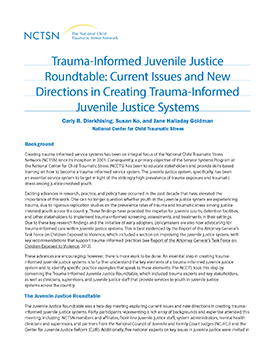
Provides an introduction to the NCTSN Trauma-Informed Juvenile Justice Roundtable.

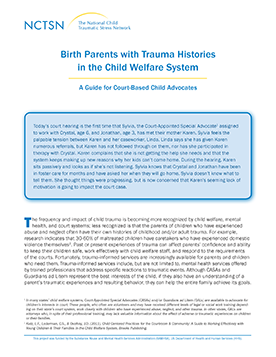
Highlights the importance for court-based advocates to understand the serious consequences that trauma histories can have for birth parents and the subsequent potential impact on their parenting.

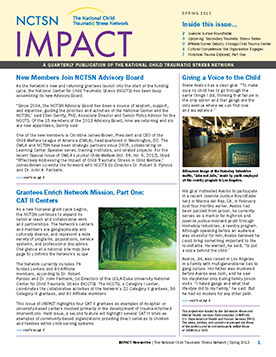
Introduces the new NCTSN Advisory Board, describes new and returning centers of the NCTSN at the beginning of this new four-year grant cycle, honors the life of a young man touched by the Juvenile Justice System, and other highlights.

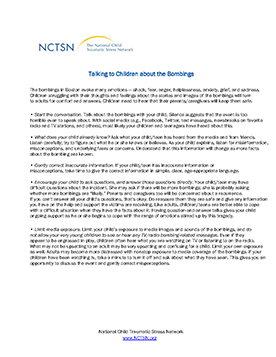
Provides information on how to talk to children about the bombings in Boston. This tip sheet describes how to talk to children about the bombings in Boston and applies to mass violence events that involve bombings in general.

Helps youth recognize that community violence does not have to dominate their lives if they understand their reactions to it, understand how to keep themselves safe, and understand how to make positive choices in dangerous times.

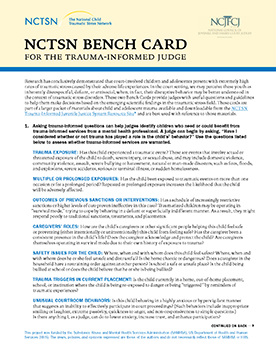
Provides judges with useful questions and guidelines to help make decisions based on the emerging scientific findings in the traumatic stress field. These bench cards assist judges and court-appointed professionals doing mental health assessment of children.