NCTSN Resource
Remembering Katrina Part Two: The Great Diaspora of New Orleans
Type: Webinar
Describes the unique set of challenges faced to address the needs of Americans displaced by Hurricane Katrina.

The following resources on child trauma were developed by the NCTSN. To find a specific topic or resource, enter keywords in the search box, or filter by resource type, trauma type, language, or audience.
Describes the unique set of challenges faced to address the needs of Americans displaced by Hurricane Katrina.
Offers information on refugee youth and their families.
Provides community violence workers with information about secondary traumatic stress (STS).
Provides information to policymakers about the impact of natural and technological disasters on children, families, and communities.
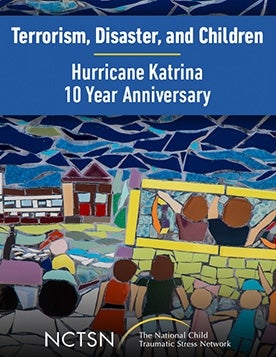
Focuses on the widespread behavioral health impact that Hurricane Katrina had. This webinar presents the direct operation of response and recovery services from the days preceding Katrina and into the present day.
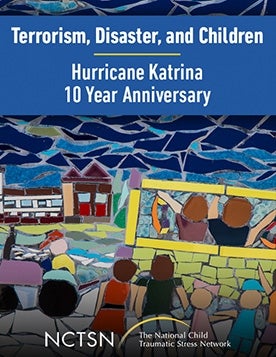
Remembers the 10th Anniversary of Hurricane Katrina. This webinar series discusses how 33 of our Network centers and 31 of our partners assisted in 22 states making the response to Katrina the greatest NCTSN response and recovery effort to date.
Explores the importance, clinical considerations, and approaches to assessing for psychological trauma and posttraumatic stress with youth in the juvenile justice population.
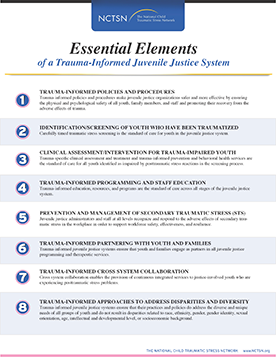
Helps programs who work with justice-involved youth better understand the steps to take to recognize and respond to the trauma-related needs of youth, family members, and staff working in the justice system.
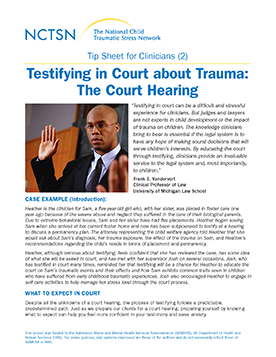
Helps mental health professionals preparing for a court hearing.
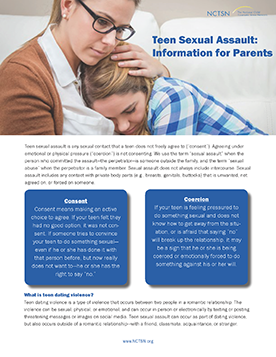
Defines key terms, including consent and coercion, and offers guidance to parents related to dating violence and sexual assault.
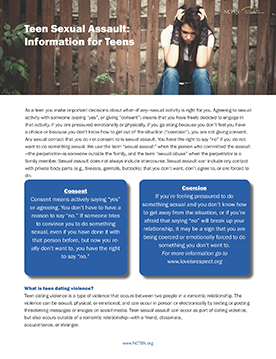
Defines key terms, including consent and coercion, and offers guidance to teens related to dating violence and sexual assault.
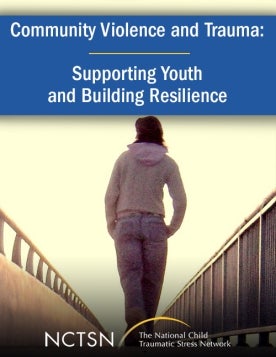
Discusses the processes leading maltreated youth to become involved in the juvenile justice system.