Understanding and Preventing Child Suicide for Native Military Families
Provides practical information to help start conversations with children who may be experiencing suicidal thoughts or behaviors.
September was first declared as National Suicide Prevention Awareness Month in 2008. Since then, September has been a time to acknowledge those affected by suicide, raise awareness, and connect individuals with suicidal ideation to treatment services. According to the CDC, each year more than 41,000 individuals die by suicide, leaving behind friends and family members to navigate the tragedy of their loss. Suicide is the 10th leading cause of death among adults in the U.S. and the 2nd leading cause of death among people aged 10-24 and these rates are increasing.
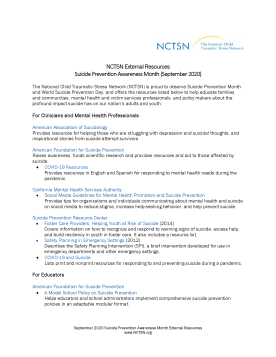
The National Child Traumatic Stress Network (NCTSN) has compiled a list of helpful resources for parents and caregivers, children and teens, mental health providers, educators and school staff, and policy makers.

Provides practical information to help start conversations with children who may be experiencing suicidal thoughts or behaviors.
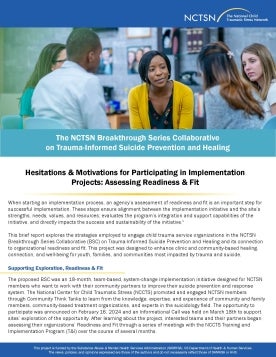
Explores strategies used to engage child trauma service organizations in the NCTSN Breakthrough Series Collaborative (BSC) on Trauma-Informed Suicide Prevention and Healing, emphasizing the importance of organizational readiness and fit.
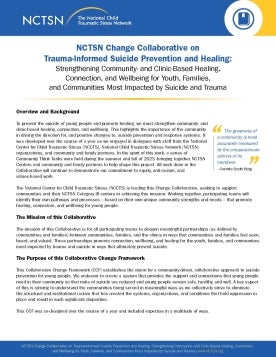
Highlights the importance of the community in driving the direction for, and positive changes to, suicide prevention and response systems.

Offers military parents information about military youth suicide.

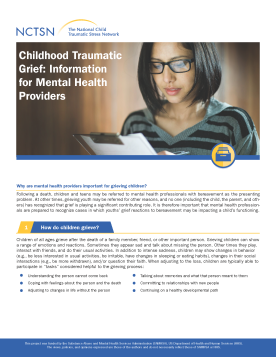
Offers information on why mental health providers are important for grieving children. This fact sheet outlines how children grieve, what Childhood Traumatic Grief is...

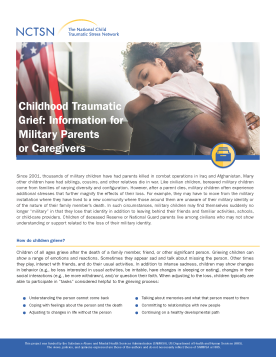
Provides information to military parents and caregivers on Childhood Traumatic Grief.

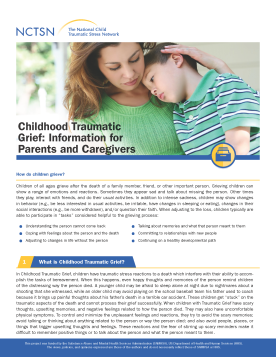
Provides information to parents and caregivers on Childhood Traumatic Grief.

Offers information on why pediatric providers are important for grieving children.

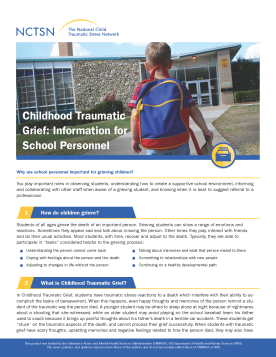
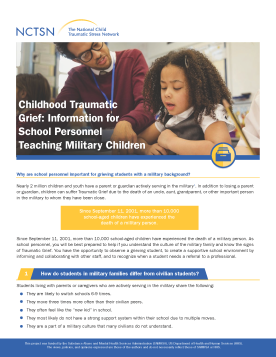
Offers information on why school personnel are important for grieving students. This fact sheet outlines how children grieve, what Childhood Traumatic Grief is, who develops Childhood Traumatic Grief, what traumatic stress reactions in Childhood Traumatic Grief can look like, the signs a student

Offers information on why school personnel are important for grieving students with a military background. This fact sheet outlines how students in military families differ from civilian students, how students grieve, what Childhood Traumatic Grief is, who develops Childhood Traumatic Grief, what

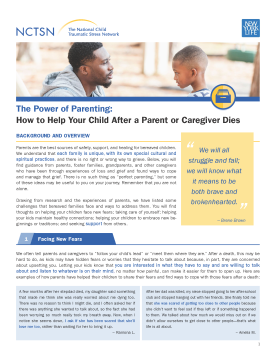
Offers guidance around helping children cope after the death of a loved one. Information is provided about how to face new fears in the context of bereavement, how grieving caregivers can take care of their own needs...

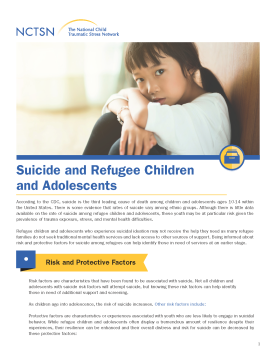
Offers information about risk and protective factors as related to suicide and refugee children and adolescents. This fact sheet gives strategies for talking with refugee children and adolescents about suicide.