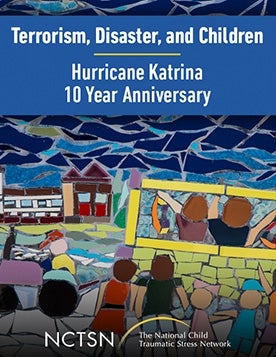
A Case Study of Post-Hurricane Katrina Reconstruction: A Decade of Trauma-Informed Programming in...
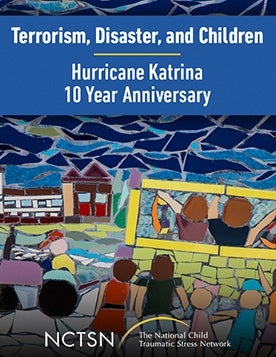
Discusses Project Fleur-de-lis (PFDL), an intermediate and long-term school-based mental health response to Hurricane Katrina.
The following resources on child trauma were developed by the NCTSN. To find a specific topic or resource, enter keywords in the search box, or filter by resource type, trauma type, language, or audience.
Discusses Project Fleur-de-lis (PFDL), an intermediate and long-term school-based mental health response to Hurricane Katrina.

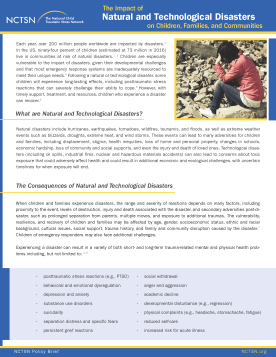
Provides information to policymakers about the impact of natural and technological disasters on children, families, and communities.
Remembers the 10th Anniversary of Hurricane Katrina. This webinar series discusses how 33 of our Network centers and 31 of our partners assisted in 22 states making the response to Katrina the greatest NCTSN response and recovery effort to date.

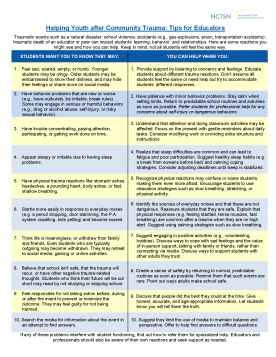
Lists common reactions educators might see in the students with whom they work and suggestions on how they may help after community trauma.

Provides parents and providers with information about the psychological impact of a shooting.
Describe the fundamentals of Psychological First Aid for Schools (PFA-S). This webinar offers information on how PFA-S helps to reduce the distress that school communities can experience after a disaster or violent event.

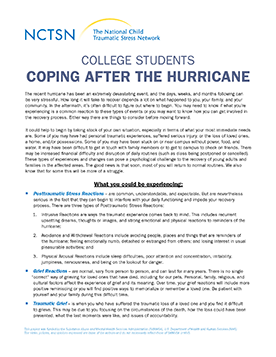
Supports students who are recovering from a hurricane. This fact sheet describes common reactions students may experience, suggests ways to enhance their capacity for coping, and gives a checklist of specific strategies students can use in the aftermath of the disaster.

Lets responders review PFA guidelines and assess their readiness to deliver PFA in the field.

Lets responders review PFA guidelines and assess their readiness to deliver PFA in the field.

Highlights the partnership of a Network Center with their local police department and how a trauma-informed response is making a difference.

Gives guidance on responding to disaster or terrorism events using the Psychological First Aid intervention. This evidence-informed approach helps to assist children, adolescents, adults, and families in the aftermath of disaster and terrorism.

Is the full set of appendices for the Psychological First Aid Field Operations Guide. These appendices are handouts for first responders, adults, children, and professionals responding to, or dealing with the aftermath of a disaster, mass violence, or terrorism event.