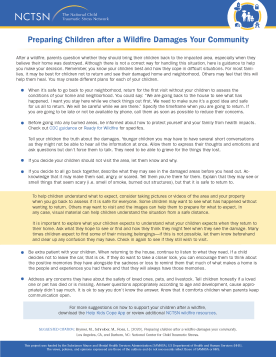
Preparing Children after a Wildfire Damages Your Community
Offers guidance to parents and caregivers on deciding whether or not a child should return to their home or neighborhood after it was damaged in a wildfire.
The following resources on child trauma were developed by the NCTSN. To find a specific topic or resource, enter keywords in the search box, or filter by resource type, trauma type, language, or audience.

Offers guidance to parents and caregivers on deciding whether or not a child should return to their home or neighborhood after it was damaged in a wildfire.

Serves as a guide for child-serving professionals and families new to the information available through the NCTSN including an overview of the NCTSN, along with a brief introduction to child traumatic stress, its causes, and consequences.

Provides external resources related to working with military-connected children and families.

Provides external resources related to National Homeless Youth Awareness Month.

Offers military parents and caregivers information about child trauma and resilience. This fact sheet includes information about what traumatic experiences are, how they impact military families, and common reactions children or teens may have.

Offers military parents and caregivers information about military youth substance use.

Offers information for youth to help them understand the differences between grief and traumatic grief, the signs and symptoms of traumatic grief in children and youth, and what to do to feel better.

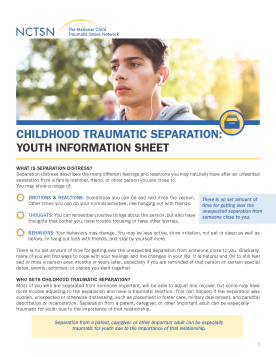
Provides information for youth about separation distress, when separation can be traumatic for children and youth, traumatic reactions to separation, and what to do to feel better.

Describe Los 12 Conceptos Centrales: Conceptos para entender las reacciones al estrés traumático en los niños y sus familias.

Describe cómo reaccionan los niños más pequeños, los escolares y los adolescentes ante acontecimientos traumáticos y ofrece sugerencias para que padres y cuidadores los puedan ayudar y apoyar.

Identifies existing NCTSN resources related to race and trauma. The list includes fact sheets and resource guides, offering information and suggestions for supporting African American children and families who have experienced trauma.

Offers juvenile justice professionals ways to care for themselves during the pandemic. This fact sheet includes questions to ask when monitoring stress as well as do’s and don’ts for strengthening resilience and caring for yourself and others.