Racial Injustice and Trauma: African Americans in the US
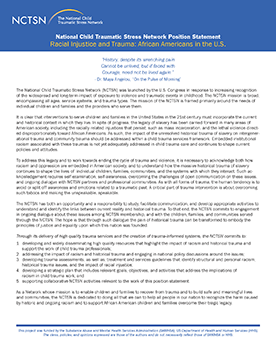
Emphasizes the importance of understanding how historical trauma has shaped the experiences of African Americans.
The following resources on child trauma were developed by the NCTSN. To find a specific topic or resource, enter keywords in the search box, or filter by resource type, trauma type, language, or audience.

Emphasizes the importance of understanding how historical trauma has shaped the experiences of African Americans.
Complements the Resource Parent Curriculum (RPC). This course is for resource families who are considering attending a RPC training to help them determine whether it would be worth their time to attend an entire workshop.

Provides information for staff in residential treatment centers on how to understand behavior through a trauma lens.

Details the importance of a holistic, multidisciplinary, multi-level approach to addressing the needs of youth with complex trauma in residential treatment settings.

This resource has been retired. Please see our other resources for more up-to-date information on supporting children and families living with trauma and intellectual and developmental disabilities.
Explores policy challenges and lessons learned in promoting and supporting trauma-informed schools.

Addresses community violence in the lives of youth.

Defines resilience and factors that enhance resilience in children following a potentially traumatic event.

Answers the question what is a trauma-informed child and family service system. This fact sheet details the components of a trauma-informed child and family service system.
Increases understanding of the impact that parents’ own unresolved trauma can have on their capacity to engage with child welfare personnel, negotiate different aspects of the child welfare system, and safely parent their children.
Features a trauma-informed caregiver discussing how to partner with a variety of providers including pediatricians.

Discusses research findings and real-life experiences to better understand how gang involvement affects young people’s emotional and psychological well-being.