Guiding Youth Through Loss and Betrayal
Depicts a client as she reveals, during her first therapy session, that she discovered her adoptive mother hid letters from her biological mother.
The following resources on child trauma were developed by the NCTSN. To find a specific topic or resource, enter keywords in the search box, or filter by resource type, trauma type, language, or audience.
Depicts a client as she reveals, during her first therapy session, that she discovered her adoptive mother hid letters from her biological mother.

Provides a glossary of terms for healthcare providers to better understand the concepts within trauma-informed integrated care.

Provides policymakers and other stakeholders an overview of trauma-informed integrated care and its importance for children who have experienced trauma.
Provides an overview of issues specific to military culture and family life, describes two models for treating military children with traumatic grief, and highlights a service member's experience.

Outlines and describes a range of points that practitioners and agencies should consider as they strive to assess, understand, and assist youth who are trafficked.
Offers a look at how the NCTSN has impacted the children and families it serves. This video includes snippets of Network members talking about being a part of the Network and how it has changed the work they do with children.
This webinar shows a therapy session with a family, two parents and their teenage daughter and son, who have been required to seek therapy after the parents had a physical altercation while intoxicated.

Provides policymakers and other stakeholders with an overview of child sex trafficking and its relationship to child trauma, as well as policy-relevant and child trauma-focused recommendations to assist them in their response to child sex trafficking. Updated March 2021.
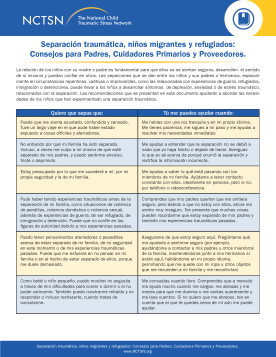
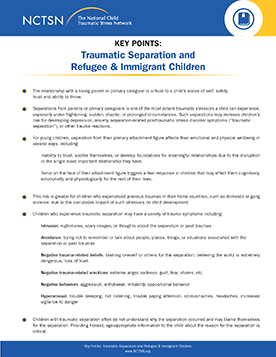
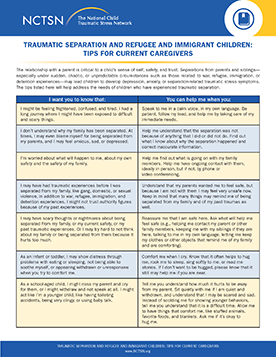
Describes the impact of traumatic separation, attachment, and attachment disruption on children and adolescents.

Provides policymakers and other stakeholders with an overview of intimate partner violence (IPV) and its relationship to child trauma, as well as policy-relevant and child trauma-focused recommendations to assist them in their response to intimate partner violence.

Features Youth Task Force members discussing Never Give Up, a video that offers hope for their peers who have experienced complex trauma.

Offers parents guidance on helping their children after a mass violence event. This fact sheet describes common reactions children may have, how parents can help them, and self-care tips after a violent event.