NCTSN Resource
Child Sex Trafficking: A Fact Sheet for Child Welfare Professionals
Type: Fact Sheet
Offers information regarding child sex trafficking to child welfare professionals.

The following resources on child trauma were developed by the NCTSN. To find a specific topic or resource, enter keywords in the search box, or filter by resource type, trauma type, language, or audience.
Offers information regarding child sex trafficking to child welfare professionals.
Offers information regarding child sex trafficking to educational professionals.
Offers information regarding child sex trafficking to juvenille justice professionals.
Offers information regarding child sex trafficking to medical professionals.
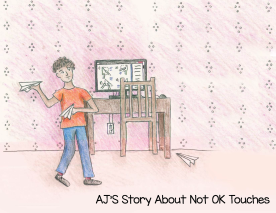
Is designed to be read by a supportive adult (parent/caregiver, therapist) to a child (ages 5-10, or as developmentally appropriate) who has engaged in a Not OK touch or problematic sexual behaviors with another child.
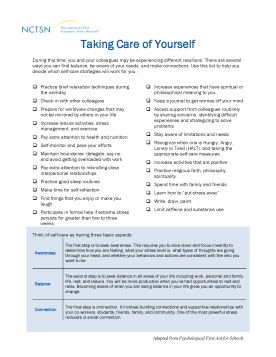
Offers providers a list of ideas for self-care strategies to use after a difficult event. This checklist outlines the three basics aspects of self-care including awareness, balance, and connection.
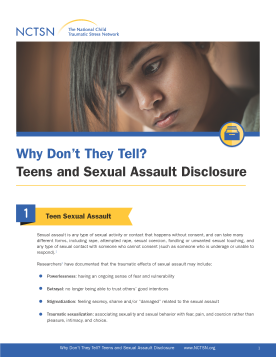
Offers information about teen sexual assault and disclosure. This fact sheet outlines why teens don't disclose sexual assault, the benefits of disclosure, and how to support teens after disclosure of a sexual assault.
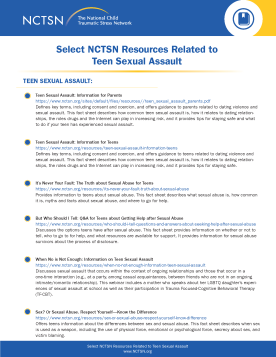
Identifies existing NCTSN resources related to teen sexual assault, acquaintance rape, sexual abuse, and child traumatic stress. The list includes fact sheets and webinars that offer information and tips for professionals, parents, and teens themselves.
Explores the importance of knowing the difference between appropriate and inappropriate school staff behavior with students.
Discusses prevention and intervention strategies for child sexual abuse. This webinar gives ways to help prevent child sexual abuse, as well as intervention strategies upon disclosure.
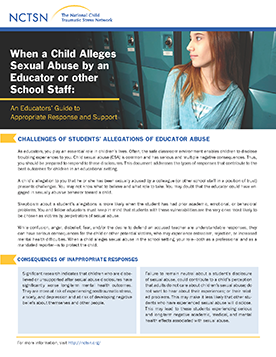
Provides educators and school staff information on the challenges that occur when there is an allegation of educator abuse.
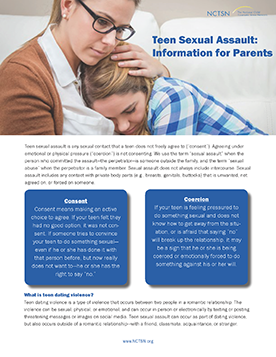
Defines key terms, including consent and coercion, and offers guidance to parents related to dating violence and sexual assault.