Bullying and Trauma
Highlights the intersection between bullying and trauma and offers ways adults can help them feel safe and supported.
The following resources on child trauma were developed by the NCTSN. To find a specific topic or resource, enter keywords in the search box, or filter by resource type, trauma type, language, or audience.

Highlights the intersection between bullying and trauma and offers ways adults can help them feel safe and supported.

Offers practical tips for children and caregivers to stay safe online, recognize the risks of cyberbullying and AI misuse, and promote healthy, responsible digital habits.

Explores the complex relationship between bullying and trauma. Highlights how both targets and perpetrators can be affected by their environments and how these experiences shape emotional and behavioral responses.

Supports exploration and decision-making processes when applying for a grant that will help support the selection, implementation, and sustainability planning of a trauma-specific intervention or practice.

Explores how relationships with people with lived experience are essential to trauma-informed care by emphasizing the importance of shared decision-making, mutual respect, and authentic collaboration.
Provides information for supporting the staff in a children’s advocacy center (CAC) setting who have been exposed to critical incidents and may have concerns about their physical or psychological safety.
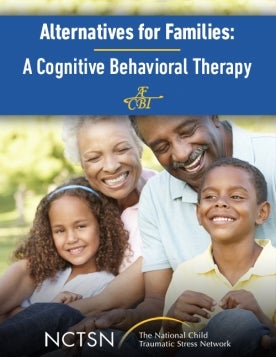
Orients you to the approach used in AF-CBT and to prepare you for an AF-CBT training. Alternatives for Families: A Cognitive Behavioral Therapy (AF-CBT) is an evidence-based treatment designed to improve the relationships...

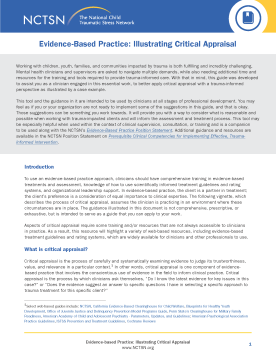
Describes the process of critical appraisal in evidence-based practice for clinicians working with children and families who have experienced trauma.

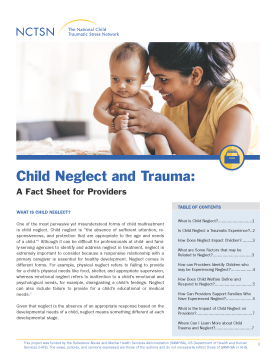
Offers child-serving providers information about child neglect and trauma.

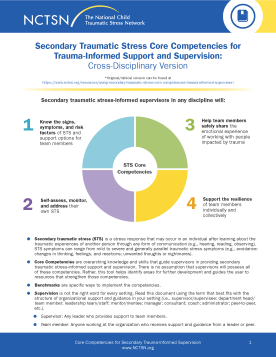
Identifies the core competencies that STS-informed supervisors in any discipline should have. This fact sheet defines terms, outlines benchmarks for each competency, and offers supervisors guidance on ways...

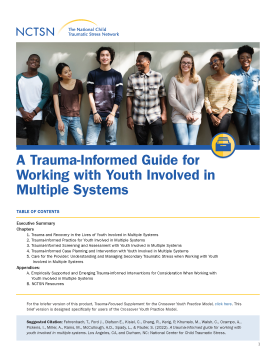
Offers guidance to help those working with youth involved in multiple systems (YIMS) and their families to use a traumatic stress perspective and provide trauma-informed care.

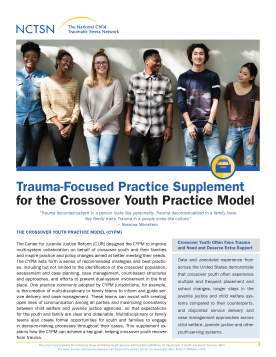
Is designed for those working with youth involved in multiple systems using the Crossover Youth Practice Model. This supplement is a brief version of A Trauma-Informed Guide for Working with Youth Involved in Multiple Systems developed specifically for staff...