The National Child Traumatic Stress Network
Published on The National Child Traumatic Stress Network (https://www.nctsn.org)

Home > Families and Caregivers

Parents and caregivers play an essential role in helping children and teenagers recover from traumatic events. These resources are for parents, adoptive parents, resource/foster parents, grandparents, caregivers, and all others who care for children and teens. The more caregivers learn about how traumatic events affect their children (whether toddler, school-age, teen, youth, or adult), the more they understand the reasons for their children’s behaviors and emotions, and the better prepared they are to help them cope. When children know that caring adults are working to keep them safe and support them in understanding their reactions to trauma, most can recover and go on to live healthy and productive lives.

NCTSN Resource

Staying Safe While Staying Connected: Tips for Caregivers [1]

Type: Fact Sheet

Provides information to parents and caregivers about keeping children safe online. This fact sheet describes why sexting is not smart and how sexts can be used to hurt or bully.

view [1]
NCTSN Resource

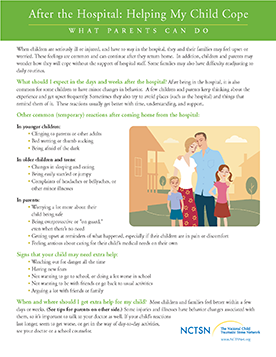
After the Hospital: Helping My Child Cope - What Parents Can Do [2]

Type: Fact Sheet

Offers tips parents can use to help themselves understand a child's behavior following a hospitalization. These tips assist parents with helping their child cope after a hospital stay.

view [2]
NCTSN Resource

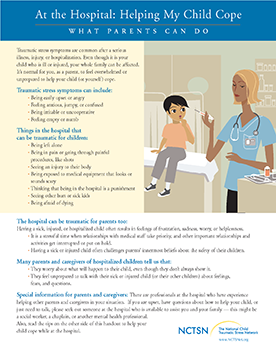
At the Hospital: Helping My Child Cope - What Parents Can Do [3]

Type: Tip Sheet

Offer tips on ways parents can cope with their concerns during their child's hospital stay. This fact sheet assists parents with ways to help their child cope with being in the hospital.

view [3]
NCTSN Resource

At the Hospital: Helping My Teen Cope - What Parents Can Do [4]

Type: Fact Sheet

Offers parents guidance to parents about how to support your teen while at the hospital before, during, or after a medical procedure.

view [4]
NCTSN Resource

Helping Teens with Traumatic Grief: Tips for Caregivers [5]

Type: Tip Sheet

Describes how teens may feel when struggling with the death of someone close and offers tips on what caregivers can do to help.

view [5]
NCTSN Resource

Complex Trauma: Facts for Caregivers [6]

Type: Fact Sheet

Helps parents and caregivers recognize the signs and symptoms of complex trauma and offers recommendations on how to help children heal.

view [6]
NCTSN Resource

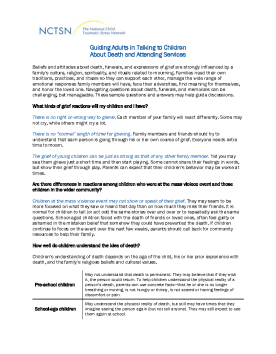
Guiding Adults in Talking to Children about Death and Attending Services [7]

Type: Fact Sheet

Provides ways to navigate questions about death, funerals, and memorials for children. This fact sheet discusses this challenging, but manageable, task and includes sample questions and answers to help guide discussions.

view [7]
NCTSN Resource

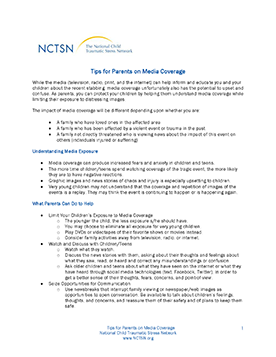
Tips for Parents on Media Coverage of a Stabbing [8]

Type: Tip Sheet

Gives information to parents and caregivers about media coverage following a stabbing. This tip sheet describes what parents can do to help their children, media exposure after events, and talks about what it is like when a family is a part of the story.

view [8]
NCTSN Resource

What You Should Expect from Treatment: Building Stronger Parent-Child Relationships [9]

Type: Fact Sheet

Highlights the importance of parent-child relationships and how to use treatment as a way to build these relationships.

view [9]
NCTSN Resource

Ready to Remember: Jeremy’s Journey of Hope and Healing [10]

Type: Special Resource

Tells the story of a 10-year-old boy's experience following the tragic death of his father. Jeremy is having a traumatic reaction and struggling at school and at home.

view [10]
NCTSN Resource

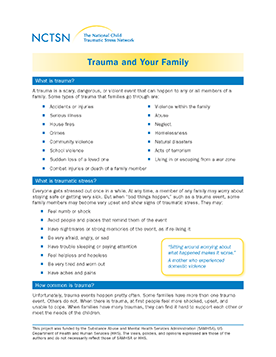
Trauma and Your Family [11]

Type: Fact Sheet

Offers parents and caregivers information about trauma. This fact sheet defines traumatic stress and describes how common it is, how it can impact a family, and things a family can do to cope with traumatic stress.

view [11]
NCTSN Resource

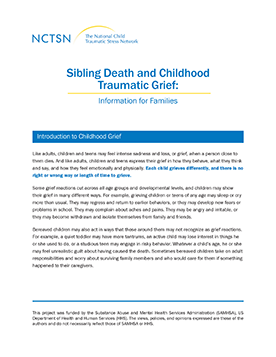
Sibling Death and Childhood Traumatic Grief: Information for Families [12]

Type: Fact Sheet

Offers parents and caregivers information about particular grief reactions that a child may have when a brother or sister dies, and provides tips to help the grieving child.

view [12]

Pages

  • FIRST [13]
  • PREVIOUS [14]
  • …
  • 5 [15]
  • 6 [16]
  • 7 [17]
  • 8 [14]
  • 9
  • 10 [18]
  • 11 [19]
  • 12 [20]
  • 13 [21]
  • NEXT [18]
  • LAST [21]

Source URL:https://www.nctsn.org/audiences/families-and-caregivers?page=8

Links
[1] https://www.nctsn.org/resources/staying-safe-while-staying-connected-tips-caregivers [2] https://www.nctsn.org/resources/after-hospital-helping-my-child-cope-what-parents-can-do [3] https://www.nctsn.org/resources/hospital-helping-my-child-cope-what-parents-can-do [4] https://www.nctsn.org/resources/hospital-helping-my-teen-cope-what-parents-can-do [5] https://www.nctsn.org/resources/helping-teens-traumatic-grief-tips-caregivers [6] https://www.nctsn.org/resources/complex-trauma-facts-caregivers [7] https://www.nctsn.org/resources/guiding-adults-talking-children-about-death-and-attending-services [8] https://www.nctsn.org/resources/tips-parents-media-coverage-stabbing [9] https://www.nctsn.org/resources/what-you-should-expect-treatment-building-stronger-parent-child-relationships [10] https://www.nctsn.org/resources/ready-remember-jeremys-journey-hope-and-healing [11] https://www.nctsn.org/resources/trauma-and-your-family [12] https://www.nctsn.org/resources/sibling-death-and-childhood-traumatic-grief-information-families [13] https://www.nctsn.org/print/898 [14] https://www.nctsn.org/print/898?page=7 [15] https://www.nctsn.org/print/898?page=4 [16] https://www.nctsn.org/print/898?page=5 [17] https://www.nctsn.org/print/898?page=6 [18] https://www.nctsn.org/print/898?page=9 [19] https://www.nctsn.org/print/898?page=10 [20] https://www.nctsn.org/print/898?page=11 [21] https://www.nctsn.org/print/898?page=12