The National Child Traumatic Stress Network
Published on The National Child Traumatic Stress Network (https://www.nctsn.org)

Home > Families and Caregivers

Parents and caregivers play an essential role in helping children and teenagers recover from traumatic events. These resources are for parents, adoptive parents, resource/foster parents, grandparents, caregivers, and all others who care for children and teens. The more caregivers learn about how traumatic events affect their children (whether toddler, school-age, teen, youth, or adult), the more they understand the reasons for their children’s behaviors and emotions, and the better prepared they are to help them cope. When children know that caring adults are working to keep them safe and support them in understanding their reactions to trauma, most can recover and go on to live healthy and productive lives.


Partner-In Resource

Helping Children Cope with the COVID-19 Pandemic [1]

Type: Fact Sheet

Helps parents and caregivers address their children's concerns and worries arising from the COVID-19 pandemic and the disruptions of normal life that we are experiencing.

view [1]
Partner-In Resource

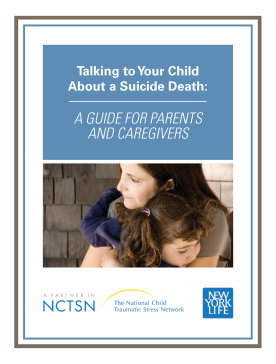
Talking to Your Child About a Suicide Death: A Guide for Parents and Caregivers [2]

Type: Fact Sheet

Provides information to parents and caregivers on how to talk to children about a suicide death.

view [2]
Partner-In Resource

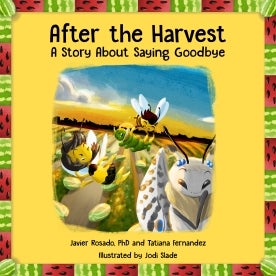
After the Harvest: A Story About Saying Goodbye [3]

Type: Special Resource

Tells the story of several illustrated characters who are coping with having to say goodbye when the family of a school-age boy, Gabriel, announces that they will need to move and relocate yet again in search for seasonal farm-work. The story highlights the unique stressors young children from mi

view [3]
Partner-In Resource

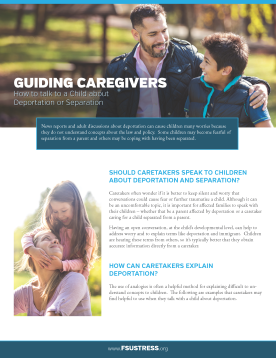
Guiding Caregivers: How to Talk to a Child about Deportation or Separation [4]

Type: Fact Sheet

Offers guidance on how to talk with children about deportation or separation.

view [4]
Partner-In Resource

Una Guía para los Cuidadores: Cómo hablarle a un niño/a sobre la deportació o separación [5]

Type: Fact Sheet


view [5]
Partner-In Resource

After the Injury [6]

Type: Website

Helps parents and caregivers understand children's reactions to injuries, and advises them on how they can help children respond in healthy ways.

view [6]
Partner-In Resource

After a Crisis: Helping Young Children Heal [7]

Type: Fact Sheet

Offers tips to parents on how to help young children, toddlers, and preschoolers heal after a traumatic event.

view [7]

Pages

  • FIRST [8]
  • PREVIOUS [9]
  • …
  • 5 [10]
  • 6 [11]
  • 7 [12]
  • 8 [13]
  • 9 [14]
  • 10 [15]
  • 11 [16]
  • 12 [9]
  • 13

Source URL:https://www.nctsn.org/audiences/families-and-caregivers?page=12

Links
[1] https://www.nctsn.org/resources/helping-children-cope-with-the-COVID-19-pandemic [2] https://www.nctsn.org/resources/talking-to-your-child-about-a-suicide-death-a-guide-for-parents-and-caregivers [3] https://www.nctsn.org/resources/after-the-harvest-a-story-about-saying-goodbye [4] https://www.nctsn.org/resources/guiding-caregivers-how-talk-child-about-deportation-or-separation [5] https://www.nctsn.org/resources/una-guia-para-los-cuidadores-como-hablarle-un-ninoa-sobre-la-deportacio-o-separacion [6] https://www.nctsn.org/resources/after-injury [7] https://www.nctsn.org/resources/after-crisis-helping-young-children-heal [8] https://www.nctsn.org/print/898 [9] https://www.nctsn.org/print/898?page=11 [10] https://www.nctsn.org/print/898?page=4 [11] https://www.nctsn.org/print/898?page=5 [12] https://www.nctsn.org/print/898?page=6 [13] https://www.nctsn.org/print/898?page=7 [14] https://www.nctsn.org/print/898?page=8 [15] https://www.nctsn.org/print/898?page=9 [16] https://www.nctsn.org/print/898?page=10