The National Child Traumatic Stress Network
Published on The National Child Traumatic Stress Network (https://www.nctsn.org)

Home > Families and Caregivers

Parents and caregivers play an essential role in helping children and teenagers recover from traumatic events. These resources are for parents, adoptive parents, resource/foster parents, grandparents, caregivers, and all others who care for children and teens. The more caregivers learn about how traumatic events affect their children (whether toddler, school-age, teen, youth, or adult), the more they understand the reasons for their children’s behaviors and emotions, and the better prepared they are to help them cope. When children know that caring adults are working to keep them safe and support them in understanding their reactions to trauma, most can recover and go on to live healthy and productive lives.

NCTSN Resource

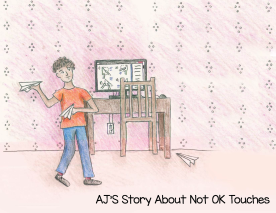
AJ's Story About Not OK Touches [1]

Type: Special Resource

Is designed to be read by a supportive adult (parent/caregiver, therapist) to a child (ages 5-10, or as developmentally appropriate) who has engaged in a Not OK touch or problematic sexual behaviors with another child.

view [1]
NCTSN Resource

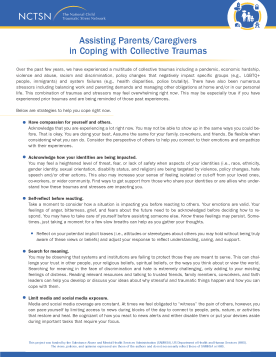
Assisting Parents and Caregivers in Coping with Collective Traumas [2]

Type: Tip Sheet

Offers strategies to help parents and caregivers cope with collective traumas. This fact sheet also provides guidance on what parents and caregivers can do to care for their children as they cope. Updated May 2024. 

view [2]
NCTSN Resource

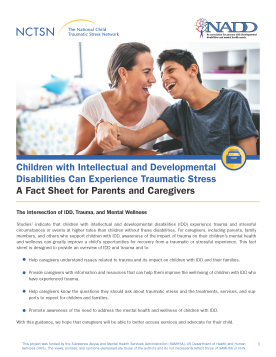
Children with Intellectual and Developmental Disabilities Can Experience Traumatic Stress: A Fact... [3]

Type: Fact Sheet

Offers parents and caregivers information about how children with intellectual and developmental disabilities (IDD) experience traumatic stress.

view [3]
NCTSN Resource

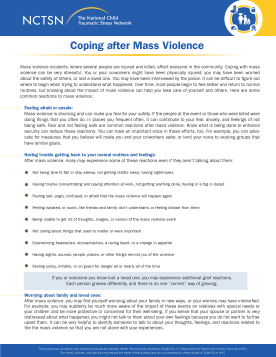
Coping After Mass Violence [4]

Type: Fact Sheet

Offers information on coping after mass violence. This fact sheet provides common reactions children and families may be experiencing after a mass violence event, as well as what they can do to take care of themselves. 

view [4]
NCTSN Resource

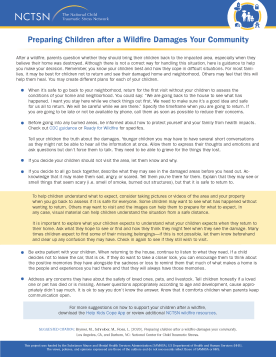
Preparing Children after a Wildfire Damages Your Community [5]

Type: Fact Sheet

Offers guidance to parents and caregivers on deciding whether or not a child should return to their home or neighborhood after it was damaged in a wildfire.

view [5]
NCTSN Resource

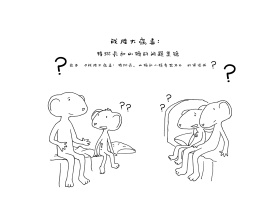
Fighting the Big Virus: Trinka's and Sam's Questions (Simplified Chinese) [6]

Type: Resource Guide

Provides questions that Trinka and Sam have about the big virus and ways to answer those questions.

view [6]
NCTSN Resource

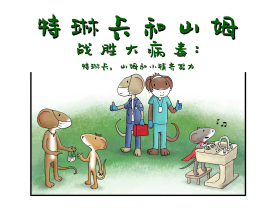
Trinka and Sam Fighting the Big Virus: Trinka, Sam, and Littletown Work Together (Simplified... [7]

Type: Special Resource

Helps young children and families talk about their experiences and feelings related to COVID-19 and the need to shelter in place. In the story, the coronavirus has spread to Littletown causing changes in everyone's lives.

view [7]
NCTSN Resource

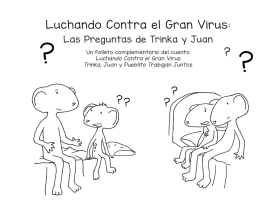
Luchando Contra el Gran Virus: Las Peguntas de Trinka y Juan [8]

Type: Special Resource

Ayuda a los niños más pequeños y sus familias a hablar sobre sus experiencias y sentimientos relacionados con COVID-19 y la necesidad de permanecer en casa. En el cuento, el coronavirus se ha extendido por todo Littletown, provocando cambios en la vida de todos.

view [8]
NCTSN Resource

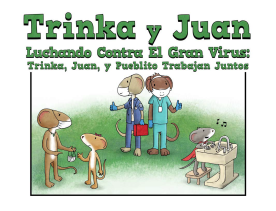
Trinka y Juan Luchando Contra El Gran Virus: Trinka, Juan, y Pueblito Trabajan Juntos [9]

Type: Special Resource

Presenta algunas de las preguntas que tienen Trinka y Sam sobre el gran virus y formas de responderlas. Esta historia acompañante incluye preguntas comunes que los niños puedan tener sobre COVID-19.

view [9]
NCTSN Resource

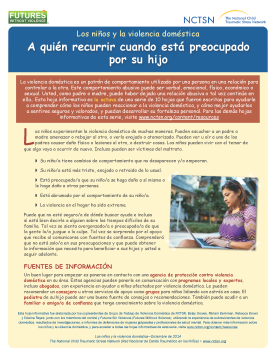
A quién recurrir cuando está preocupado por su hijo [10]

Type: Fact Sheet

Ofrece información para los padres sobre cómo hablar con los niños sobre violencia doméstica. Esta hoja informativa habla sobre dónde pueden acudir los padres si están preocupados por su hijo.
 

view [10]
NCTSN Resource

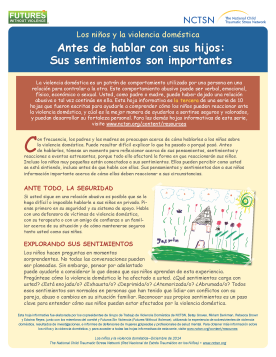
Antes de hablar con sus hijos: Sus sentimientos son importantes [11]

Type: Fact Sheet

Ofrece información para los padres sobre cómo hablar con los niños sobre violencia doméstica. Esta hoja informativa habla de la importancia de reconocer y lidiar con los sentimientos propios antes de hablar con los niños.

view [11]
NCTSN Resource

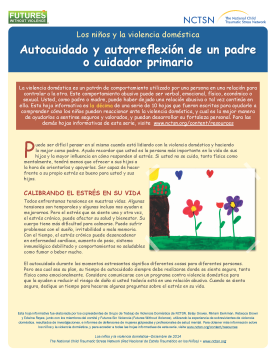
Autocuidado y autorreflexión de un padre o cuidador primario [12]

Type: Fact Sheet

Ofrece ideas sobre el autocuidado para los padres impactados por la violencia doméstica. Esta hoja informativa subraya cómo el estrés puede afectar a los padres y ofrece sugerencias para lidiar con el estrés.

view [12]

Pages

  • FIRST [13]
  • PREVIOUS [14]
  • 1 [13]
  • 2 [15]
  • 3 [16]
  • 4 [14]
  • 5
  • 6 [17]
  • 7 [18]
  • 8 [19]
  • 9 [20]
  • …
  • NEXT [17]
  • LAST [21]

Source URL:https://www.nctsn.org/audiences/families-and-caregivers?page=4

Links
[1] https://www.nctsn.org/resources/ajs-story-about-not-ok-touches [2] https://www.nctsn.org/resources/assisting-parents-caregivers-in-coping-with-collective-traumas [3] https://www.nctsn.org/resources/children-with-intellectual-and-developmental-disabilities-can-experience-traumatic-stress-for-parents-and-caregivers [4] https://www.nctsn.org/resources/coping-after-mass-violence [5] https://www.nctsn.org/resources/preparing-children-after-a-wildfire-damages-your-community [6] https://www.nctsn.org/resources/fighting-the-big-virus-trinka-and-sam-questions-sch [7] https://www.nctsn.org/resources/trinka-and-sam-fighting-the-big-virus-sch [8] https://www.nctsn.org/resources/fighting-the-big-virus-trinka-and-sam-questions-sp [9] https://www.nctsn.org/resources/trinka-and-sam-fighting-the-big-virus-sp [10] https://www.nctsn.org/resources/children-and-domestic-violence-where-turn-if-you-are-worried-about-your-child-sp [11] https://www.nctsn.org/resources/children-and-domestic-violence-you-talk-your-children-how-your-feelings-matter-sp [12] https://www.nctsn.org/resources/children-and-domestic-violence-parents-self-care-and-self-reflection-sp [13] https://www.nctsn.org/print/898 [14] https://www.nctsn.org/print/898?page=3 [15] https://www.nctsn.org/print/898?page=1 [16] https://www.nctsn.org/print/898?page=2 [17] https://www.nctsn.org/print/898?page=5 [18] https://www.nctsn.org/print/898?page=6 [19] https://www.nctsn.org/print/898?page=7 [20] https://www.nctsn.org/print/898?page=8 [21] https://www.nctsn.org/print/898?page=12