According to the National Coalition Against Domestic Violence, an average of 20 people are physically abused by intimate partners every minute in the United States. This equates to more than 10 million abuse victims annually. Intimate Partner Violence (IPV) occurs when an individual purposely causes harm or threatens the risk of harm to any past or current partner or spouse. Intimate partner violence can cause physical injury, psychological trauma, and even death. The devastating consequences can cross generations and last a lifetime. Millions of children are exposed to intimate partner violence every year. This exposure can have long-lasting negative effects on children's emotional wellbeing, along with social and academic functioning. Children who live with intimate partner violence can heal from their experiences. One of the most important factors that helps youth recover after exposure to intimate partner violence is a strong relationship with a caring, nonviolent caregiver, along with trauma-informed care. Talking to youth about intimate partner violence is critical. The NCTSN has resources to help caregivers, providers, welfare workers, and school staff support, listen, and talk to children affected by intimate partner violence.

Children and Domestic Violence for Parents Fact Sheet Series
Offers support to parents whose children have been affected by intimate partner violence. This fact sheet series provides education to support their strength and recovery.

Children and Domestic Violence: Before You Talk to Your Children: How Your Feelings Matter
This fact sheet explains the importance of recognizing and dealing with one's own feelings before talking to children. Also available in Spanish.
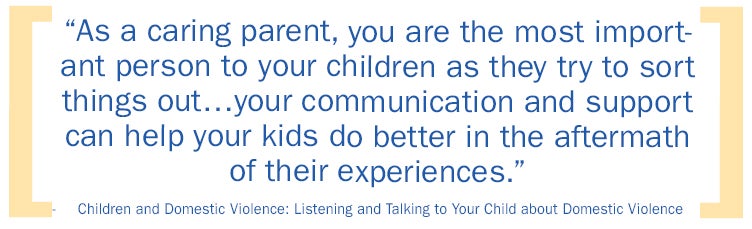
Children and Domestic Violence: Listening and Talking to Your Child about Domestic Violence
Discusses the importance of listening and talking to children about intimate partner violence. Also available in Spanish.
Children and Domestic Violence: How Does Domestic Violence Affect Children?
Provides information on how intimate partner violence can affect children. Also available in Spanish and Italian.
Children and Domestic Violence: Celebrating Your Child's Strengths
This fact sheet helps you understand how children may react to intimate partner violence, and how to best help them feel safe and valued along with developing personal strength. Also available in Spanish.
Children and Domestic Violence: Managing Challenging Behavior of Children Living with Domestic Violence
Discusses how to manage challenging behavior in children living in domestic violence situations. Also Available in Spanish and Italian.
Helping Your Child Navigate a Relationship With the Abusive Parent
This fact sheet discusses how to help a child navigate a relationship with an abusive parent. Also available in Spanish.
Children and Domestic Violence: Keeping Your Children Safe and Responding to Their Fears
Provides guidance on how to keep children safe and respond to their fears. Also available in Spanish.
Addressing Perpetration of Intimate Partner Violence in Families Affected by Substance Use
This webinar describes the connections between intimate partner violence and substance use. This webinar discusses the impact of challenges on parenting and children and suggests strategies for working with affected families.

Creating Supportive Environments When Scary Things Happen
Offers guidance on creating supportive environments for youth when scary things happen. This fact sheet includes information on routines, rhythm, and rituals.
Dealing with a Reluctant Disclosure of Sexual Exploitation
This webinar presents Jordyn, age 16, who lives with her mother, father, and two younger siblings and has been exposed to intimate partner violence and parental substance use, as well as prolonged periods of separation while her father was deployed in Afghanistan. While her dad started treatment four months ago for PTSD and substance use and is beginning to make some progress, Jordyn started treatment just two weeks ago to address irritability, depression, trouble falling asleep, and nightmares. Worried her family may lose their home, Jordyn got a job; now she is failing classes and feeling totally overwhelmed. Early in treatment, the therapist assesses Jordyn’s safety and her heightened level of distress. As Jordyn becomes angry the therapist attempts to re-engage her by identifying supportive people in her life, and Jordyn accidentally reveals possible exploitation by her older boyfriend. The therapist gathers the details she needs for the authorities while supporting Jordyn and trying to keep her safe.
Assessing and Treating Interpersonal Violence in the Wake of COVID-19
Describes assessment strategies and evidence-based interventions for interpersonal violence in the wake of the COVID-19 pandemic across development, with a focus on how to ask children about their trauma experiences and responses. This webinar also covers Child-Parent Psychotherapy (CPP), features of problematic sexual behaviors (PSB) in children 12 years and younger, and the use of Trauma-Focused Cognitive Behavioral Therapy (TF-CBT) for youth who experience interpersonal trauma including PSB and their non-offending parents/caregivers.
The Needs of Children in Domestic Violence Shelters
Provides information on how trauma from intimate partner violence impacts children and how best to serve these children's needs. This guide discusses the behavioral and mental health impact of intimate partner violence on children and parents. It also provides ways to teach positive parenting skills, assessment tools, and lists resources for service providers working with families.
|


