In 2022, the U.S. reported that an estimated 558,899 children were victims of child abuse or neglect and 1,990 children died as a result of abuse or neglect (National Children’s Alliance). The impact of physical and sexual abuse on a child’s life can be far-reaching. Some children develop traumatic stress reactions. Prevention is possible when community programs and systems are engaged, supportive, and include services focusing on parental resilience, trauma history, nurturing and attachment, social connections, knowledge about parenting and child development, social and emotional competence of children, and concrete supports for parents. The NCTSN has resources for children and families, educators, advocates and policy makers, child welfare and juvenile justice professionals, and mental health providers.

Age-Related Reactions to a Traumatic Event
Describes how young children, school-age children, and adolescents react to traumatic events and offers suggestions on how parents and caregivers can help and support them. Also available in Spanish, Dari, Pashto, Ukranian, Russian, German, Japanese, Arabic, Polish, and ASL.

Child Physical Abuse Fact Sheet
Explains the prevalence and consequences of child physical abuse. This fact sheet offers guidance on how to recognize and help children who are being physically abused.
The Hope of Family Focused Interventions for Child Abuse
Outlines the causes and consequences of child abuse. This video describes how family-focused interventions can help families make a new beginning.
What You Should Expect from Treatment: Building Stronger Parent-Child Relationships
Highlights the importance of parent-child relationships and how to use treatment as a way to build these relationships. This tip sheet outlines qualities that treatment programs should have in order to build stronger parent-child relationships.
Reducing the Risk of Child Sexual Abuse
Discusses prevention and intervention strategies for child sexual abuse. This webinar gives ways to help prevent child sexual abuse, as well as intervention strategies upon disclosure.
Child Sexual Abuse Fact Sheet: For Parents, Teachers, and Other Caregivers
Defines and answers commonly-asked questions about child sexual abuse. This fact sheet outlines myths and facts about child sexual abuse and provides tips to help protect children. Also available in Spanish and Italian.
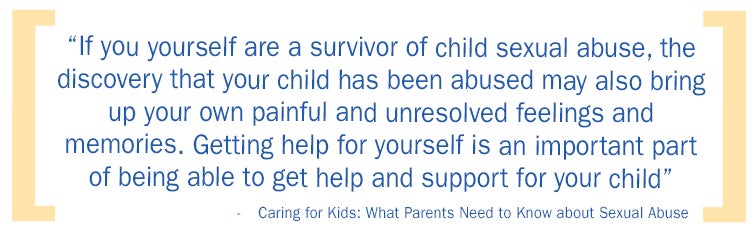
Caring for Kids: What Parents Need to Know about Sexual Abuse
Provides parents and caregivers with tools to help them support children who have been victims of sexual abuse, information on the importance of talking to children and youth about body safety, and guidance on how to respond when children disclose sexual abuse. This fact sheet series also includes advice on how to cope with the shock of intrafamilial abuse and with the emotional impact of legal involvement in sexual abuse cases. Also available in Spanish.
Coping with the Shock of Intrafamilial Sexual Abuse: Information for Parents and Caregivers
Provides information for parents and caregivers on intrafamilial sexual abuse. This fact sheet, a part of the Caring for Kids: What Parents Needs to Know About Sexual Abuse,describes what intrafamilial sexual abuse is, its effects on children, its impact on a family, coping for parents, and how to move forward. Also available in Spanish and Italian.

Talking to Youth When Scary Things Happen
Offers guidance on talking with children and youth when scary things happen. This fact sheet includes information on checking in with yourself, clarifying your goal, providing information, reflecting, asking helpful questions, going slow, labeling emotions, validating, and reducing media exposure.
|


