Parents and caregivers play an essential role in helping children and teenagers recover from traumatic events. The more caregivers learn about how traumatic events affect their children (whether toddler, school-age, youth, teen, or young adult), the more they understand the reasons for their children’s behaviors and emotions, and the better prepared they are to help them cope. When children know that caring adults are working to keep them safe and support them in understanding their reactions to trauma, most can recover and go on to live healthy and productive lives. The NCTSN has resources for parents, adoptive parents, resource/foster parents, grandparents, caregivers, and all others who care for children and teens to help support youth who have experienced trauma.

What is Child Trauma?
Discusses the differences between acute, chronic, and complex trauma and how each trauma type uniquely affects children. Emphasizes the importance of recognizing their overlap to provide effective trauma-informed care.

Age-Related Reactions to a Traumatic Event
Describes how young children, school-age children, and adolescents react to traumatic events and offers suggestions on how parents and caregivers can help and support them. Also available in Spanish, Dari, Pashto, Ukranian, Russian, German, Japanese, Arabic, Polish, and ASL.
Childhood Traumatic Grief: Information for Parents and Caregivers
Provides information to parents and caregivers on Childhood Traumatic Grief. This fact sheet outlines how children grieve, what Childhood Traumatic Grief is, who develops Childhood Traumatic Grief, the signs a child might have Childhood Traumatic Grief, and what parents or caregivers can do to help.
Understanding Trauma Responses in Children with Intellectual and Developmental Disabilities and When to Seek Help
Outlines what responses to trauma could look like in children with IDD. This fact sheet discusses how a child with IDD might respond to traumatic or stressful experiences, how a caregiver's response to the child's behavior may influence recovery, what a trauma reminder is, common responses to a traumatic event, and when to seek help.
Caring for Kids: What Parents Need to Know about Sexual Abuse
Provides parents and caregivers with tools to help them support children who have been victims of sexual abuse, information on the importance of talking to children and youth about body safety, and guidance on how to respond when children disclose sexual abuse. This fact sheet series also includes advice on how to cope with the shock of intrafamilial abuse and with the emotional impact of legal involvement in sexual abuse cases.
The Power of Parenting: How to Help Your Child After a Parent or Caregiver Dies
Offers guidance around helping children cope after the death of a loved one. Information is provided about how to face new fears in the context of bereavement, how grieving caregivers can take care of their own needs, how to help children hold on to the old while embracing the new and how to create comforting connections. In this fact sheet, co-developed by parents and professionals, parents share their knowledge gained from experience and provide practical, real life examples, that can help support families and their children who are experiencing grief and bereavement.
For Military Parents and Caregivers: Supporting Your Children Throughout Deployment
Provides military parents and caregivers with several ways to mitigate the negative effects of deployment including maintaining well-being, fostering positive family dynamics, and using effective parenting strategies. When a parent/caregiver is deployed or faces an increased operational tempo, especially to a combat zone, this can be one of the most significant stressors on a military family. Although military children may exhibit behavioral and emotional changes, including worry about the safety of their deployed parent/caregiver (and even you), most military children will demonstrate remarkable resilience.
Coping After Mass Violence
Offers information on coping after mass violence. This fact sheet provides common reactions children and families may be experiencing after a mass violence event, as well as what they can do to take care of themselves.
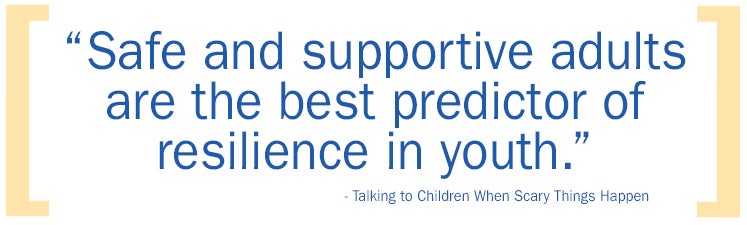
Talking to Children When Scary Things Happen
This partner-in resource with the Center for Resilience + Wellbeing offers guidance on talking with children and youth when scary things happen. This fact sheet includes information on checking in with yourself, clarifying your goal, providing information, reflecting, asking helpful questions, going slow, labeling emotions, validating, and reducing media exposure.
|


