Many ill or injured children and their families experience traumatic stress reactions following a life-threatening illness, injury, or painful medical procedure. Pediatric medical traumatic stress is a set of psychological and physiological responses of children and their families to serious medical events. Following these medical events, 20-30% of parents and 15-25% of children and siblings experience persistent medical traumatic stress reactions that can impair day-to-day functioning, affect adherence to medical treatment, and make recovery more difficult. The reactions can include re-experiencing and thinking a lot about the event, avoidance, fear, and hyperarousal symptoms where the body’s stress response system stays “on” long after the medical event has occurred. While many pediatric patients and their families do well, reactions vary in intensity and can be adaptive or may become disruptive and distressing. The NCTSN has resources for parents, children, healthcare professionals, and providers to help support children and families who have experienced medical trauma.

Pediatric Medical Traumatic Stress Toolkit for Health Care Providers
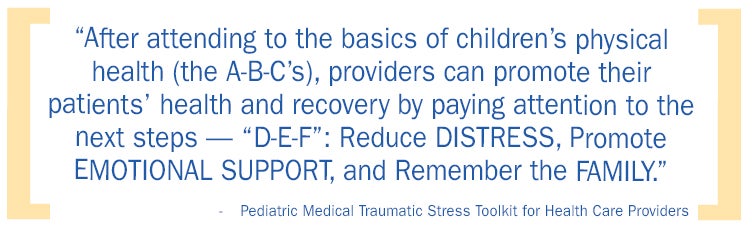
Provides tools to guide medical professionals in effectively assessing and treating medical traumatic stress in children and families. This toolkit helps providers address the emotional and physical side of trauma. It is anchored by the D-E-F Protocol for trauma-informed care, which helps providers respond to Distress, offer Emotional support, and ensure Family-centered care for traumatized children and families. This toolkit includes guidebooks on implementing trauma-informed care, with case studies and examples, as well as patient handouts for children and parents with evidence-based tips and activities.

Traumatic Stress in Ill or Injured Children: After the ABC'S Consider the DEF's
Offers information about distress, emotional support, and working with families after a medical trauma. These reference cards are a way to quickly screen if a parent, caregiver, or child is at risk for ongoing traumatic stress reactions after a medical procedure or trauma.
At the Hospital: Helping My Child Cope - What Parents Can Do
This fact sheet offers tips on ways parents can cope with their concerns during their child's hospital stay. It also assists parents with ways to help their child cope with being in the hospital.
After the Hospital: Helping My Child Cope - What Parents Can Do
Offers tips parents can use to help themselves understand a child's behavior following a hospitalization. These tips also assist parents with helping their child cope after a hospital stay.
After the Hospital: Getting Back to a Schedule
This fact sheet contains information about how to get back to a schedule after a hospital stay and offers activities and reflective questions for children to answer.
Medical Traumatic Stress: What Health Care Providers Need To Know
Provides a brief overview of medical traumatic stress, the D-E-F protocol (Reduce Distress, Promote Emotional Support, and Remember the Family) and traumatic stress reactions. This brochure is one component of the Pediatric Medical Traumatic Stress Toolkit for Health Care Providers, a compendium of tools to guide medical professionals in effectively assessing and treating medical traumatic stress in children and families.
When It Hurts: Dealing with Pain
Offers children guidance with information and activities to help cope with pain after an injury, illness, or medical stay. This fact sheet guides medical professionals in effectively assessing and treating medical traumatic stress in children and families.
Age-Related Reactions to a Traumatic Event
Describes how young children, school-age children, and adolescents react to traumatic events and offers suggestions on how parents and caregivers can help and support them. Also available in Spanish, Dari, Pashto, Ukrainian, Russian, German, Japanese, Arabic, Korean, and ASL.
Integrated Care Approaches to Traumatic Stress in Children with Chronic Health Conditions
This webinar offers information on integrated care approaches to supporting children and families dealing with traumatic stress and chronic health conditions. The webinar series includes the perspectives of clinicians, healthcare providers, and parents.

Helping a Family with Traumatic Stress When a Child Has Cancer
Discusses an integrated approach to recognizing and responding to child and family traumatic stress when a child has cancer. This webinar explores the impact of the diagnoses and treatment on the child and family, discusses cultural considerations that may intersect with a family's response, and describes approaches for assessing, managing, and treating traumatic stress.
Creating Supportive Environments When Scary Things Happen
This partner-in resource offers guidance on creating supportive environments for youth when scary things happen. The fact sheet includes information on routines, rhythm, and rituals.
Health Care Toolbox
Offers best practice recommendations and clinical guidelines for working with children and families who have experienced serious illness or injury. This website, developed by the Center for Pediatric Traumatic Stress, is intended for health care professionals, to help improve comprehensive care for children and their families.
|


