The National Child Traumatic Stress Network
Published on The National Child Traumatic Stress Network (https://www.nctsn.org)

Home > What is Child Trauma? > Trauma Types > Disasters > COVID-19 Resources

Public health is the science of protecting and improving the health of people and their communities. This work is achieved by promoting healthy lifestyles, researching disease and injury prevention, and detecting, preventing and responding to infectious diseases. Overall, public health is concerned with protecting the health of entire populations. These populations can be as small as a local neighborhood, or as big as an entire country or region of the world (Center for Disease Control and Prevention, 2020).

When public health emergencies occur, there is rapidly evolving information that may be confusing and lead to feelings of anxiety. In the event of an outbreak in your community, your first concern is about how to protect and take care of yourself, your children and your family. Knowing important information about the outbreak and learning how to be prepared can reduce your stress and help calm likely anxieties.

These resources will help you think about how an infectious disease outbreak or pandemic might affect your family— both physically and emotionally—and what you can do to help your family cope in times of public health emergencies.

NCTSN Resource

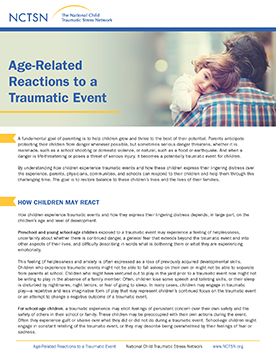
Age-Related Reactions to a Traumatic Event [1]

Type: Fact Sheet

Describes how young children, school-age children, and adolescents react to traumatic events and offers suggestions on how parents and caregivers can help and support them.

view [1]
NCTSN Resource

Psychological First Aid (PFA) Online [2]

Type: eLearning Course

Includes a 5-hour interactive course that puts the participant in the role of a provider in a post-disaster scene. This course is for individuals new to disaster response who want to learn the core goals of PFA, as well as for seasoned practitioners who want a review.

view [2]
NCTSN Resource

Supporting Children and Teens Who Experienced Loss During This Holiday Season [3]

Type: Fact Sheet

Offers parents and caregivers strategies and ideas for supporting children and teens during the holiday season. This fact sheet provides tips that parents can use to talk to their children and teens about how they are feeling and changes to holiday celebrations and traditions.

view [3]
NCTSN Resource

Assessing and Treating Interpersonal Violence in the Wake of COVID-19 [4]

Type: Webinar

Describes assessment strategies and evidence-based interventions for interpersonal violence in the wake of the COVID-19 pandemic across development, with a focus on 1) how to ask children about their trauma experiences and responses; 2) the use of Child-Parent Psychotherapy (CPP) for young...

view [4]
NCTSN Resource

How is the COVID-19 Summit Supporting the Long-Term Recovery of Our Nation's Children and... [5]

Type: Report

Highlights the importance of supporting children and families during the COVID-19 pandemic. This report offers insight into how the NCTSN gathered Network expertise in some areas that impacted children and families the most during the pandemic.

view [5]
NCTSN Resource

Applying Evidence-Based Treatments for Child Traumatic Stress Reactions to COVID-19-Related Deaths [6]

Type: Webinar

Describes trauma-focused evidence-based treatments (EBT) for children and teens who develop traumatic stress reactions, with specific applications to familial deaths during COVID-19 for . . .

view [6]
NCTSN Resource

Child and Adolescent Traumatic Stress Reactions to COVID-19-Related Deaths [7]

Type: Webinar

Describes aspects of COVID-19-related deaths that can contribute to children’s traumatic stress reactions, with an emphasis on developmental considerations and behavioral health disparities. To date, more than 140,000 children have lost a parent or primary caregiver to COVID-19-related deaths.

view [7]
NCTSN Resource

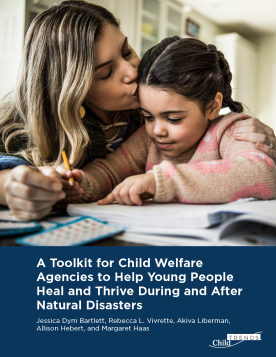
A Toolkit for Child Welfare Agencies to Help Young People Heal and Thrive During and After... [8]

Type: Special Resource

Helps child welfare agencies support children and youth during and after natural disasters. This toolkit is for child welfare staff, supervisors, and administrators who work with and on behalf of children, youth, and families who experience a natural disaster.

view [8]
NCTSN Resource

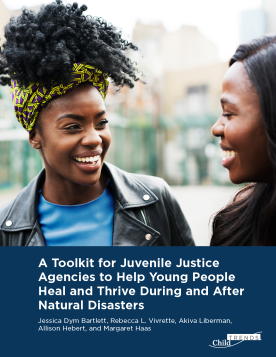
A Toolkit for Juvenile Justice Agencies to Help Young People Heal and Thrive During and After... [9]

Type: Special Resource

Helps juvenile justice agencies support children and youth during and after natural disasters. This toolkit is for juvenile justice staff, supervisors, and administrators who work with and on behalf of children, youth, and families who experience a natural disaster.

view [9]
NCTSN Resource

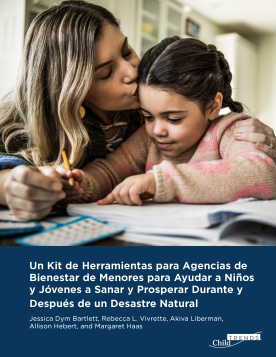
Un Kit de Herramientas para Agencias de Bienestar de Menores para Ayudar a Jóvenes a Durante y... [10]

Type: Special Resource

Ayuda a las agencias de bienestar infantil a apoyar a los niños y jóvenes durante y después de los desastres naturales.

view [10]
NCTSN Resource

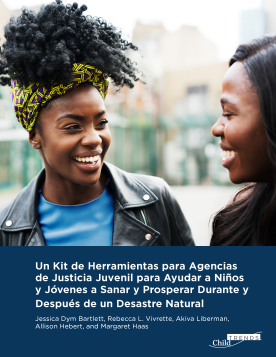
Un Kit de Herramientas para Agencias de Justicia Juvenil para Ayudar a Jóvenes a Durante y... [11]

Type: Special Resource

Ayuda a las agencias de justicia juvenil a apoyar a los niños y jóvenes durante y después de los desastres naturales.

view [11]
NCTSN Resource

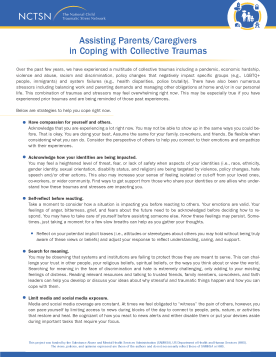
Assisting Parents and Caregivers in Coping with Collective Traumas [12]

Type: Tip Sheet

Offers strategies to help parents and caregivers cope with collective traumas. This fact sheet also provides guidance on what parents and caregivers can do to care for their children as they cope. Updated May 2024. 

view [12]

Pages

  • 1
  • 2 [13]
  • 3 [14]
  • 4 [15]
  • 5 [16]
  • NEXT [13]
  • LAST [16]

Source URL:https://www.nctsn.org/what-is-child-trauma/trauma-types/disasters/pandemic-resources

Links
[1] https://www.nctsn.org/resources/age-related-reactions-traumatic-event [2] https://www.nctsn.org/resources/psychological-first-aid-pfa-online [3] https://www.nctsn.org/resources/supporting-children-and-teens-during-this-holiday-season [4] https://www.nctsn.org/resources/assessing-and-treating-interpersonal-violence-in-the-wake-of-covid-19 [5] https://www.nctsn.org/resources/how-is-the-covid-19-summit-supporting-the-long-term-recovery-of-our-nations-children-and-families [6] https://www.nctsn.org/resources/applying-evidence-based-treatments-for-child-traumatic-stress-reactions-to-covid-19-related-deaths [7] https://www.nctsn.org/resources/child-and-adolescent-traumatic-stress-reactions-to-covid-19-related-deaths [8] https://www.nctsn.org/resources/a-toolkit-for-child-welfare-agencies-to-help-young-people-heal-and-thrive-during-and-after-natural-disasters [9] https://www.nctsn.org/resources/a-toolkit-for-juvenile-justice-agencies-to-help-young-people-heal-and-thrive-during-and-after-natural-disasters [10] https://www.nctsn.org/resources/a-toolkit-for-child-welfare-agencies-to-help-young-people-heal-and-thrive-during-and-after-natural-disasters-sp [11] https://www.nctsn.org/resources/a-toolkit-for-juvenile-justice-agencies-to-help-young-people-heal-and-thrive-during-and-after-natural-disasters-sp [12] https://www.nctsn.org/resources/assisting-parents-caregivers-in-coping-with-collective-traumas [13] https://www.nctsn.org/print/828?page=1 [14] https://www.nctsn.org/print/828?page=2 [15] https://www.nctsn.org/print/828?page=3 [16] https://www.nctsn.org/print/828?page=4