

Refugee children and adolescents exhibit resilience despite a history of trauma. Trauma can affect a child’s emotional and behavioral development. Providers working with refugee children should consider how the refugee experience may contribute to a child or adolescent’s emotional or behavioral presentation in a clinic, school, or community setting. These experiences include exposure to hunger, thirst, and lack of shelter, injury and illness, being a witness, victim, or perpetrator of violence, fleeing their home and country, separating from family, living in a refugee camp, resettling in a new country, and navigating a new culture. Many refugees, especially children, have experienced trauma related to war or persecution that may affect their mental and physical health long after the events have occurred. The NCTSN has resources for mental health professionals, healthcare providers, school personnel, policy makers, and more that provide information on refugee trauma and how to support refugee children and families.

Understanding Refugee Trauma Fact Sheets
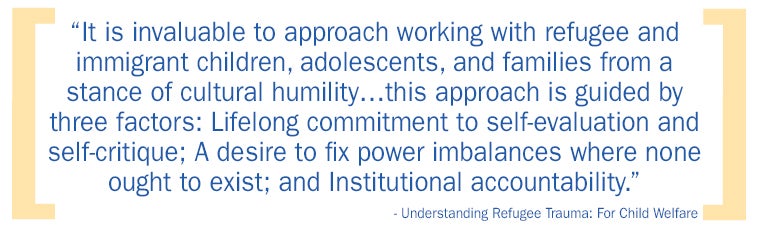
Outlines different considerations that professionals need to take into account when working with refugee youth and their families.Understanding Refugee Trauma: For Child Welfare
Provides information about refugee trauma for those working in or with the child welfare system. This fact sheet gives definitions to describe those who migrate to the US; potentially traumatic events that could occur before, during, or after migration; involvement in the child welfare system; how notions of safety, permanency, and well-being are shaped by culture; factors that could potentially elevate the risk of child welfare involvement; special considerations for child sexual abuse; barriers to service access and engagement; and system considerations.
Understanding Refugee Trauma: For Mental Health Professionals
This fact sheet describes the cultural, child and youth, family, and provider considerations that mental health professionals should understand when working with refugee children and families.

Understanding Refugee Trauma: For Primary Care Providers
Outlines different considerations that primary care providers need to take into account when working with refugee youth and their families. This fact sheet describes the cultural, child and youth, family, and provider considerations that healthcare providers should understand when working with this population.
Understanding Refugee Trauma: For School Personnel
This fact sheet describes the school, classroom, individual, and family considerations that school personnel should understand when working with refugee youth and their families.
Coping with Unconfirmed Death for Forcibly Displaced Children and Families: Tips for Caregivers
Offers information for caregivers on unconfirmed death, how it relates to forced displacement, how it is traumatic for children, and how children might respond. This fact sheet also provides information on how you can help a child cope with unconfirmed death, and includes additional resources for caregivers.
Parenting in a New Context Podcast Series:
Strategies for Practitioners Supporting Refugee and Immigrant Caregivers
Discusses how practitioners can enhance their skills and raise their standard of care to refugee and immigrant caregivers and families who are adjusting to a new culture and may have experienced potentially traumatic events. Cultural and contextual differences require providers to adapt or reconsider common parenting interventions when working with refugee and immigrant caregivers.

Psychological First Aid for Displaced Children and Families
This resource is an evidence-informed flexible approach to assist displaced children and families immediately after arriving in the US. This approach includes a set of tools to assist staff in supporting displaced children and families through early transitions. Because each family has their own experiences and circumstances, it is important to tailor your interactions to meet their unique needs, and to practice cultural competency and humility in every interaction.
Mandated Reporting with an Immigrant Family Struggling with Acculturation and Developmental Trauma
This webinar series provides clinicians, counselors, and other providers with insights on dealing with the most difficult crises and turning points that occur in therapy with traumatized children and families. This webinar introduces Enrique Sanchez, a young immigrant father, who brought his seven-year-old son, Joaquin, to a new country without the rest of their family. Their therapist, Dr. Chang, will discuss a difficult decision with Enrique, regarding concerns she has over Joaquin’s safety and the family’s future.
A Socio-Culturally, Linguistically-Responsive, and Trauma-Informed Approach to Mental Health Interpretation
Provides mental health clinicians and professional interpreters with information about a trauma-informed approach to mental health interpretation that is socio-culturally and linguistically- responsive to the needs of children and families receiving services. This resource guide describes frameworks for mental health interpretation, roles in a clinical setting, the interpreter and mental health clinician dyad, how to manage a session that needs interpretation services, secondary traumatic stress, supervision, values and ethics, as well as advocacy for better services for children and families needing interpretation services.
|


