
There is a strong link between traumatic stress and substance use that has implications for children and families, whether the user is a teen or a parent or caregiver. Adolescents who engage in problematic substance use are more likely to experience traumatic events and develop PTSD, depression, violent behavior, suicide, or other mental health challenges compared to those who do not use substances. Additionally, youth exposed to traumatic events are more vulnerable to problematic substance use as a means of coping with their experiences. Caregiver substance use also carries many risks for child and adolescent development. Starting even before children are born, parental substance use increases children's risk for later mental health problems and victimization. Children and teens with parents who use substances may be exposed to other high-risk situations, such as violence in the home or community. Understanding the connection between trauma and substance use is essential in supporting children and families affected by substance use.

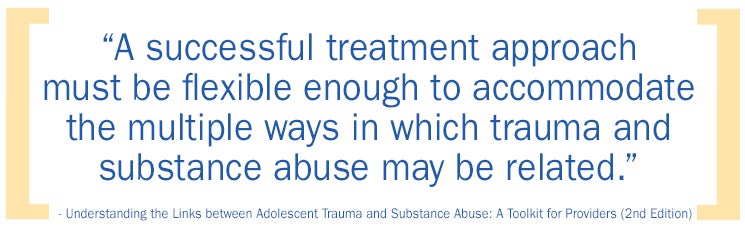
Understanding the Links between Adolescent Trauma and Substance Abuse:
A Toolkit for Providers (2nd Edition)
Explores the complex connections between traumatic stress and substance misuse. This toolkit provides guidelines for identifying, engaging, and treating adolescents suffering from these co-occurring problems.

Supporting Caregivers of Youth with Substance Use Problems Affected by Trauma
Provides a picture of the challenges experienced by families caring for youth with trauma and substance use. This webinar addresses the effect of trauma and substance use in the context of the family; offers information on promising practices, supports, and resources for families; identifies ways in which trauma and substance use are linked for youth and families; discusses the effect of youth substance use and family trauma on family functioning; and gives promising practices, supports, and resources for families.

The Role of Trauma Among Families Struggling with Substance Abuse
Offers perspectives on the intersections between trauma, caregiver substance use, parenting, and prenatal substance use exposure.
Addressing Perpetration of Intimate Partner Violence in Families Affected by Substance Use
Describes the connections between intimate partner violence and substance use. This webinar discusses the impact of challenges on parenting and children and suggests strategies for working with affected families.
The Power of Parenting:
How to Help Your Child After the Death of a Sibling From Substance Use or Overdose
Offers parents and caregivers information to help support their surviving children after the death of a sibling due to substance use or overdose. This fact sheets includes information on helping children cope with stigma and shame, understanding the wide range of reactions that different family members may experience, coping with how substance use influences the family over time, adapting to loss, and prioritizing self-care and support for the parents or caregivers.
Adolescent Trauma and Substance Abuse Online
Provides training and materials for mental health clinicians and substance use treatment providers on the complex intersections between psychological trauma and co-occurring substance use and dependency. The course includes interactive online modules on understanding the links between traumatic stress and substance use among adolescents, a webinar and lecture presentation featuring expert faculty from the NCTSN, and a four-part Train-the-Trainer video series entitled Trauma and Co-Occurring Disorders: Understanding and Working with Youth and Their Caregivers.
Child Trauma and Opioid Use: Policy Implications
Provides policymakers and other stakeholders with an overview of how substance use and trauma affects children, adolescents, and families; substance use-related impaired caregiving; and the impact of the opioid crisis on children and families. This policy brief offers recommendations for clinical interventions and training, as well as prevention efforts. Updated March 2021.
Prenatal Exposure to Substances and Trauma: Fostering Parent and Child Well-being
Provides information about the effects of prenatal exposure to substances and trauma on children. This webinar discusses assessment and treatment approaches for youth and caregivers, as well as the story of a parent who has experienced the challenges associated with Fetal Alcohol Syndrome.
Opiate Exposed Newborns: Development, Assessment and Treatment
Discusses the potential impact of opiates on the developing fetus and the baby. This webinar features three experts in the field of neonatal abstinence syndrome and one consumer, with first-hand experience, who describe the potential impact of opiates on the developing fetus, how medical staff assess and support babies and families exposed to opiates, and tips and techniques for parents and providers as they transition from the hospital to either the family's home or a residential treatment facility.
Understanding and Treating Caregiver Substance Abuse and Trauma: A Focus on the Family
Describes the connection between caregiver trauma and substance use, the impact of both on children, and the challenges experienced by families when both substance misuse and trauma are present. This webinar discusses four models of intervening in the area of parenting, substance use, and trauma, including an attachment curriculum utilized in a residential program for women with substance use disorders and an adaptation of Child Parent Psychotherapy for parents and children in family residential treatment for substance use.
|


