Complex trauma describes both children’s exposure to multiple traumatic events—often of an invasive, interpersonal nature—and the wide-ranging, long-term effects of this exposure. These events are severe and pervasive, such as abuse or profound neglect. They usually occur early in life and can disrupt many aspects of the child’s development and the formation of a sense of self. Since these events often occur with a caregiver, they interfere with the child’s ability to form a secure relationship. Many aspects of a child’s healthy development rely on this primary source of safety and stability. Children whose families and homes do not provide consistent safety, comfort, and protection develop ways of coping. As a child grows up and encounters situations and relationships that are safe, these adaptations are no longer helpful, and may in fact be counterproductive and interfere with the capacity to live, love, and be loved. The NCTSN has resources to help caregivers, providers, educators, and youth understand and navigate complex trauma.

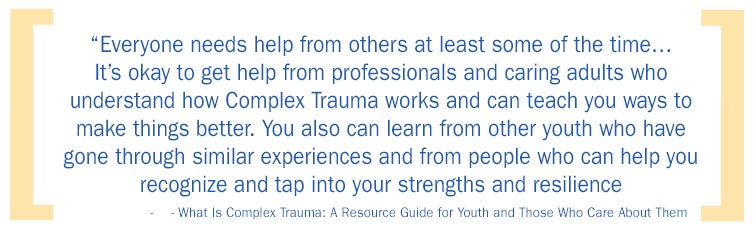
What Is Complex Trauma: A Resource Guide for Youth and Those Who Care About Them
Offers information about complex trauma, how it can impact youth, both good and harmful coping strategies, and ways to improve. This guide is for youth who have experienced complex trauma or who know someone who has. Clinicians, caregivers, and other adults can also use the guide to have conversations with youth about what complex trauma is. Also available in Italian.

Complex Trauma: Facts for Caregivers
Helps parents and caregivers recognize the signs and symptoms of complex trauma and offers recommendations on how to help children heal. Also available in Italian.
Complex Trauma: Facts for Educators
Helps educators and school staff recognize the signs and symptoms of complex trauma and offers recommendations on how to help students heal.
Assessment of Complex Trauma by Mental Health Professionals
Offers information on the assessment of complex trauma in children. This fact sheet provides general guidelines for assessing complex trauma such as gathering information, a variety of approaches and techniques, how to work with a child's family and care team, and assessing over time. It also gives helpful tips providers can use.
Complex Trauma Standardized Measures
Is a table of standardized measures that are appropriate for children and families dealing with complex trauma.
Assessment of Complex Trauma by Parents and Caregivers
Offers parents and caregivers a brief checklist to use to determine if a complete assessment for complex trauma should be scheduled. This fact sheet will help parents and caregivers determine when to seek professional help. Also available in Italian.
Assessment of Complex Trauma Information for Non-Mental Health Professionals
Provides information for non-mental health professionals regarding the assessment of complex trauma. This fact sheet asks questions that can help determine whether to refer a child/family in need for a more comprehensive assessment.
What Is Child Trauma?
Discusses the differences between acute, chronic, and complex trauma and how each trauma type uniquely affects children. Emphasizes the importance of recognizing their overlap to provide effective trauma-informed care.
Developmental Trauma Disorder: Identifying Critical Moments and Healing Complex Trauma
Provides clinicians, counselors, and other providers with insights on recognizing and dealing with the most difficult crises and turning points that occur in therapy with traumatized children and families. This webinar series features youth and caregivers, who are actors playing fictional characters, and therapists who are real. Viewers will see how therapists handle critical turning points during the therapy session to help families safely heal from the severe emotional and interpersonal problems that occur in the aftermath of complex trauma.

Keeping Secrets: Family Communication After Trauma
Since disclosing her sexual exploitation experiences in a previous session, Jordyn continues to attend therapy sessions to address her distress symptoms; depression and PTSD. During this session, Jordyn is joined by her father, Jimmy, who has a trauma history related to combat exposure. Both Jordyn and Jimmy have experienced notable progress in their respective individual treatment. However, the upcoming court proceedings and trial for the man who sexually exploited Jordyn has increased tensions between Jordyn and her father. To address the mounting tensions at home, the therapist decides to focus on improving Jordyn and Jimmy’s communication to repair the rift between them.
|


