The National Child Traumatic Stress Network
Published on The National Child Traumatic Stress Network (https://www.nctsn.org)

Home > What is Child Trauma? > Trauma Types > Sexual Abuse > NCTSN Resources

The following resources on Sexual Abuse were developed by the NCTSN.

NCTSN Resource

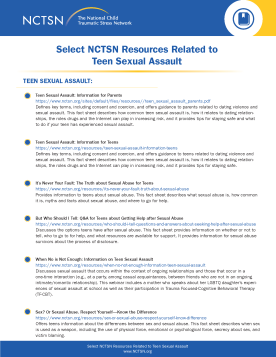
Select NCTSN Resources Related to Teen Sexual Assault [1]

Type: Fact Sheet

Identifies existing NCTSN resources related to teen sexual assault, acquaintance rape, sexual abuse, and child traumatic stress. The list includes fact sheets and webinars that offer information and tips for professionals, parents, and teens themselves.
view [1]
NCTSN Resource

Educator Sexual Misconduct in Schools: Guidelines for Staff, Volunteers, and Community Partners [2]

Type: Webinar

Explores the importance of knowing the difference between appropriate and inappropriate school staff behavior with students.

view [2]
NCTSN Resource

Reducing the Risk of Child Sexual Abuse [3]

Type: Webinar

Discusses prevention and intervention strategies for child sexual abuse. This webinar gives ways to help prevent child sexual abuse, as well as intervention strategies upon disclosure.

view [3]
NCTSN Resource

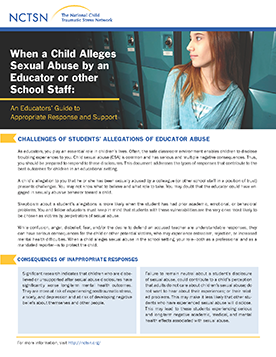
When a Child Alleges Sexual Abuse by an Educator or Other School Staff: An Educator’s Guide to... [4]

Type: Fact Sheet

Provides educators and school staff information on the challenges that occur when there is an allegation of educator abuse.

view [4]
NCTSN Resource

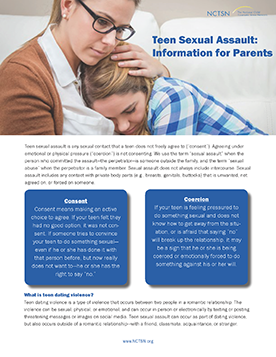
Teen Sexual Assault: Information for Parents [5]

Type: Fact Sheet

Defines key terms, including consent and coercion, and offers guidance to parents related to dating violence and sexual assault.

view [5]
NCTSN Resource

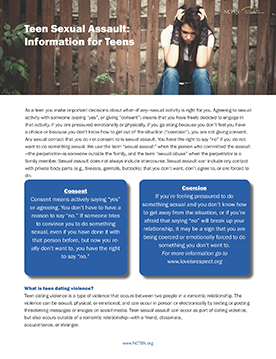
Teen Sexual Assault: Information for Teens [6]

Type: Fact Sheet

Defines key terms, including consent and coercion, and offers guidance to teens related to dating violence and sexual assault.

view [6]
NCTSN Resource

When NO is Not Enough: Information on Teen Sexual Assault [7]

Type: Webinar

Discusses sexual assault that occurs within the context of ongoing relationships and those that occur in a one-time interaction (e.g., at a party, among casual acquaintances, friends who are not in an ongoing intimate/romantic relationship).

view [7]
NCTSN Resource

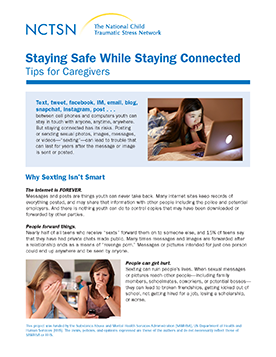
Staying Safe While Staying Connected: Tips for Caregivers [8]

Type: Fact Sheet

Provides information to parents and caregivers about keeping children safe online. This fact sheet describes why sexting is not smart and how sexts can be used to hurt or bully.

view [8]
NCTSN Resource

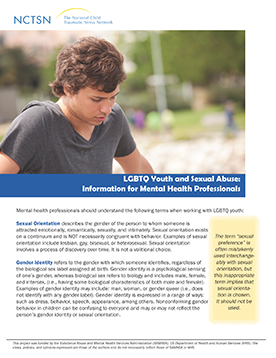
LGBTQ Youth and Sexual Abuse: Information for Mental Health Professionals [9]

Type: Fact Sheet

Provides a short glossary of relevant terms and a chart delineating the continuums of sex, gender, and sexual orientation.

view [9]
NCTSN Resource

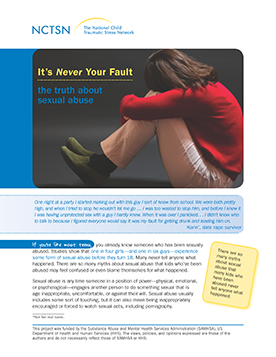
It’s Never Your Fault: The Truth About Sexual Abuse [10]

Type: Fact Sheet

Provides information to teens about sexual abuse. This fact sheet describes what sexual abuse is, how common it is, myths and facts about sexual abuse, and where to go for help.

view [10]
NCTSN Resource

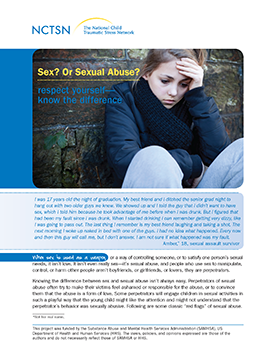
Sex? Or Sexual Abuse? Respect Yourself—Know the Difference [11]

Type: Fact Sheet

Offers teens information about the differences between sex and sexual abuse. This fact sheet describes when sex is used as a weapon, including the use of physical force, emotional or psychological force, secrecy about sex, and victim blaming.

view [11]
NCTSN Resource

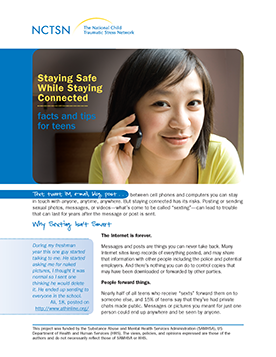
Staying Safe While Staying Connected: Facts and Tips for Teens [12]

Type: Fact Sheet

Provides information to teens about staying safe while they are online.

view [12]

Pages

  • FIRST [13]
  • PREVIOUS [13]
  • 1 [13]
  • 2
  • 3 [14]
  • 4 [15]
  • NEXT [14]
  • LAST [15]

Source URL:https://www.nctsn.org/what-is-child-trauma/trauma-types/sexual-abuse/nctsn-resources?page=1

Links
[1] https://www.nctsn.org/resources/select-nctsn-resources-related-teen-sexual-assault [2] https://www.nctsn.org/resources/educator-sexual-misconduct-schools-guidelines-staff-volunteers-and-community-partners [3] https://www.nctsn.org/resources/reducing-risk-child-sexual-abuse [4] https://www.nctsn.org/resources/when-child-alleges-sexual-abuse-educator-or-other-school-staff-educators-guide-appropriate [5] https://www.nctsn.org/resources/teen-sexual-assault-information-parents [6] https://www.nctsn.org/resources/teen-sexual-assault-information-teens [7] https://www.nctsn.org/resources/when-no-not-enough-information-teen-sexual-assault [8] https://www.nctsn.org/resources/staying-safe-while-staying-connected-tips-caregivers [9] https://www.nctsn.org/resources/lgbtq-youth-and-sexual-abuse-information-mental-health-professionals [10] https://www.nctsn.org/resources/its-never-your-fault-truth-about-sexual-abuse [11] https://www.nctsn.org/resources/sex-or-sexual-abuse-respect-yourself-know-difference [12] https://www.nctsn.org/resources/staying-safe-while-staying-connected-facts-and-tips-teens [13] https://www.nctsn.org/print/853 [14] https://www.nctsn.org/print/853?page=2 [15] https://www.nctsn.org/print/853?page=3