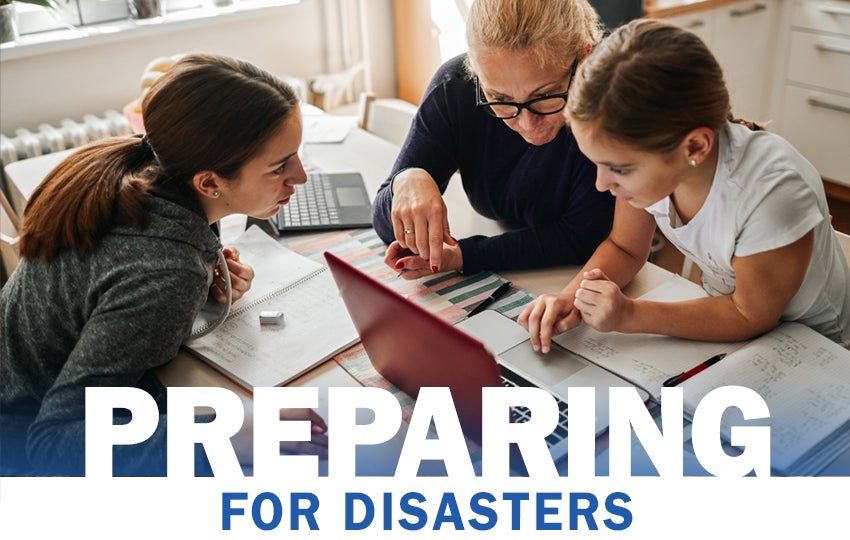
The devastation caused by ongoing events (recent hurricanes, flooding, and wildfires) across the nation, reaffirms the need for, and importance of, disaster preparedness. Disasters can occur at any time and children and families who experience a disaster can react in a number of different ways and some may find it difficult to cope. Families and communities can take steps to help prepare before a disaster occurs, minimize negative outcomes, and recover following a disaster. The NCTSN has supportive resources to help families and communities affected by these disasters along with resources for improving disaster preparedness.

Psychological First Aid (PFA) Online
This 5-hour interactive course helps participants learn the eight Core Actions of PFA and describes ways to apply them in different post-disaster scenarios and with different survivor needs. It covers provider well-being before, during, and after disasters. This course is for new providers who are wanting to be oriented to PFA as well as seasoned practitioners who want a review of the PFA concepts. It features e-learning activities, knowledge checks, and detailed examples to test your learning and sharpen your decision making.

Help Kids Cope
This mobile app offers parents, caregivers, and child-serving professionals resources for explaining, learning about, preparing for, responding to, and healing from natural disasters. It includes tailored recommendations for ten different natural disaster types, including earthquakes, floods, hurricanes, tornadoes, tsunamis, and wildfires. Available for both iOS and Android.

Family Preparedness Wallet Cards and Fact Sheet
Prepare your family for natural disasters by adding important telephone numbers and contact details to the wallet cards. You can make a card for each member of your family to carry in case an event occurs when family members are not together.
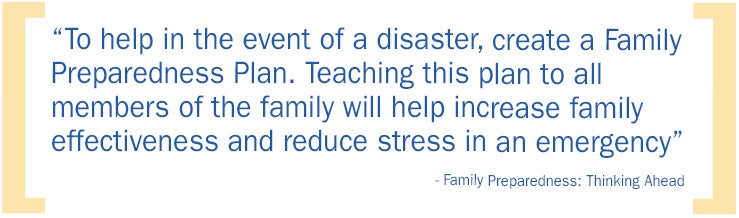
● Family Preparedness: Thinking Ahead
This checklist highlights what steps your family can take before an emergency. Important emergency preparedness tips include learning about the disasters and hazards in your area, making a family emergency plan, identifying the best ways to communicate, collecting supplies for an emergency kit, learning where to get official updates during and after an event and practicing your plan.. The wallet cards and checklist are available in multiple languages: English, Spanish, Vietnamese, Korean, Armenian, and Russian.
Skills for Psychological Recovery (SPR) Online
This course helps providers learn the foundational principles and six core skills of SPR. SPR aims to help survivors gain skills to manage distress and cope with post-disaster stress and adversity. This course features e-learning activities, knowledge checks, and a range of disaster scenarios to build practical knowledge on how to implement SPR and teach the skills to survivors.
Childhood Traumatic Grief: Youth Information Sheet
This tip sheet offers information for youth to help them understand the differences between grief and traumatic grief, the signs and symptoms of traumatic grief in children and youth, and strategies for coping with grief.
Preparing Your Organization to Respond to Disasters and Terrorism
This webinar series is designed to help child-and family-serving providers best position themselves to support their community following catastrophic events. It includes discussion on how to partner with local organizations, regional and federal resources available after a disaster or terrorism event, and strategies for staging response activities to address immediate and long-term recovery.
Simple Activities for Children and Adolescents
Offers activity ideas to parents and caregivers whose families are sheltering in place, social distancing, and homeschooling. Also available in Spanish.
Building Community Resilience for Children and Families
This guidebook provides information about building community resilience, helping communities improve their capacity to respond effectively to natural or man-made disasters or acts of terrorism. The book includes strategies to put in place before an incident occurs to enhance a community's ability to improve its outcomes after an event.
Taking Care of Yourself
This tip sheet offers a list of self-care strategies for child-serving providers who may be providing care to families following a difficult event. This checklist outlines the three basic aspects of self-care including awareness, balance, and connection.
Pause-Reset-Nourish (PRN)* to Promote Wellbeing: Use as Needed to Care for Your Wellness!
This fact sheet provides information about the specific self-care framework of Pause-Reset-Nourish, or PRN. It acknowledges the levels of stress that professionals may be currently experiencing and offers in-the-moment strategies to address stress reactions and promote and replenish wellbeing and enhance resilience.
|


