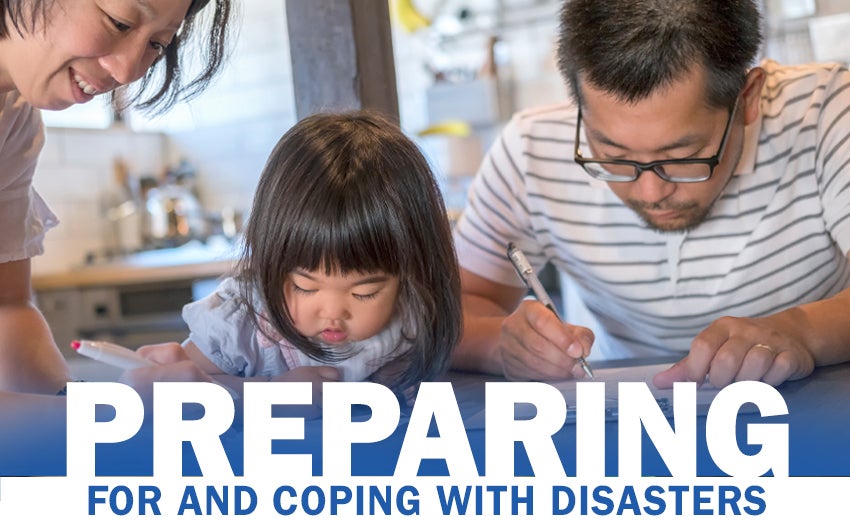
While natural disasters can strike at any time with very little warning, families and communities can take steps to prepare in the event that a disaster does occur. With the devastation caused by ongoing events (hurricanes, flooding, wildfires, COVID-19) across the nation, this reaffirms the need for disaster preparedness. Our thoughts are with the families, children, and communities who have been affected by these disasters. The NCTSN has resources to help families and communities cope before, during, and after a disaster along with resources to help them improve their disaster preparedness.

Help Kids Cope
Talk to children of all ages about natural disasters using the Help Kids Cope app. From preparing for a hurricane to seeking help following an earthquake, the app offers parents, caregivers, and child-serving professionals resources for explaining, learning about, preparing for, responding to, and healing from natural disasters. Select from ten different natural disaster types, including earthquakes, floods, hurricanes, tornadoes, tsunamis, and wildfires. Available for both iOS and Android.

Family Preparedness Wallet Cards and Fact Sheet
In the event of an emergency, get in touch with separated family members using NCTSN’s Family Preparedness Wallet Cards. Prepare your family for natural disasters by adding important telephone numbers and contact details to the wallet cards. You can make a card for each member of your family to carry in case an event occurs when family members are not together.
● Family Preparedness: Thinking Ahead
This Fact Sheet highlights what steps your family can take before an emergency. Learning about the disasters and hazards in your area, making a family emergency plan, identifying the best ways to communicate, collecting supplies for an emergency kit, learning where to get official updates during and after an event and practicing your plan are a few of the emergency preparedness tips found in this fact sheet. Both resources are available in multiple languages: English, Spanish, Vietnamese, Korean, Armenian, and Russian.
Skills for Psychological Recovery (SPR) Online
Aims to help survivors gain skills to manage distress and cope with post-disaster stress and adversity. This course utilizes skills-building components from mental health treatment that have been found helpful in a variety of post-trauma situations. Research suggests that a skills-building approach is more effective than supportive counseling. SPR is appropriate for developmental levels across the lifespan, and is culturally informed.
Coping in Hard Times: Fact Sheet for Parents
Helps parents understand how economic difficulties can affect their families, in terms of their sense of safety, connectedness, and hope. The fact sheet also helps families find ways to cope during uncertain times.
Creating Effective Child- and Family-Focused Disaster Behavioral Health Messages on Social Media
Offers guidance to child-serving behavioral health organizations and professionals who serve communities affected by disaster and terrorism events. This toolkit provides guidance and shares lessons learned from previous incidents, how to get started using social media, including guidance on developing a social media policy and plan, constructing messages for various disasters and audiences, and managing social media accounts. It also includes sample messages that can be modified to better fit specific disasters and terrorism events.
Preparing Your Organization to Respond to Disasters and Terrorism
Effectively responding to the needs of children and families in times of disaster, terrorism, or public health emergencies requires organizations to stay up to date on changing sources available after a disaster or terrorism event, and strategies for staging response activities to address intermediate and long-term recovery. This series is designed to help child-and family-serving providers best position themselves to support their community following catastrophic events.

Creating School Active Shooter/Intruder Drills
Provides information to schools about how to create a trauma-informed active shooter/intruder drill. This fact sheet outlines the steps to take before, during, and after for students, school staff, and parents.
Building Community Resilience for Children and Families
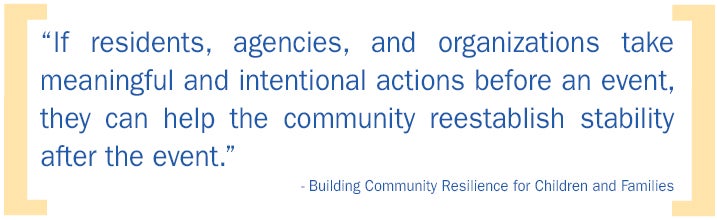
Provides information about building community resilience, helping communities improve their capacity to respond effectively to natural or man-made disasters or acts of terrorism. This guidebook includes strategies to put in place before an incident occurs to enhance a community's ability to improve its outcomes after an event.
Taking Care of Yourself
Offers a list of self-care strategies for child-serving providers who may be providing care to families following a difficult event. This checklist outlines the three basic aspects of self-care including awareness, balance, and connection.
External Resources from NCTSN Partners
This compilation of resources includes tips for families, educators, disaster response workers, medical personnel, and mental health professionals. Resources provide information and recommendations for preparing children, families, and communities for disaster events.
|


