

Schools serve as a critical system of support for children who have experienced trauma. Administrators, teachers, and staff can help reduce the effects of trauma on children by recognizing trauma responses, accommodating and responding to traumatized students within the classroom, and referring children to outside professionals when necessary.
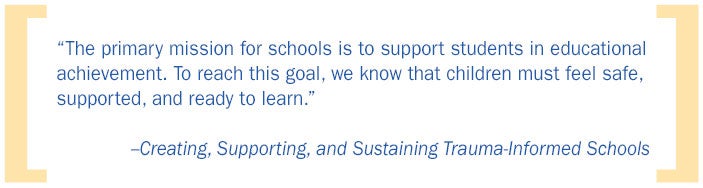
Creating, Supporting, and Sustaining Trauma-Informed Schools: A System Framework
Utilizes a multi-tiered approach to help create a trauma-informed school environment that addresses the needs of all students, staff, administrators, and families who might be at risk of experiencing the symptoms of traumatic stress. This strategic guide provides readers with a vision of what a trauma-informed school looks like.


Addressing Race and Trauma in the Classroom: A Resource for Educators
Helps educators understand the interplay of race and trauma, its effects on students, along with how to address it within a classroom setting. Additionally, this fact sheet offers suggestions for creating a trauma-informed classroom along with two complementary resources: Position Statement on Racial Injustice and Trauma and Child Trauma Toolkit for Educators.
Child Trauma Toolkit for Educators
Provides school administrators, teachers, staff, and concerned parents with information about working with children of all ages who have experienced trauma. From recognizing the signs of trauma in children to learning actions you can take to help affected children at school, this guide is a tool to help you support yourself and your students throughout the year.
Self-Care for Educators
As a part of the Child Trauma Toolkit for Educators, this one-page tip sheet presents school professionals with six self-care suggestions designed to combat secondary traumatic stress and compassion fatigue.

Preparing Our Children for Emergencies
From a community preparedness and resiliency outlook, this webinar discusses how school personnel, parents, and caregivers can prepare children for emergencies within a school setting.

Psychological First Aid for Schools
An informative webinar designed to highlight the fundamentals of Psychological First Aid for Schools (PFA-S). Speakers share how PFA-S helps to reduce the distress that school communities might experience following a disaster or violent event. Viewers learn the importance of working within the school structure and system; how teachers, support staff, and administrators can use PFA-S to prepare for and respond to school emergencies; and how to support the school community as a whole.

Childhood Traumatic Grief: Information for School Personnel
Offers information on why school personnel are important for grieving students. This fact sheet outlines how children grieve, what Childhood Traumatic Grief is, who develops Childhood Traumatic Grief, what traumatic stress reactions in Childhood Traumatic Grief can look like, the signs a student might have Childhood Traumatic Grief, and what school personnel can do to help their students.
Childhood Traumatic Grief: Information for School Personnel Teaching Military Children
Gives information on why school personnel are important for grieving students with a military background. This fact sheet outlines how students in military families differ from civilian students, how students grieve, what Childhood Traumatic Grief is, who develops Childhood Traumatic Grief, what traumatic stress reactions in Childhood Traumatic Grief can look like, the signs a student might have Childhood Traumatic Grief, and what school personnel can do to help their students.

Click to follow NCTSN on social media!

This project was developed by the developed by the NCTSN Core Curriculum Task Force, and funded by the Substance Abuse and Mental Health Services Administration (SAMHSA), US Department of Health and Human Services (HHS).


