
Creating safe and affirming spaces for LGBTQ+ youth to express themselves honestly—without fear of judgment, ridicule, or having their identities outed is essential to providing gender-affirming and trauma-informed care. LGBTQ+ youth experience high rates of trauma, including but not limited to parental rejection, bullying, and physical and sexual harassment. Often LGBTQ+ youth’s increased risk for trauma is partly due to societal stigma, prejudice, and discrimination. Trauma-informed care for LGBTQ+ youth also includes access to developmentally appropriate, evidence-based care provided by medical and mental health experts in partnership with youth, parents, and caregivers. The NCTSN offers resources to help mental health providers, child welfare and juvenile justice professionals, healthcare providers, school professionals, caregivers, and other supportive adults support LGBTQ+ youth.

Gender-Affirming Care Is Trauma-Informed Care
Discusses how gender-affirming care is trauma-informed care and offers tips for showing support and acceptance for transgender, gender diverse, and intersex (TGI) youth.

Identifying the Intersection of Trauma and Sexual Orientation and Gender Identity,
Part I: Key Considerations
Addresses why providers should ask about sexual orientation and gender identity, identifies the intersection of trauma, sexual orientation and gender identity, and provides goals for the screener. This resource also includes what studies have revealed about LGBTQ+ youth and trauma and key implementation considerations for trauma-informed organizations and providers.
Identifying the Intersection of Trauma and Sexual Orientation and Gender Identity,
Part II: The Screener
Highlights common risk factors and the critical importance of screening for trauma exposure, post-traumatic stress disorder (PTSD), and post-traumatic stress symptoms. The screener includes questions about gender identity intended for children ages 7-18, questions about sexual orientation and behaviors intended for children ages 12-18, as well as questions for the caregivers of youth.
Screening for the Intersection of Trauma with Sexual Orientation and Gender Identity
Introduces a new screening tool for mental health treatment providers to explore youth identities and identify potentially traumatic experiences for LGBTQ+ youth. LGBTQ+ youth are disproportionately impacted by a wide variety of traumatic experiences, including abuse and neglect, which may not be effectively addressed or treated in the absence of intentional LGBTQ+ affirming practices. The tool intends to promote a shared language around youth identity and a mutual understanding of the experiences of LGBTQ+ youth, as well as to support providers in meaningful engagement with youth and their caregivers. Participants will be guided through considerations and planning for how to implement this tool with youth and caregivers within the scope of their current organizational engagement and assessment practices.

Engaging Families in Affirming Trauma-Informed Care for LGBTQ Children and Youth
Outline techniques for engaging families in affirming treatment and care of their LGBTQ youth, including a review of techniques used within the Family Acceptance Project (FAP) with founder Caitlin Ryan. FAP is an initiative that works to prevent health and mental health risks for LGBTQ children and youth while using a research-based, culturally grounded approach to help diverse families support their LGBTQ children. Practitioners will examine ways to engage in cultural humility and understanding when engaging families and youth in trauma treatment.
Trauma-Focused CBT for LGBTQ Youth
Discusses how professionals can recognize qualities of a safe, affirming environment where staff can explore personal views and values, and articulate professional responsibilities. Presenters will share the experiences of LGBTQ youth in out-of-home care settings and respectful and supportive ways to interact with LGBTQ youth and their caregivers. Finally, presenters explain the application of Trauma-Focused Cognitive Behavioral Therapy for complex trauma and how to tailor it for LGBTQ youth.
Affirming Care for Transgender and Gender Expansive Youth
Provides participants with a comprehensive understanding of the needs and challenges transgender and gender-expansive youth face. This webinar covers basic definitions surrounding gender, gender identity, and gender expression, while creating a learning environment for participants to examine their own perceptions of gender and reflect on the capacity of their role as a professional. Participants learn about developmental considerations, components of a social transition, and aspects of a medical transition. Presenters examine the impact of trauma transgender and gender-expansive youth may experience and how providers can build an affirming practice and environment for the youth and families that they serve.
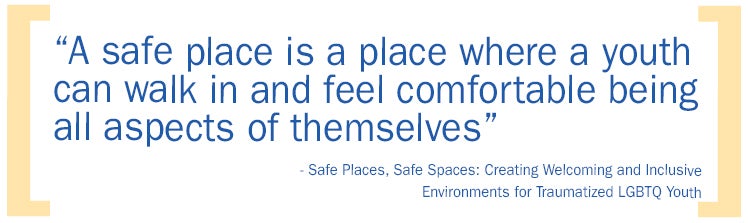
Safe Places, Safe Spaces:
Creating Welcoming and Inclusive Environments for Traumatized LGBTQ Youth Video
Introduces the viewer to the needs of lesbian, gay, bisexual, transgender and questioning (LGBTQ) youth who have experienced trauma. This video discusses how to create welcoming and inclusive environments for youth who have experienced trauma and identify as LGBTQ. It may be used in conjunction with the discussion guide as a training tool or in supervision with staff.
Safe Places, Safe Spaces:
Creating Welcoming and Inclusive Environments for Traumatized LGBTQ Youth Video Resource Guide
Offers guidance on how to use the Safe Places, Safe Spaces video. This guide has information on how providers can use the video to promote awareness, inclusive environments, and cultural sensitivity to those working with LGBTQ youth.
Enhancing Resilience in Military LGBTQ Youth: Tips for Parents and Caregivers
Offers information to parents and caregivers on how to help military children and adolescents who identify as LGBTQ deal with the many challenges they face. This tip sheet describes common thoughts or situations LGBTQ youth may have and how parents and caregivers may help.
|


