
Military children embody strength, resilience, and courage. They often face unique challenges, including extended separations, deployments, temporary duty assignments, frequent moves, permanent change in stations, and fast-paced changes to home life and routines. Many are also navigating experiences of child trauma, including grief and loss related to combat-related injury and death, parental PTSD, and ambiguous losses. Although military youth are raised in a culture of strength and resiliency, they may experience mental health issues or challenges due to the unique stressors that impact them. This is a time when military children and families may be experiencing heightened feelings of worry for loved ones who are or may be deployed due to the ongoing war in Ukraine or who are already stationed in the region. It is important to provide additional support to help bolster their resilience and assist them through these challenging times. The NCTSN has resources to help mental health professionals support the needs of military children and families.

Understanding Child Trauma and Resilience: For Military Parents and Caregivers
Offers military parents and caregivers information about child trauma and resilience. This fact sheet includes information about what traumatic experiences are, how they impact military families, and common reactions children or teens may have. It also includes a checklist for parents and caregivers to use to help keep track of behaviors their child or teen may be exhibiting as well as questions to ask providers about treatment services. The fact sheet also includes questions military parents or caregivers may have about supporting their child after a traumatic event and tips for starting discussions with children of different ages. Also available in Russian.

Understanding Child Suicide: For Military Parents
Offers military parents information about military youth suicide. This fact sheet includes information about suicide and military youth, how to talk to your child about suicide, warning signs that your child may be experiencing suicidal thoughts, and helpful responses by age group. It also provides evidence-based treatments for suicidal youth, and how to address your needs as a parent.
Understanding Youth Substance Use: For Military Parents and Caregivers
Offers military parents and caregivers information about military youth substance use. This fact sheet includes information about substance use and military youth, how to talk to your child about substance use, monitoring your child and understanding trauma and substance use, as well as resources on how to address your needs as a parent and caregiver.
Talking to Children about War
Offers information for caregivers on how to talk to children about war. This fact sheet includes the potential impact and considerations when talking to children about war, how to start the conversation, understanding media coverage, and how to foster resilience. Also available in Russian., Ukrainian, German, Japanese, and Hungarian.
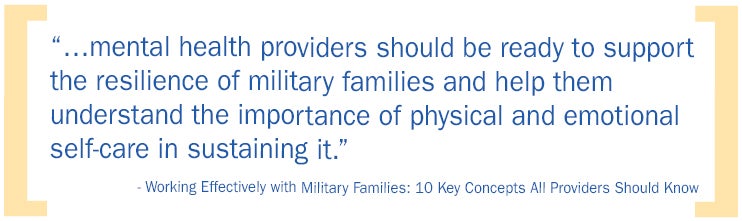
Working Effectively with Military Families: 10 Key Concepts All Providers Should Know
Outlines the top ten things to keep in mind when working with military families. This tip sheet includes information on family separation, stigma about mental health care, access to programs, involving peers and civilian providers, and more. Also available in Russian.
Helping Military Children with Traumatic Grief: Tips for Parents
Offers information on military children grieving the loss of a loved one. This tip sheet describes how military children dealing with trauma and grief responses may be feeling and what parents can do to help. Also available in Russian.
Helping Military Children with Traumatic Grief: Tips for Educators
Offers information on military children grieving the loss of a loved one. This tip sheet describes how military children dealing with trauma and grief responses may be feeling and what educators and school staff can do to help.
Childhood Traumatic Grief: Information for Military Parents or Caregivers
Provides information to military parents and caregivers on Childhood Traumatic Grief. This fact sheet outlines how children grieve, what Childhood Traumatic Grief is, who develops Childhood Traumatic Grief, the signs a child might have Childhood Traumatic Grief, and what military parents or caregivers can do to help.
Supporting Military Children with Traumatic Grief
Provides an overview of issues specific to military culture and family life, describes two models for treating military children with traumatic grief, and highlights a service member's experience. This webinar discusses unique military related stressors, like traumatic grief following the death of a caregiver from combat or non-combat situations.
|


