
The COVID-19 pandemic continues to create challenges for school districts across the US. Schools serve as a critical system of support for children and teens who have experienced trauma. The public health and economic effects of the pandemic continue to have a profound mental health impact on students and their families across the nation. Educators recognize the impact that students’ personal experiences can have on their learning achievement and can provide them with the support they need to heal and achieve their educational goals. At the same time, the pandemic has taken a toll on educators, and we need to support their emotional well-being so that they can continue to support students. The NCTSN has resources to help strengthen school personnel well-being and to assist them in providing trauma-informed care when working with students and their families.

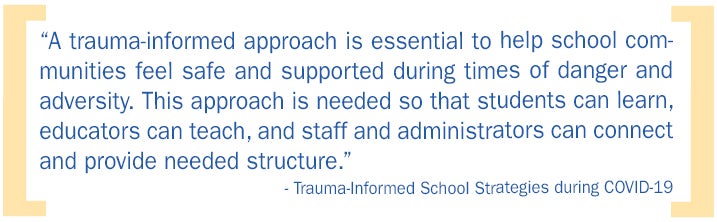
Trauma-Informed School Strategies During COVID-19
Offers information on the physical and emotional wellbeing of staff and creating a trauma-informed learning environment, including strategies for dealing with stress/STS for educators and administrators during COVID-19. It includes guidance for identifying, assessing, addressing, and treating traumatic stress. This fact sheet also provides trauma education and awareness, partnerships with students and families, cultural responsiveness, emergency management, crisis response, and school discipline policies and practices.

Coping in Hard Times: Fact Sheet for School Staff
Discusses how challenging financial circumstances may affect you, other school staff, students, and their families and provides specific ways to help.
Child Trauma Toolkit for Educators
Provides school administrators, teachers, staff, and concerned parents with basic information about working with children who have experienced trauma in the school system. This includes a Self Care for Educators tip sheet.
Words to Use When Talking About Suicide
Provides information to help youth know what words to use when talking about suicide with friends and peers. This fact sheet includes when you should ask, examples of what to say, when to get help, as well as next steps. This resource is most helpful for youth ages 12 and older.
Addressing Race and Trauma in the Classroom: A Resource for Educators
Helps educators understand how they might address the interplay of race and trauma and its effects on students in the classroom. The guide outlines recommendations for educators and offers a list of supplemental resources. It should be implemented in accordance with individual school policies and procedures.
Childhood Traumatic Grief: Information for School Personnel
Offers information on why school personnel are important for grieving students. This fact sheet outlines how children grieve, what Childhood Traumatic Grief is, who develops Childhood Traumatic Grief, what traumatic stress reactions in Childhood Traumatic Grief can look like, the signs a student might have Childhood Traumatic Grief, and what school personnel can do to help their students.
Pause-Reset-Nourish (PRN)* to Promote Wellbeing: Use as Needed to Care for Your Wellness!
Provides information about the specific self-care strategy of Pause-Reset-Nourish, or PRN. This fact sheet acknowledges the levels of stress that professionals may be experiencing and offers a way to address unwanted symptoms, promote and replenish wellbeing, and enhance resilience.
Staying Safe While Staying Connected: Facts and Tips for Teens
Provides information to teens about staying safe while they are online. This fact sheet describes why sexting is not smart and how sexts can be used to hurt or bully. It offers tips for keeping teens safe when they are online, including privacy settings and protecting their identity.
A Trauma-Informed Resource for Strengthening Family-School Partnerships
Helps schools assess what level of partnering currently exists within their school community, areas that require enhancement, and strategies for implementing these enhancements. This tool is for administrators and staff to drive further conversation about family-school partnerships. It builds on the NCTSN Trauma-Informed Schools Framework and is aligned with SAMHSA’s 6 Principles of Trauma-Informed Care: safety; trustworthiness and transparency; peer support and mutual self-help; collaboration and mutuality; empowerment, voice, and choice; and cultural, historical, and gender issues.
|


