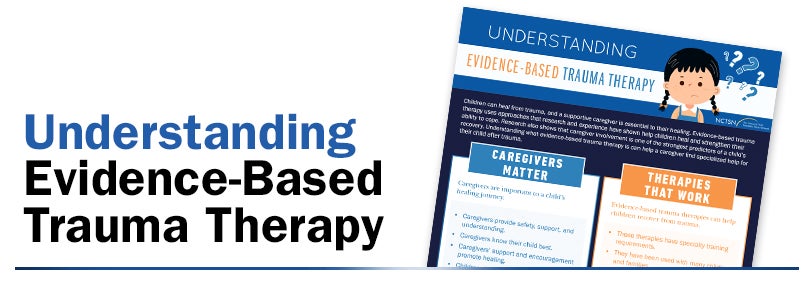
Understanding Evidence-Based Trauma Therapy
Explains evidence-based trauma therapy and highlights how specialized, research-supported treatments can help children heal from trauma. Emphasizes the important role caregivers play in recovery and dispels common myths about treatment, reinforcing that effective care is tailored to each child’s unique needs, strengths, and experiences.

Identifying Trauma Therapy for Your Child
Helps caregivers identify specialized, evidence-based trauma therapy for children and understand what to look for when choosing a provider. Highlights key components of effective treatment and offers questions caregivers can ask to ensure therapy meets their child’s unique needs and supports their healing.
Building Safer Spaces: A Trauma-Informed Guide to Difficult Conversations in Schools
Helps school staff navigate difficult conversations through a trauma-informed approach that prioritizes student well-being, safety, and connection. Offers practical strategies for understanding students’ diverse experiences, fostering respectful dialogue, managing challenging interactions, and creating supportive school environments where all students can thrive.
Navigating Grief and the Holidays for Different Communities
While holidays can be a source of comfort and celebration, they can also serve as reminders of ongoing uncertainty, instability, loss, tragedy and separation. This article is aimed to support providers with recommended resources to share with families anticipating the holiday season.
Child Mind Institute's Professional Learning Portal
The Child Mind Institute has created a new online learning platform for educators, clinicians, school mental health professionals, as well as school and district leaders to support students’ mental health during a busy school day. It brings evidence-based learning and ready-to-use resources together in one place, so you can find support that fits your role and schedule.
RECENT JOURNAL PUBLICATIONS
Assessing Children and Adolescents Exposed to Trauma, authored by Courtney L. McMickens, Alexis French, Jenika Hardeman, and Michelle P. Durham, explores trauma assessment as the first step in addressing symptoms related to traumatic stress, especially in children and adolescents. Over two-thirds of children experience at least one traumatic event by age of 16 years, affecting various aspects of their development, including brain function, emotional processing, social skills, physical health outcomes, and mental health. Trauma screening is a brief process by frontline providers to identify trauma exposure, while a trauma-informed assessment is a comprehensive evaluation by mental health professionals that explores trauma’s impact on a child’s functioning, with effective methods like semistructured posttraumatic stress disorder interviews to gather detailed information. Understanding the neurobiological, psychosocial, and cultural factors of traumatic stress, along with awareness of structural inequities, can build trust, improve symptom assessment, and inform treatment plans.
Looking for Trainings?
Visit the NCTSN Training Page on LinkedIn
Not on our mailing list? Click here to sign up.
This project was funded by the Substance Abuse and Mental Health Services Administration (SAMHSA), US Department of Health and Human Services (HHS). The views, policies, and opinions expressed are those of the authors and do not necessarily reflect those of SAMHSA or HHS.