


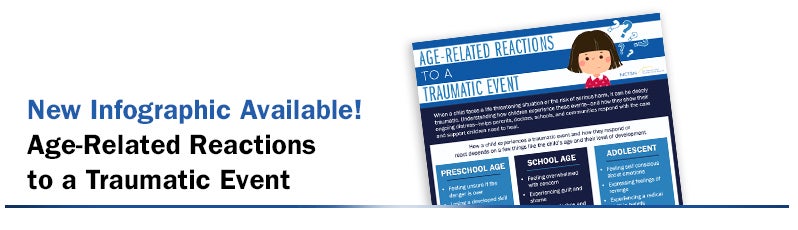
New Infographic Available!Age-Related Reactions to a Traumatic Event
Explains how children of different ages may react to traumatic events and offers simple strategies for parents, caregivers, and communities to provide support and promote healing.


Checklist for Agencies Choosing a Trauma-Informed Intervention or Practice as Part of a Grant Application
Supports exploration and decision-making processes when applying for a grant that will help support the selection, implementation, and sustainability planning of a trauma-specific intervention or practice.

Online Safety for Youth: A Tip Sheet for Parents and Caregivers
Equipping youth with the skills they need to keep themselves safe online is now a necessity of the digital age. What can parents and caregivers do to help develop these skills? What should they consider when it comes to providing personal device access, monitoring use, modeling safe behavior, and developing a parent/child relationship that can help inoculate against online harms? This tip sheet, developed by Children and Screens: Institute of Digital Media and Child Development, provides guidance for caregivers navigating these questions,

How to Foster Resilience in Infants and Toddlers: A Guide for Educators and Caregivers
This resource from ZERO TO THREE offers guidance on fostering resilience in early childhood. Building resilience in infants and toddlers lays the foundation for lifelong mental health and helps them handle challenges as they grow. Resilience isn’t just for big or traumatic events; it also supports frustration tolerance and helps children manage everyday ups and downs, like waiting their turn or trying something new.
Butterflyon Books
Butterflyon Books hosts over 20 titles of illustrated books that offer guidance with coping strategies, mindfulness, and wellness for children of all ages.
RECENT JOURNAL PUBLICATIONS
Psychiatry Special Issue: Children and War
Children and War explores the psychological impact of conflict on children, highlighting insights and contributions from many NCTSN members involved throughout the issue. It includes manuscripts that focus on the plight of refugee children, children associated with armed forces and armed groups (e.g., child soldiers), the impact of conflict-related sexual violence on mothers and their children, and trauma associated with war-related bereavement. It also includes manuscripts focusing on parenting during wartime, experiences unique to the children of military service members, as well as the challenges to adult professionals who witness the combat-related injury and death of children. In addition to these contributions, four commentaries written by international experts in the area of child trauma provide their reflections on this special issue.
Looking for Trainings?
Visit the NCTSN Training Page on LinkedIn
Not on our mailing list? Click here to sign up.
This project was funded by the Substance Abuse and Mental Health Services Administration (SAMHSA), US Department of Health and Human Services (HHS). The views, policies, and opinions expressed are those of the authors and do not necessarily reflect those of SAMHSA or HHS.


