
How To Gain Buy-In From Schools and Other Service Systems Through a Trauma-Informed & Culturally Responsive (TICR) Approach [1]

Resource Description
 Date: February 13, 2026
 Author: Isaiah B. Pickens
 Time: 10 minute read

It unfolded during a TICR implementation team meeting.
The school principal was called to the gym to break up a fight. I followed, along with the teachers and behavioral health staff who were part of the implementation team. With significant effort, the principal and a few staff separated the students and sent the one accused of initiating the fight to the office.
In the office, a brief conversation revealed the student lost his cousin to gun violence the week prior. It was unfortunately, a story too common for this school.
Educators were holding a tension many school leaders know well.
How do you recognize trauma and respond with compassion — while still holding students accountable?
The unspoken fear: delaying accountability may lead to future behavior putting students in harm’s way. A wrong word to a neighbor, law enforcement, or someone else in power may lead to a misunderstanding that escalates and potentially ends a student’s life. The stakes were painfully high to implement a whole-school solution for responding to students’ needs inside and outside the classroom.
It begged a question: how can we deploy trauma-informed care while also honoring the cultural considerations that dictate whether students, staff, and the community buy-in or not?
That tension—between trauma-informed care and real-world accountability grounded in deep understanding of the cultures who will facilitate healing—is a significant reason why the Trauma-Informed and Culturally Responsive (TICR) approach was developed.
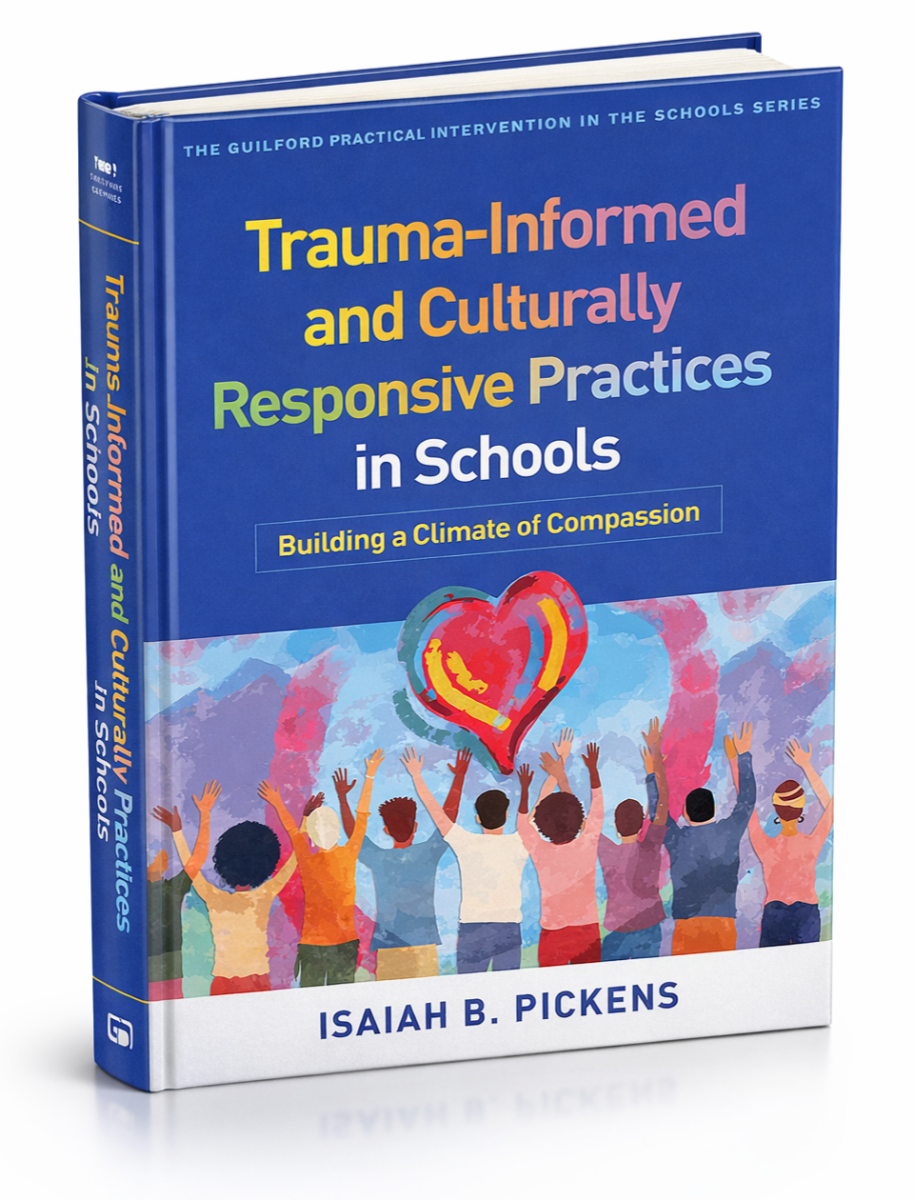
It’s also the journey I document in my new book Trauma-Informed and Culturally Responsive (TICR) Practices in Schools: Building a Climate of Compassion [2] from Guilford Press (Pickens, 2026). This book provides a comprehensive, whole-school roadmap for implementing trauma-informed best practices—from classroom design to discipline policies and behavioral health supports for both students and staff—grounded in culturally responsive science and practice.
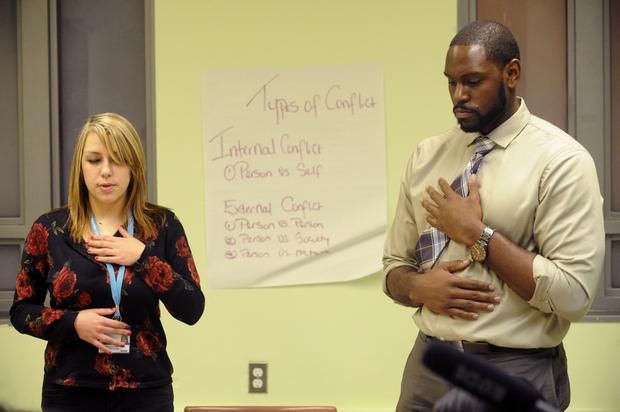
As a clinical psychologist, former Assistant Director for the Service Systems Program at the UCLA-Duke National Center for Child Traumatic Stress (NCCTS), and former NYU School of Medicine clinical faculty through a Category III NCTSN site, I’ve navigated the real-world obstacles to implementing system-level trauma-informed practices in justice, healthcare, child welfare, and school settings.
What I’ve learned is a simple truth: trauma-informed care without a culturally responsive lens is incomplete.
Where Buy-In Breaks Down
As my team and I worked with schools, we noticed a pattern.
When trauma was discussed in ways that conflicted with educators’ beliefs about discipline, buy-in dropped. And when buy-in dropped, implementation followed.
Without intentional attention to identities comprising the school community, the cultural norms guiding their actions, and community context, trauma-informed initiatives were either slowed or quietly resisted. At best, adoption was shallow. At worst, staff felt it was another external mandate disconnected from their lived reality.
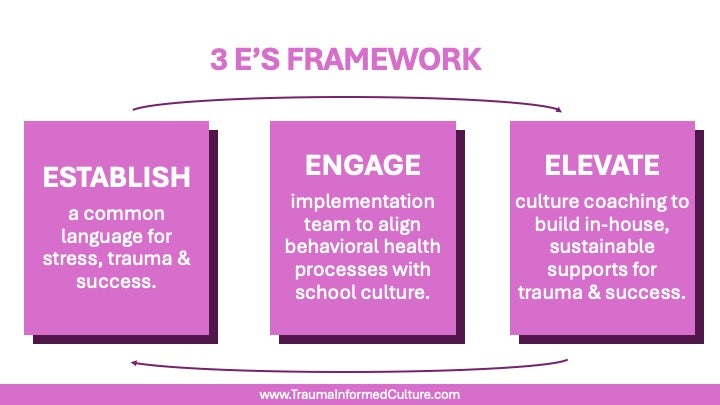 |
The TICR approach addresses this barrier through three intentional steps — known as the 3 E’s Framework:
|
These steps create the conditions for trust, alignment, and sustained change. Below learn how a TICR approach unfolds for each step and how school systems can join the Brave Schools [3] community.
Establish a Common Language
The first step includes on-demand and live professional development that shifts educators from a compliance-focused model of behavior management to a relationship-centered approach grounded in the six principles of trauma-informed care. 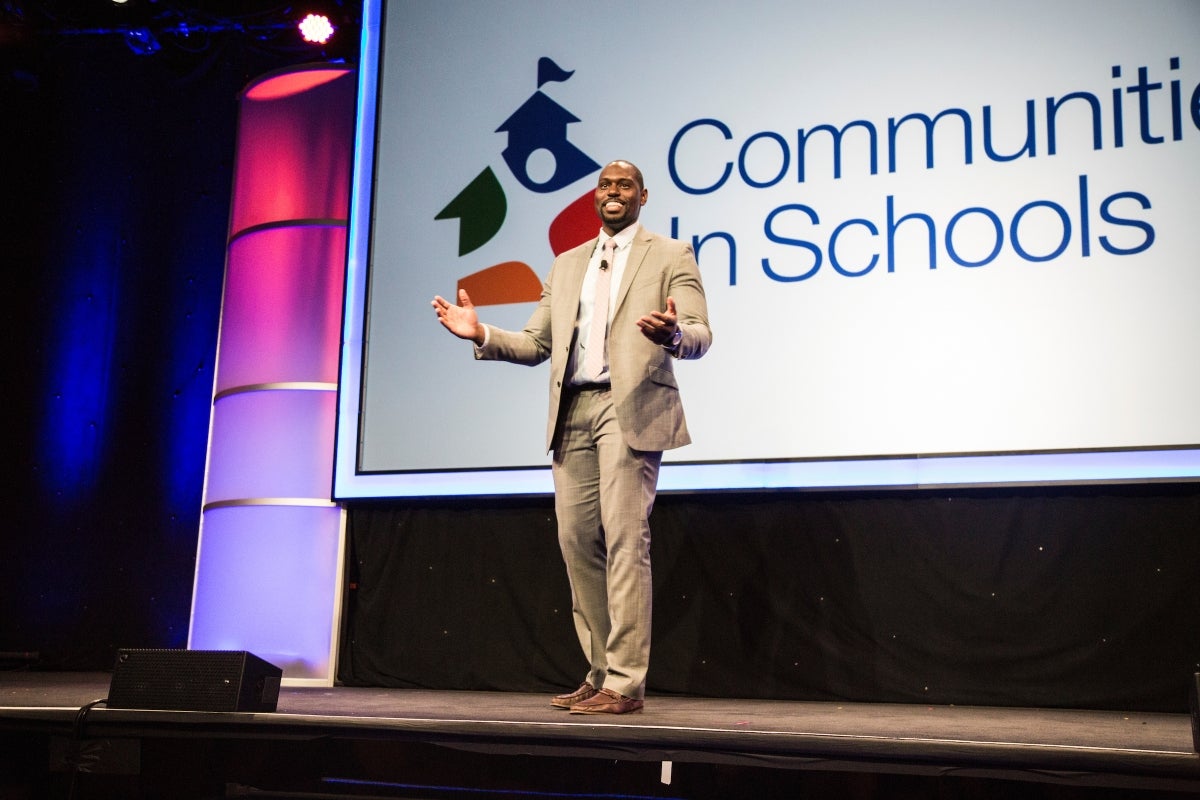
What one educator defines as “bad behavior” may look different to another. Those beliefs shape discipline and behavioral support decisions — and ultimately shape relationships.
Giving educators language to understand the role many forms of trauma play in students’ behavior, including historical and intergenerational trauma, is a powerful tool for giving context to trauma reminders and survival behaviors.
It becomes easier to move beyond a compliance-only lens. Educators can replace default interpretations of student non-compliance as misbehavior or “defiance” and develop the language and skills to become curious:
What goal is this student trying to achieve?
What survival strategy is showing up?
Even more powerful, educators gain a strengths-based lens and begin to see the ingenuity students developed to survive adversity — and redirect those strengths toward prosocial success.
Back in that office, no one excused the student’s aggression. But with training, staff understood the community context and home environment shaping his response. They also recognized the risks of that behavior in the over-policed neighborhood he lived in.
With trauma-informed relationship skills, they communicated both accountability and compassion.
That combination — clear boundaries and relational safety — is what keeps students most at risk of disengagement connected to school.
Engage an Implementation Team
Training is a great foundation but not enough to shift a school culture. 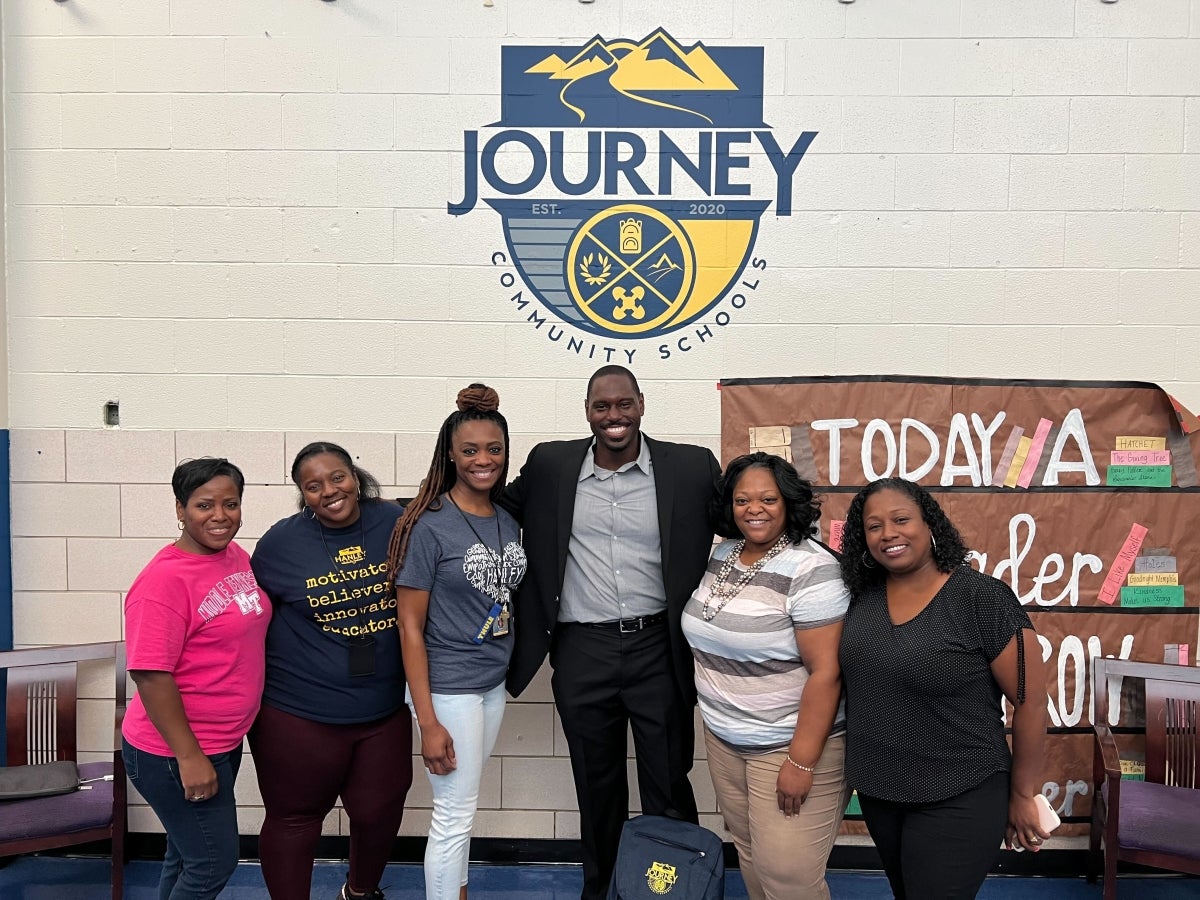
TICR Implementation Teams include 5-10 staff, caregivers, and students who take activities from TICR training and ensure they are effectively implemented as standard practices and processes in the school building.
Activities are designed to easily integrate into current school routines. Sample activities include:
- TICR Connection Sessions: A daily or weekly classroom activity for learning about others in the class—fostering attunement and psychological safety.
- TICR Regulation Stations: Dedicated classroom classroom spaces for regulation, integrating regulation experiences aligning with students’ cultures.
- TICR Bright Spots: A school-wide experience for identifying strengths emerging from adversity.
- TICR Cultural Celebration Toolkit: A guide for using cultural experiences (i.e., holidays, food, dance etc.) to understand the adversities communities have overcome and elevate behaviors reflecting joy and celebration as forms of resilience in the face of adversity.
- TICR Reflection Sheet: A worksheet for identifying stress triggers, early warning signs, and coping strategies. Sheet is designed as a whole class experience to practice understanding stressful experiences (not traumatic experiences—but this exercise normalizes the process of identifying triggers, early warning signs and coping strategies).
- In addition to implementing TICR activities, the implementation team identifies and supports deployment of Tier 2 & 3 supports such as group interventions, screeners, and assessments.
This grassroots structure empowers schools to implement activities and interventions that best address their community’s needs. By creating an in-house team to elevate the voices of various members of the school community, it shifts trauma-informed practices from “something outside people told us to do” to a process they can own.
Sustaining Trauma-Informed Practices with the Brave Schools Community
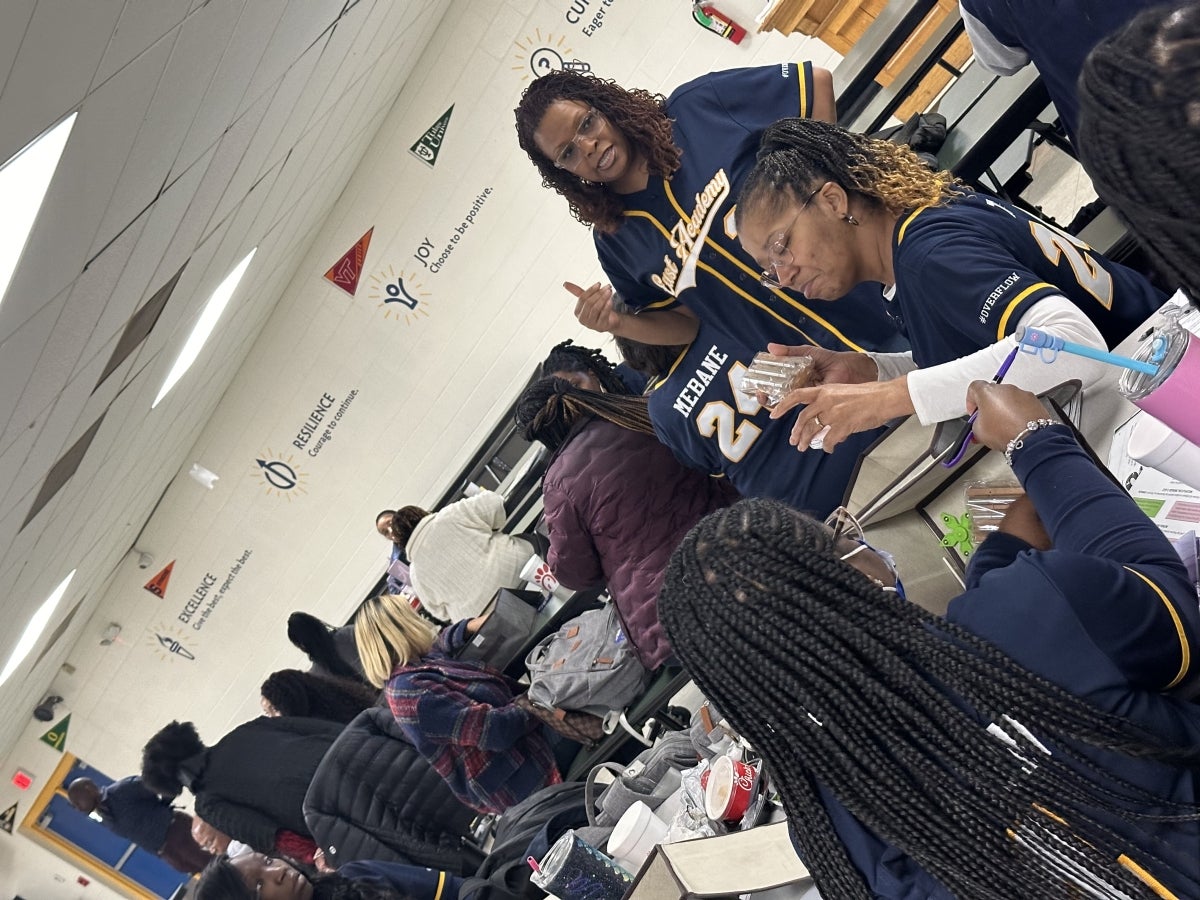 This holistic approach is not new, but it is difficult to implement and requires courage. It requires educators to reflect on long-held beliefs about discipline. It requires leadership to examine systems. It requires communities to bridge divides.
That’s why we created the Brave Schools Community [4] — a space for educators and school systems committed to centering student and staff well-being through trauma-informed and culturally responsive practices.
Brave Schools is not another initiative. It’s a community of practice grounded in:
- Building shared language
- Implementation support
- Culture coaching
- Collective learning - For schools already implementing evidence-based interventions or operating in conjunction with Category II & III NCTSN sites, TICR serves as a powerful whole-school supplement — ensuring alignment between individual clinical services and schoolwide culture.
For graduate programs and administrators seeking a comprehensive roadmap, the book provides a practical, self-guided path toward transformation.
The Real Work of Buy-In
Gaining buy-in for trauma-informed practices can feel as difficult as breaking up a fight in the gym.
But when cultural responsiveness is embedded into the work, resistance softens. Educators see themselves reflected in the process. Community strengths become assets rather than barriers.
And the foundation schools already possess — resilience, commitment, cultural wisdom — becomes the engine for sustainable change.
To learn more about the Brave School Community or bring the TICR Program to schools in your community, contact CustomerCare@iOpeningEnterprises.com [5] or visit www.traumainformedculture.com [6].