NCTSN Resource
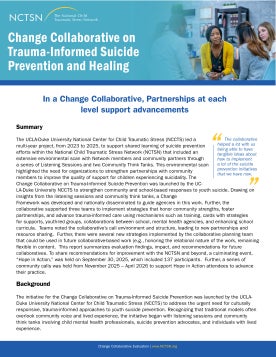
In a Change Collaborative, Partnerships at each level support advancements
Type: Report
Shares findings from the NCTSN Change Collaborative on Trauma-Informed Suicide Prevention.

The following resources on child trauma were developed by the NCTSN. To find a specific topic or resource, enter keywords in the search box, or filter by resource type, trauma type, language, or audience.
Shares findings from the NCTSN Change Collaborative on Trauma-Informed Suicide Prevention.
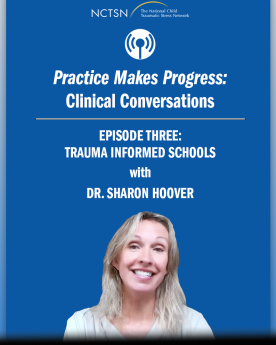
NCTSN Affiliate Dr. Sharon Hoover speaks with National Center Co-Director Dr. Lisa Amaya-Jackson about trauma informed schools: what they look like, what they require, and how they can transform the daily experience of children who have been impacted by trauma.
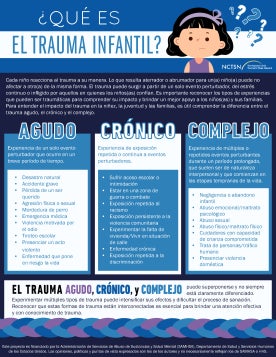
Muestra las diferencias entre el trauma agudo, crónico y complejo, y cómo cada tipo de trauma afecta de manera única a los niños(as).
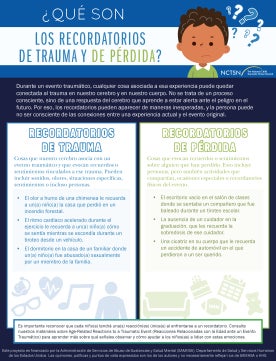
Explica cómo ciertas imágenes, sonidos y experiencias cotidianas pueden despertar de manera inesperada recuerdos o emociones relacionados con el trauma o la pérdida.
NCTSN members Wanda Vargas and Sara Fernandez-Marcote discuss Core Concept 2: Life Experiences.
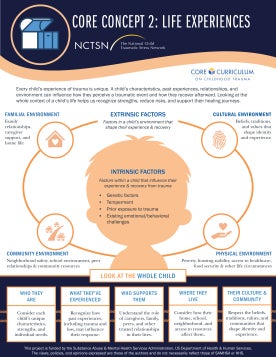
Explores Core Concept 2: Life Experiences, one of the NCTSN’s research-based Core Concepts for Understanding Child Traumatic Stress.
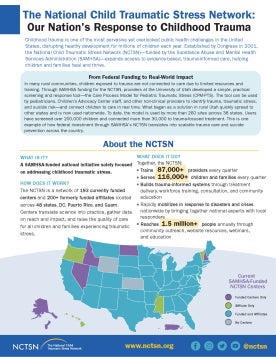
Highlights the nationwide impact of the NCTSN, showing how federal investment translates into trauma-informed care, workforce development, and crisis response across the country.

National Center Co-Director Dr. Lisa Amaya-Jackson and Center member Dr. Mia Tankersley discuss trauma, emotional dysregulation, and outbursts.
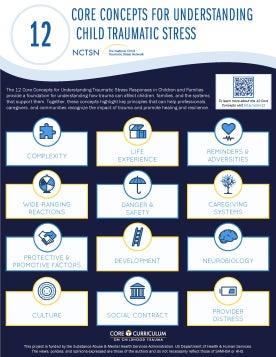
Introduces the 12 Core Concepts for Understanding Traumatic Stress Responses in Children and Families, a research-based framework developed by the NCTSN to explain how trauma affects children, families, and the systems that support them.
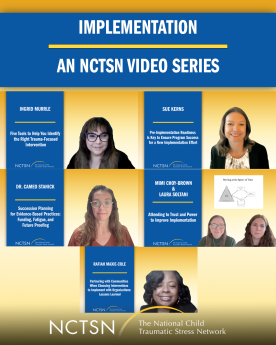
The NCTSN Video Series on Implementation was created by members of the National Child Traumatic Stress Network (NCTSN) to share lessons learned as organizations seek to implement trauma-informed practices or system change efforts.
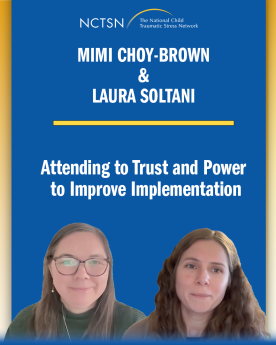
Mimi Choy-Brown and Laura Soltani from the University of Minnesota highlight key lessons from the CIRCLE Project, emphasizing the importance of intentionally addressing trust and power when implementing multi-level interventions to support resilience among refugee and immigrant youth.
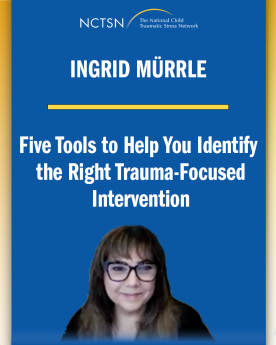
Ingrid Mürrle of the National Center for Child Traumatic Stress introduces a set of five implementation tools that agencies can use when bringing in a new practice.