NCTSN Resource
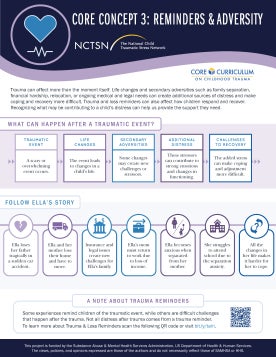
Core Concept 3: Reminders & Adversity
Type: Infographic
Explores Core Concept 3: Reminders & Adversity, one of the NCTSN’s research-based Core Concepts for Understanding Child Traumatic Stress.

The following resources on child trauma were developed by the NCTSN. To find a specific topic or resource, enter keywords in the search box, or filter by resource type, trauma type, language, or audience.
Explores Core Concept 3: Reminders & Adversity, one of the NCTSN’s research-based Core Concepts for Understanding Child Traumatic Stress.
Meghan Graham from the NCCTS Disaster and Mass Violence program is joined by NCTSN member Ashley Brock-Baca to discuss Core Concept 3: Reminders and Adversity.
In the 25 years since September 11, 2001, the lessons we learned in disaster response continue to shape trauma work, preparedness, and response. This series shares NCTSN members’ experiences and responses following the events of September 11.
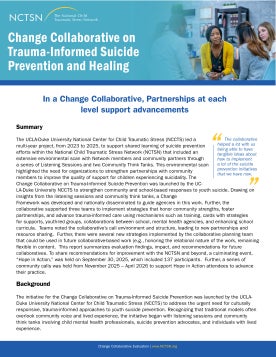
Shares findings from the NCTSN Change Collaborative on Trauma-Informed Suicide Prevention.
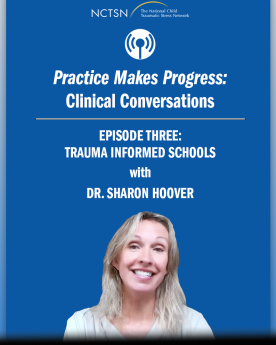
NCTSN Affiliate Dr. Sharon Hoover speaks with National Center Co-Director Dr. Lisa Amaya-Jackson about trauma-informed schools: what they look like, what they require, and how they can transform the daily experience of children who have been impacted by trauma.
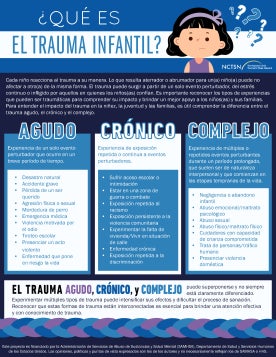
Muestra las diferencias entre el trauma agudo, crónico y complejo, y cómo cada tipo de trauma afecta de manera única a los niños(as).
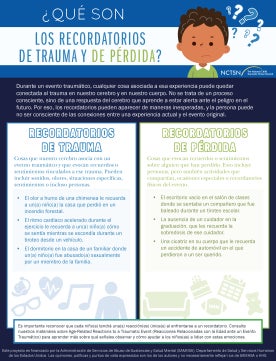
Explica cómo ciertas imágenes, sonidos y experiencias cotidianas pueden despertar de manera inesperada recuerdos o emociones relacionados con el trauma o la pérdida.
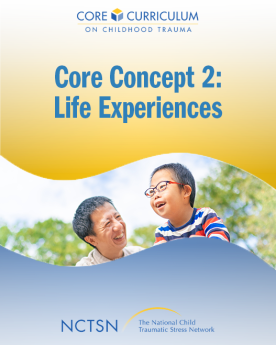
NCTSN members Wanda Vargas and Sara Fernandez-Marcote discuss Core Concept 2: Life Experiences.
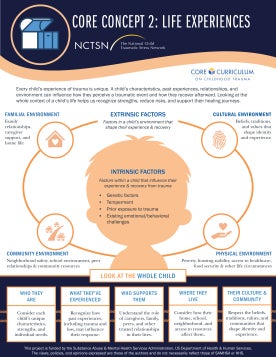
Explores Core Concept 2: Life Experiences, one of the NCTSN’s research-based Core Concepts for Understanding Child Traumatic Stress.
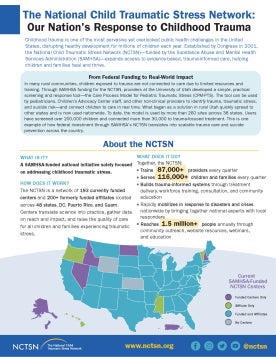
Highlights the nationwide impact of the NCTSN, showing how federal investment translates into trauma-informed care, workforce development, and crisis response across the country.

National Center Co-Director Dr. Lisa Amaya-Jackson and Center member Dr. Mia Tankersley discuss trauma, emotional dysregulation, and outbursts.
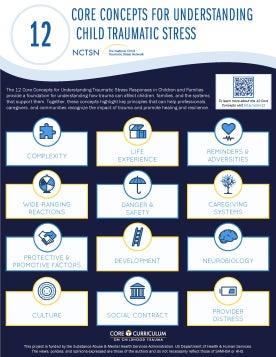
Introduces the 12 Core Concepts for Understanding Traumatic Stress Responses in Children and Families, a research-based framework developed by the NCTSN to explain how trauma affects children, families, and the systems that support them.