World Refugee Awareness Month (June 2012)
The NCTSN invites you to join us in observing World Refugee Awareness Month and, on June 20th, World Refugee Awareness Day. In doing so, we focus on the millions of refugees who live around the globe, recognizing their plight as well as their valuable contributions to our communities.
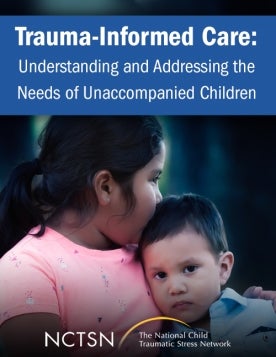
Traumatized refugee children and their families must deal with their past traumatic experiences while integrating into a new and unfamiliar society. They must look for safety in an alien culture, and ask for help in a nonnative language. Children and their families who have experienced war-related trauma and disruption also suffer burdens associated with resettlement such as poverty, unemployment, stigmatization, and bias.
See below for a listing of helpful resources related to the needs of refugee children and families.

Page Contents:
- NCTSN Resources
- NCTSN Member Resources
- For Educators
- For Mental Health and Medical Professionals
- For Refugees
- For Social Service Providers/Community Agencies

Featured NCTSN Resources
![]()
Children of War: A Video for Educators
A powerful video presentation in which refugee youth tell their own stories about the experience of war. Recommended for educators and others who work with immigrant and refugee youth and children. Because the stories are deeply moving, the video is not recommended for students younger than high school age, and any presentation to youth should be handled with sensitivity and made only after the video has been previewed.
Children of War: A Resource Guide (PDF)
A guide to help educators teaching students of all ages understand the experience of refugee youth and children. Best used in a group setting. Includes discussion questions for educators, suggests ways teachers and schools can help refugee students, and describes the traumatic stress that can result from wartime experiences and resettlement in a new culture.
Culture and Trauma Brief (vol 1, no 1) (PDF)
Promoting culturally competent trauma-informed practices (2005) (PDF)
This three-page brief highlights the need for clinicians and policy makers to understand the links between trauma and culture. Cultural competence in trauma treatments and practices is conceptualized broadly, to encompass race, ethnicity, immigrant status, sexuality, urbanity and rurality, and disability.
Mental Health Interventions for Refugee Children in Resettlement: White Paper II (2005) (PDF)
Revisits and summarizes the research reported on in White Paper I on the mental health needs of refugee children. Discusses the need for a comprehensive mental health services approach for refugee children. Then focuses on exploring what a comprehensive mental health service model for refugees might look like, based on a review of literature for findings that support the value of specific approaches or techniques. Includes recommendations for next steps toward improving standards of mental health care for traumatized refugee children.
Review of Child and Adolescent Refugee Mental Health (2003) (PDF)
A white paper that broadens work done in previous reviews of refugee mental health by discussing the most recent empirical studies of pathology and services among refugees and by describing unique populations of child and adolescent refugees. These data, as well as treatments, are organized by phase of the refugee experience and contextualized in cultural and developmental frameworks. Adaptation and adjustment of refugees, with particular emphasis on coping and use of available resources, are also reviewed.
Refugee Services Toolkit (2012)
A web-based toolkit to help service providers foster the mental health and general well-being of refugee children and families. The toolkit will help providers understand the experience of refugee children and families, identify the needs associated with their mental health, and ensure that they are connected with the most appropriate available interventions.
Survey of National Refugee Working Group Sites 2004: Summary Report (2005) (PDF)
Provides information on the nature of services offered by thirteen sites of the NCTSN that work extensively with refugees. While sites use a variety of treatment approaches, all work in collaboration with community-based organizations and various systems of care to reach clients.
NCTSN Culture and Trauma Speaker Series: Trauma & Mental Health in Child and Adolescent Refugees (2007)
Heidi Ellis and Ruth Campbell discuss the special challenges and opportunities presented in working with traumatized refugee youth.
NCTSN Member Resources
![]()
APA Presidential Task Force on Immigration
- Crossroads: The Psychology of Immigration in the New Century (2012)
This evidence-based report addresses the psychological factors related to the experience of immigration, with particular attention to the mental and behavioral health needs of immigrants across the lifespan, and the effects of acculturation, prejudice/discrimination and immigration policy on individuals, families and society.
- Resilience & Recovery After War: Refugee Children and Families in the United States (2010) (PDF)
To best address the needs of war-affected children and families, the authors recommend that stakeholders within the sectors of clinical practice, research, education, and public policy be culturally competent and cognizant of the multiple factors influencing their mental health and adjustment to resettlement.
Community Dialogue and Needs Assessment for Trauma Informed Systems of Care for Resettled African Refugee Youth in New Hampshire (PDF)
This publication is a joint report of the New Hampshire Project for Adolescent Trauma Treatment, an NCTSN member and the Wellesley Centers for Women. The report documents the results of a project that engaged African refugee youth, community members, and service providers in identifying the steps needed to create trauma-informed systems of care for African refugee youth.
For Educators
![]()
- Human Rights Education Lesson Plans: The Refugee Rights (PDF)
An exercise that shows students how to put themselves, at least imaginatively, in the shoes of refugees.
National Center for Children Exposed to Violence
- In the Setting of War: Teachers' Guide for Talking to Your Students (PDF)
Offers teachers assistance in identifying and addressing signs of adjustment difficulties in students and facilitating conversations in classrooms about the war.
U.S. Department of Education, National Clearinghouse for ESL Literacy Education (NCELA)
- Mental Health and the Adult Refugee: The Role of the ESL Teacher Focuses on how teachers can help refugee and immigrant learners make significant progress in adjusting to new life in an unfamiliar culture. Discusses qualities of mental health and stresses faced by refugees, and includes three things that teachers can do to help their students adjust.
For Mental Health and Medical Professionals
![]()
Centers for Disease Control and Prevention
- Immigrant and Refugee Health
Provides information on medical examination of immigrants and refugees, refugee health guidelines, and laws and regulations.
The Center for Victims of Torture
- Helping Refugee Trauma Survivors in the Primary Care Setting (2005) (PDF)
This clinical resource is meant for primary health care providers working with refugees or other survivors of war trauma and torture.
The Harvard Program in Refugee Trauma (HPRT)
- Harvard Trauma Questionnaire (HTQ)
A checklist that asks questions about a variety of trauma events as well as the emotional symptoms considered to be uniquely associated with trauma.
The Journal of the American Medical Association (JAMA)
Refugee Health Information Network (RHIN)
- Refugee Health Information Network (RHIN®) is a national collaborative partnership managed by refugee health professionals whose objective is to provide quality multilingual, health information resources for those providing care to resettled refugees and asylees.
For Refugees
![]()
U.S. Committee for Refugees and Immigrants
- Refugee Voices®
A program established in 1987, based on the idea that the best advocates for refugees are refugees themselves. The site enables refugees to hear and read firsthand testimonies of other refugees, and empowers them to contribute their own voice and help all refugees rebuild peaceful, stable lives.
For Social Service Providers/Community Agencies
![]()
- A project of the Center for Victims of Torture, this website provides a wide range of resources to services providers, whether they work in law, mental health, medicine, or social services.
Bridging Refugee Youth & Children's Services (BRYCS)
- Enhancing Child Care fir Refugee Self-Sufficiency: A Training Resource and Toolkit (2006) (PDF)
- Growing Up in a New Country: A Positive Youth Development Toolkit for Working with Refugees and Immigrants (2006) (PDF)
Supports social service providers in developing quality programming for the newcomer youth, ages 13–19, in their communities. - Guardianship Fact Sheet For Staff Assisting Refugee Families (2003) (PDF)
- Raising Children in a New Country: A Toolkit for Working with Newcomer Parents (2005) (PDF)
- RAISING CHILDREN IN A NEW COUNTRY: An Illustrated Handbook (2007) (PDF)
Created for agencies serving refugees and immigrants to help give newcomer parents basic information about U.S. laws and parenting practices.
U.S. Committee for Refugees and Immigrants
- Healthy Living Toolkit
Designed to help in educating refugees and immigrants to become proactive health consumers and promoters in their communities. Supports health professionals, health promoters, ESL teachers, and resettlement case managers in assisting refugees and immigrants to navigate the health system to reduce health disparities among these populations. Material presented in a culturally appropriate manner. Available in eighteen languages. - Resource Guide for Serving Refugees with Disabilities
A how-to for caseworkers and advocates who serve refugees to help improve access to services for newly arrived refugees with disabilities.