NCTSN Resource
Trauma Training for Early Childhood (TTEC) [1]
Type: eLearning Course
Is an interactive course that provides core concepts on trauma and young children in 15–20-minute lesson segments.

The following resources on Early Childhood Trauma were developed by the NCTSN.
Is an interactive course that provides core concepts on trauma and young children in 15–20-minute lesson segments.
Discusses the impact of trauma and young children including its impact of brain development; its impact on social, emotional, and cognitive development; and its impact on parent-child relationship and parenting dynamics. Dr.

Helps learners support children and families through the early years of a child’s life and development.
Addresses the complex issues and critical needs surrounding young traumatized children in the child welfare system and those who care for them.
Offers details on how early childhood trauma is unique, the scope of the problem, as well as the symptoms and behaviors associated with exposure to trauma at an early age.

Defines trauma in the early years and discusses the sources of traumatic events. This webinar describes the impact of trauma on a child's early development and discusses the role caregivers play in a child's response to trauma, as well as treatment goals when treating both child and parent.

Synthesizes research and clinical knowledge about typical brain development and the high impact that the stress response has on the developing brain. This webinar highlights the clinical application for clinicians and other professionals who work with traumatized children.

Explains how trauma, especially repeated interpersonal trauma such as sexual or physical abuse, affects a child's developing brain.
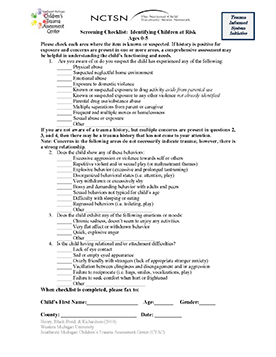
Screens children ages 0-5 for risk factors associated with traumatic stress.

Details information about interventions for children exposed to violence. This is a chapter in the Johnson & Johnson Pediatric Institute report Interventions for Children Exposed to Violence.
Links
[1] https://www.nctsn.org/resources/trauma-training-for-early-childhood
[2] https://www.nctsn.org/resources/the-impact-of-interpersonal-trauma-in-early-childhood-and-ways-we-can-all-help
[3] https://www.nctsn.org/resources/attachment-vitamins-interactive-course-early-childhood-attachment-stress-and-trauma
[4] https://www.nctsn.org/resources/young-children-foster-care
[5] https://www.nctsn.org/resources/early-childhood-trauma
[6] https://www.nctsn.org/resources/impact-trauma-very-young-children
[7] https://www.nctsn.org/resources/impact-trauma-early-brain-development
[8] https://www.nctsn.org/resources/developmental-impact-childhood-trauma
[9] https://www.nctsn.org/resources/trauma-screening-checklist-identifying-children-risk
[10] https://www.nctsn.org/resources/mobilizing-trauma-resources-children